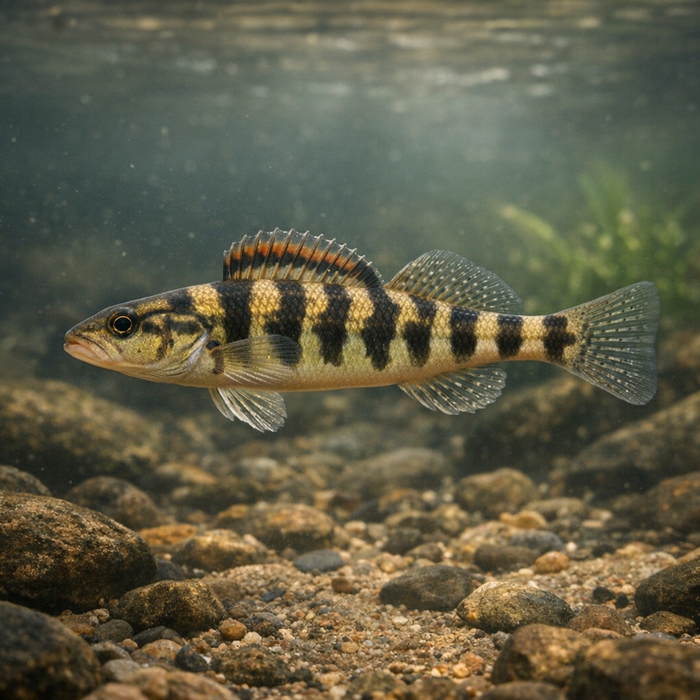
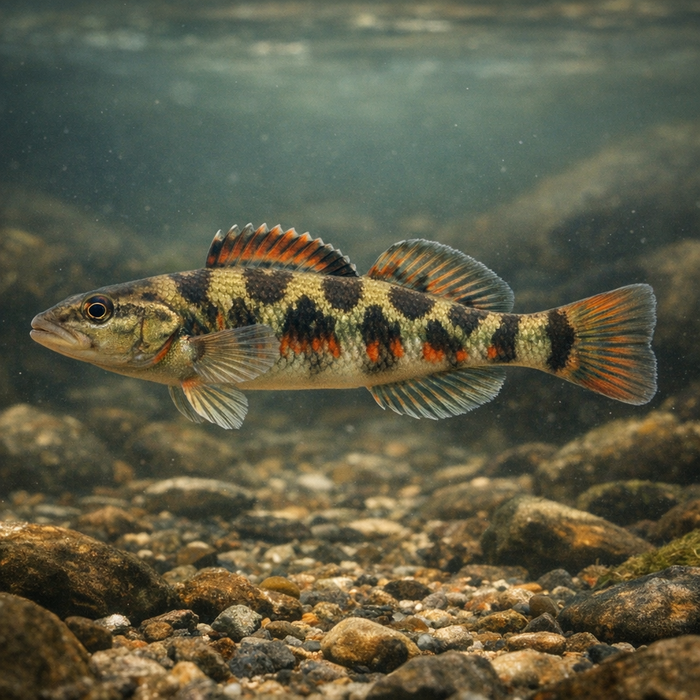
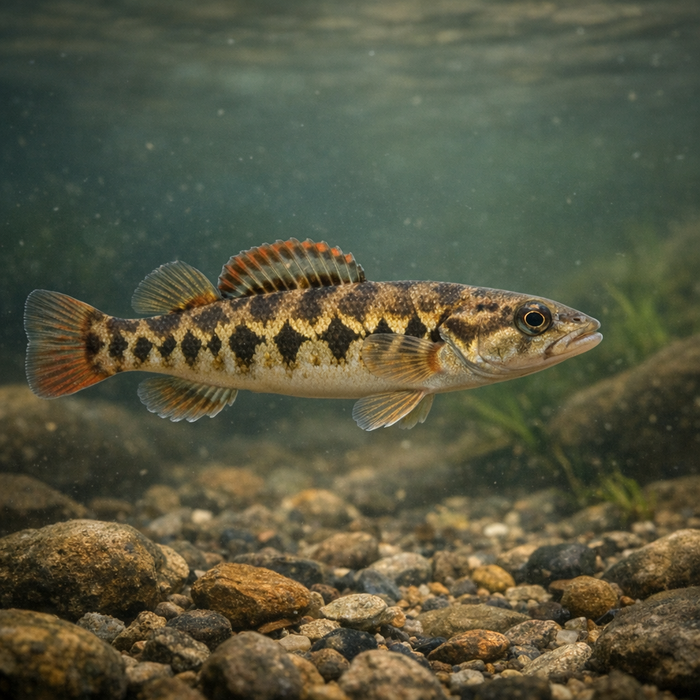
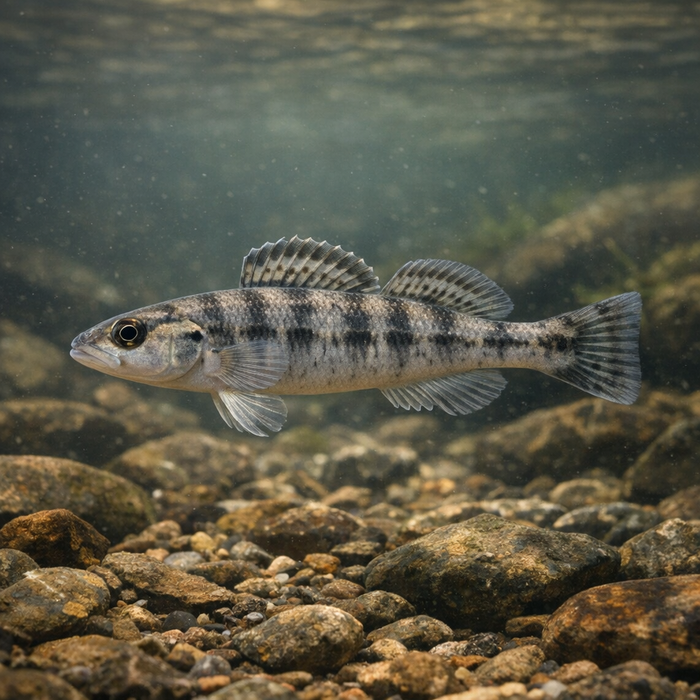
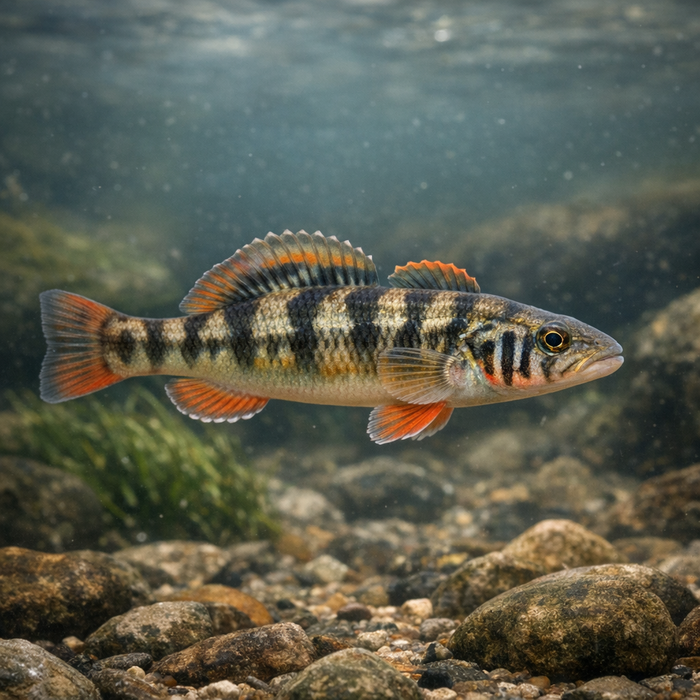
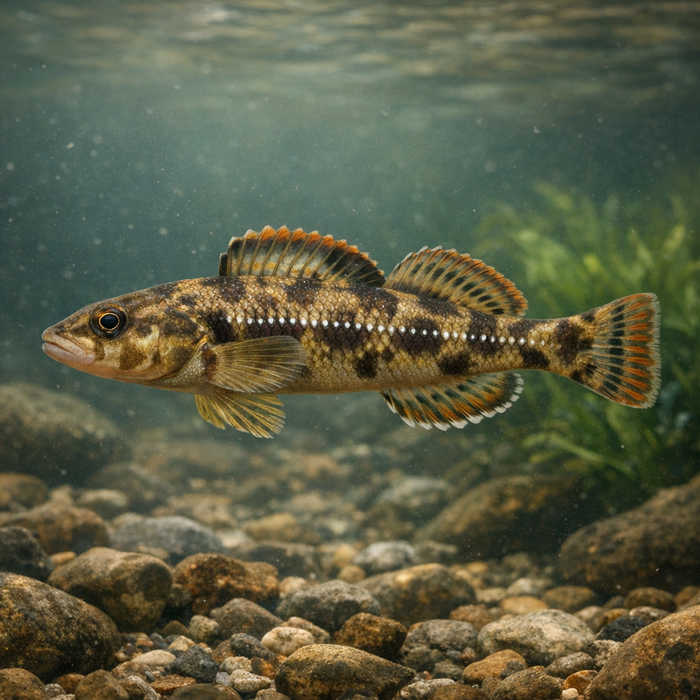
Headwater Darter (Etheostoma lawrencei): The tiny river ninja that sprints, sticks, and vanishes between the pebbles.IntroductionMeet the headwater darter, your favorite ultralight challenge hiding in ankle-deep current. This micro-sized bruiser doesn't run, jump, or peel drag. It just outsmarts you. Etheostoma lawrencei is built for the riffles, wears stealth camo, and makes pinpoint presentations feel like brain surgery. If you're here for Headwater darter facts, prepare to think small, stealthy, and precise.What Makes the Headwater darter Unique?First, the body design: slim, elongated, and tuned for bottom living. The headwater darter holds tight to stones and surges in short bursts, a move made easier by a reduced swim bladder. It's not about cruising; it's about sticking. Second, the spring wardrobe. Males punch above their weight with fired-up flank bars and fin highlights, flashing just enough color to impress females and intimidate rivals. Third, its vibe: a fish that rewards patience, clean drifts, and micro finesse more than brute strength. That's rare in freshwater fishing.Habitat & Global RangeLet's talk Headwater darter habitat without the yawns. Picture cool, clear creeks on the Cumberland Plateau and surrounding uplands, typically in Kentucky and Tennessee. The current is lively, the bottoms are cobble and gravel, and the water depth is laughably shallow. That's the sweet spot. They prefer riffles and runs with steady oxygen and low silt. Edge seams, broken pocket water, and the thin film just above the rocks are home base. Pools nearby offer a quick reset when flows bump, but the action is almost always where the water talks. These creeks are intimate and highly localized, which keeps the species off mainstream radars and on micro anglers' bucket lists.Behavior & TemperamentThe headwater darter doesn't school like shad or roam like smallmouth. It posts up, watches, and darts. Feeding is an ambush-and-pounce routine targeting small drifting invertebrates. Spawning kicks in as spring settles, when males go from muted to flashy, then escort females to the underside of small stones for egg placement. They're quick to spook in crystal water. Any clumsy footstep, sloppy cast, or flashy line sends them ghosting into the substrate's visual noise. But set up right, and you'll witness those crisp, tiny lunges that define this fish's name.Ecological ImportanceSmall fish, big job. Headwater darters help move energy from aquatic insects into larger predators and keep benthic invertebrate communities in check. Their demand for clean, well-oxygenated water makes them a living scorecard for stream health. When silt builds, flows stagnate, or banks erode, darters vanish early. Monitoring them can give managers an early read on watershed condition long before the headline species show trouble.Conservation & Environmental PressuresThese fish don't ask for much, but they're picky. Fine sediment, poorly timed dredging, culvert barriers, and dewatering crush headwater specialists. Even minor habitat fragmentation can turn a stronghold into isolated pockets. Because identification can be tricky across Etheostoma lookalikes, population data often lags, and conservation categories sometimes default to Not Evaluated. Practically, every intact riffle matters. Protect riparian buffers, stabilize banks, and keep the gravel clean, and the headwater darter usually handles the rest.The FishyAF TakeThe headwater darter is ultralight fishing distilled to its purest form: read current, see fish, move carefully, and make a tiny offering land perfectly. Hooksets feel absurdly delicate, photos require wet hands and humility, and bragging rights are measured in millimeters. But when you slide a clean drift along a sunlit seam and watch a two-inch torpedo flash and inhale, it's as satisfying as any big-fish victory. If you crave quiet creeks, sharp eyes, and a high-skill, low-drag puzzle, the headwater darter delivers. Add it to your micro list, and thank us later.