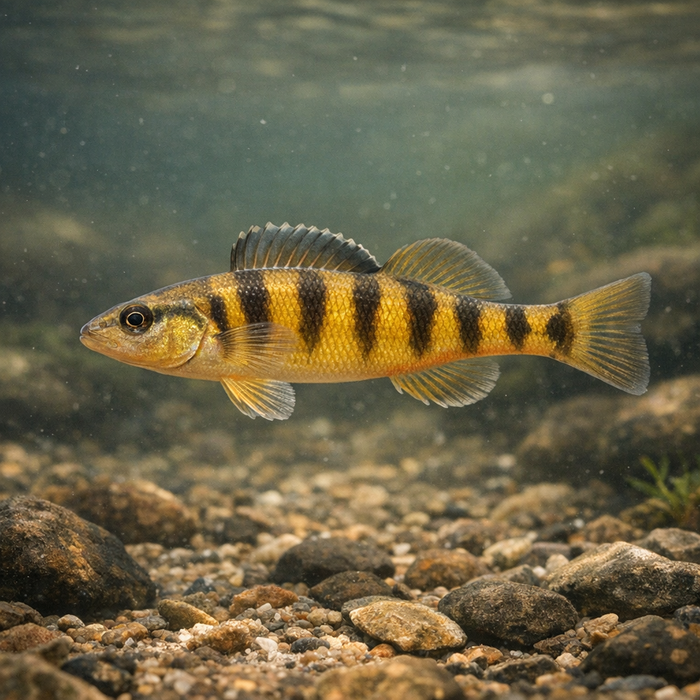
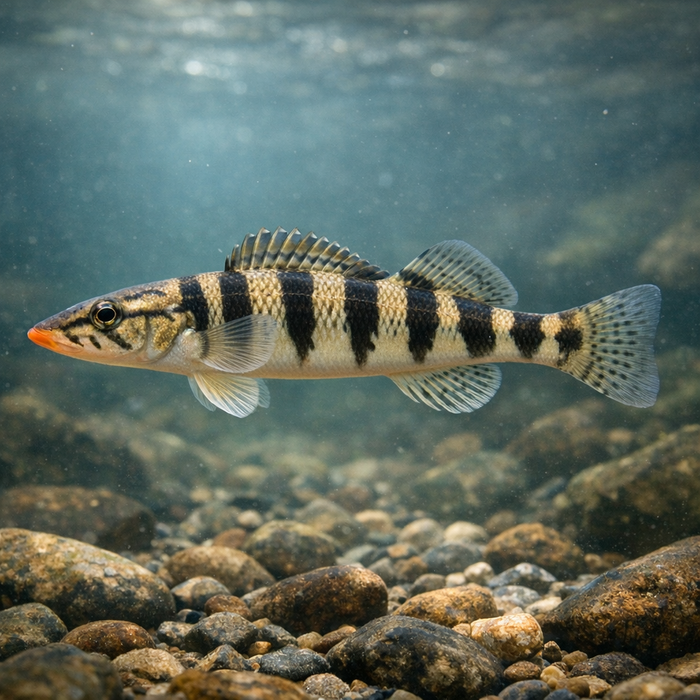
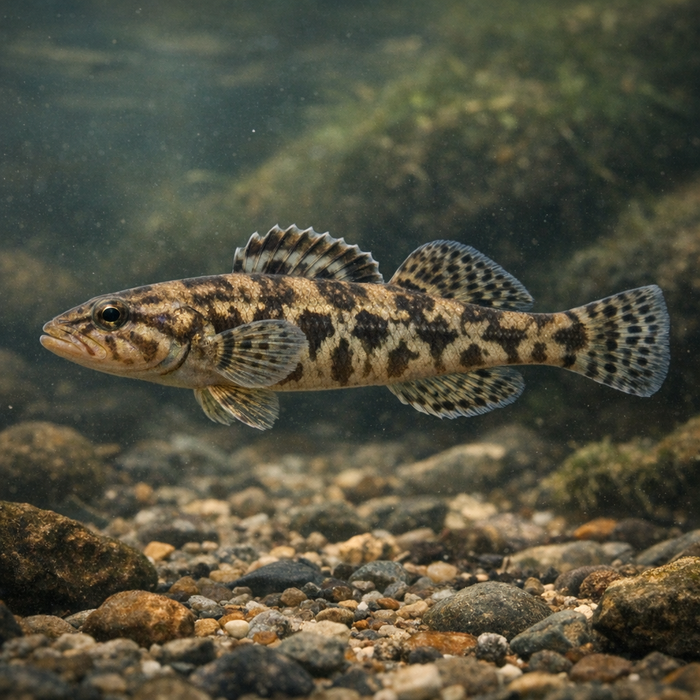
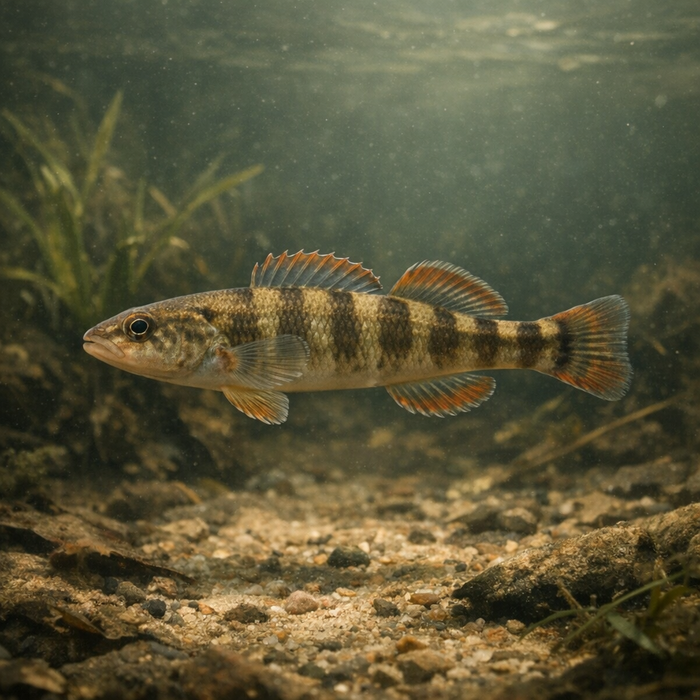
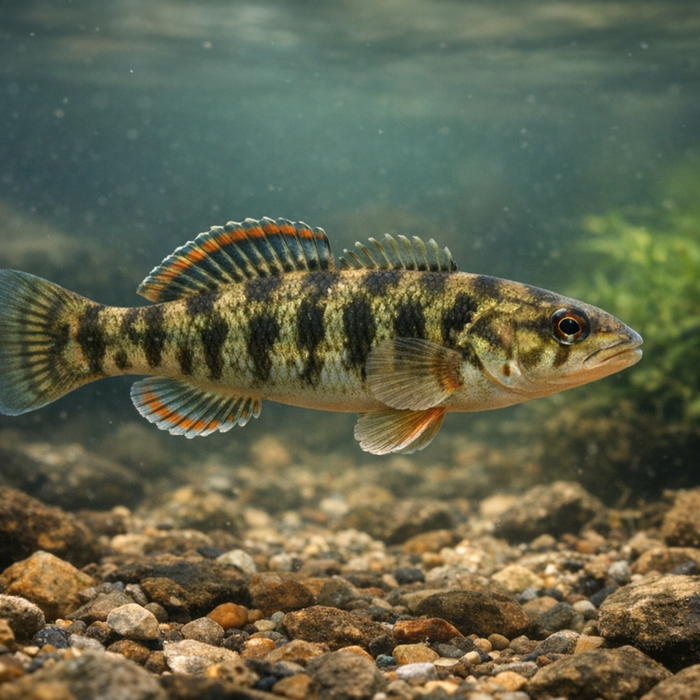
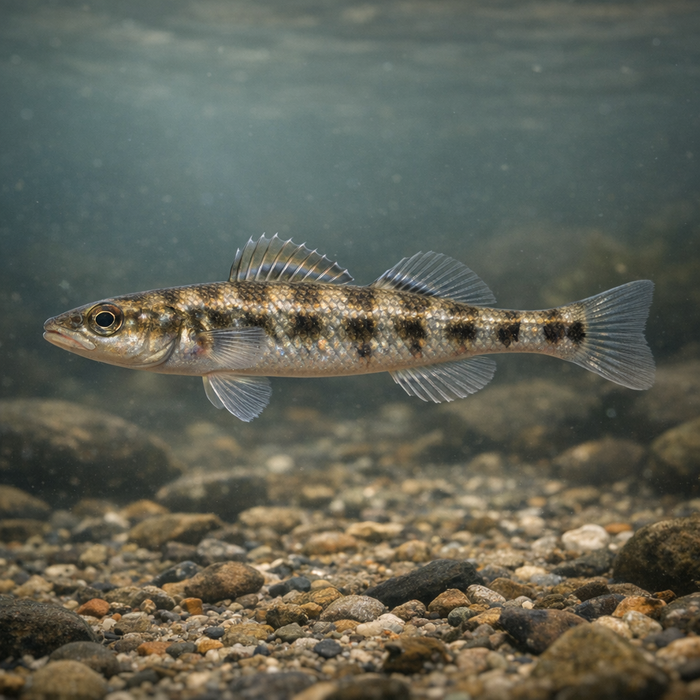
Cumberland darter (etheostoma susanae): Tiny creek phantom with a heavyweight conservation storyIntroductionThe Cumberland darter is the fish you almost step over, then suddenly realize you're staring at a two-inch miracle. It's a slip of a fish, a bottom-hugger with a serious need for clean, moving water and a starring role in conservation. For micro-anglers and creek junkies, the Cumberland darter is less a target and more a talisman: proof that a stream is still doing something right. If you're chasing Cumberland darter facts or trying to decode true Cumberland darter habitat, you've come to the right riffle.What Makes the Cumberland darter Unique?First, size. Adult Cumberland darter barely crack a couple inches, yet they're perfectly tuned for life on sand and fine gravel. Broad pectorals pin them to the bottom like little suction cups, letting them scoot and dart between ripples without getting rolled by current. Second, scarcity. This species is federally endangered and restricted to a tiny slice of the upper Cumberland River drainage. That means the Cumberland darter is a biological insider's handshake: you either know the creeks or you don't. Third, fragility with fight. Not the tug-on-the-line kind. We're talking the scrappy resilience to hang on where flows stay cool, clear, and mostly silt-free.Habitat & Global RangeCumberland darter habitat is brutally specific: shallow runs and gentle riffles over clean sand and small gravel in small headwater streams. Think palm-deep water, a steady push of current, and very little muck. The species sticks close to the bottom, tucking behind micro-structure like sand waves, root tangles, and the downstream edges of tiny pebbly bars. Its global range is essentially a postage stamp in the upper Cumberland River basin of the southeastern United States. Habitat quality rules everything. A little extra silt, a little too much warmth, or a flashy storm pulse that scours the bed can erase a year class.Behavior & TemperamentThe Cumberland darter is built for stealth living. It slides, perches, and darts short distances, picking at micro-invertebrates with quick snaps. No big migrations, no glamour runs, just a tight home range and a life measured in riffle lanes. Activity bumps when insect drift perks up, and sunlight often helps you spot them, especially where pale sand contrasts with their muted patterning. They aren't schooling fish in the classic sense; you'll encounter scattered singles and small loose groups keyed to the best bottom texture. Spawning rides the warming window of late spring into early summer, synced with stable flows and clean substrate.Ecological ImportanceTiny fish, big purpose. Cumberland darter converts stream invertebrates into forage for larger fish and aquatic predators, cycling energy at the riffle scale. As a clean-water specialist, it's also a living indicator. If Cumberland darter hang on, odds are good that the stream's temperature, oxygen, and substrate are still within healthy lanes. Lose this darter and you've probably lost the delicate interlocking pieces that make small Appalachian streams tick.Conservation & Environmental PressuresThe pressures are familiar but relentless: sedimentation from poor land use, streambank trampling, channelization, and warm, low summer flows. Being range-restricted magnifies every hit. Agencies, universities, and nonprofits have teamed up on propagation and reintroduction, plus habitat work that reins in silt and protects riparian shade. It's paying off in places, but recovery hinges on keeping water cold, clean, and consistent. For anglers, that means ethical creek time: watch, photograph, and avoid targeting. If you accidentally connect while microfishing legally for other species, release immediately and handle as little as possible.The FishyAF TakeThe Cumberland darter is the definition of small but mighty. It's not a grip-and-grin fish. It's a why-we-care fish. When you kneel beside a trickle and spot one sliding over sunlit sand, you're seeing a watershed doing its job. Respect the rules, root for the riffles, and flex your creekcraft in ways that leave the place better than you found it. The Cumberland darter doesn't need fanfare. It needs clean water, quiet banks, and folks who brag about saving streams as much as they brag about bending rods.