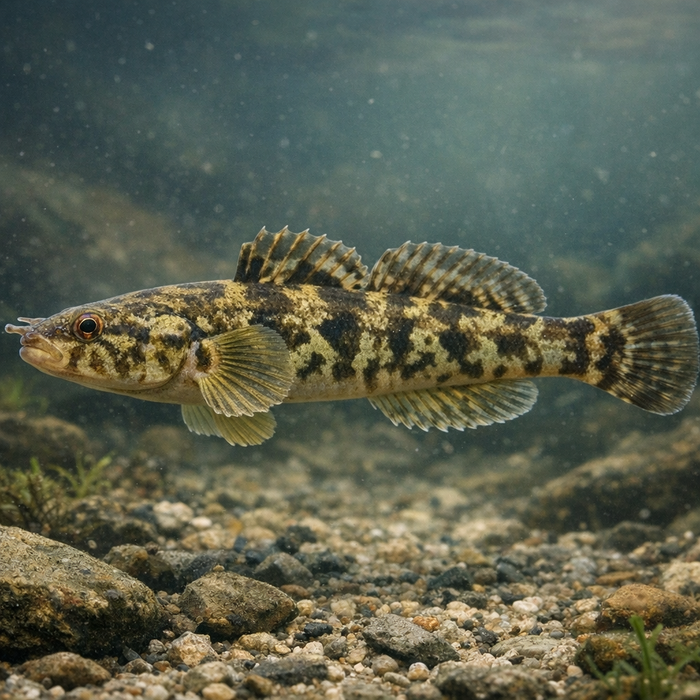
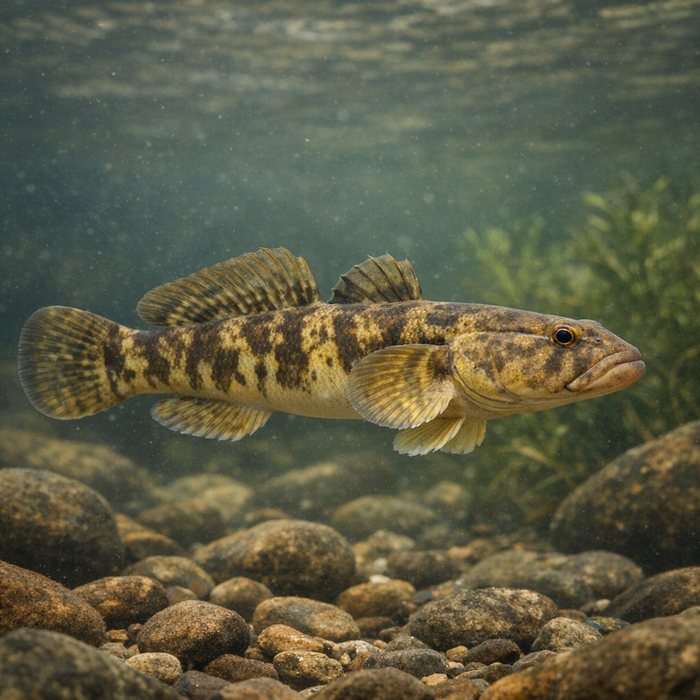
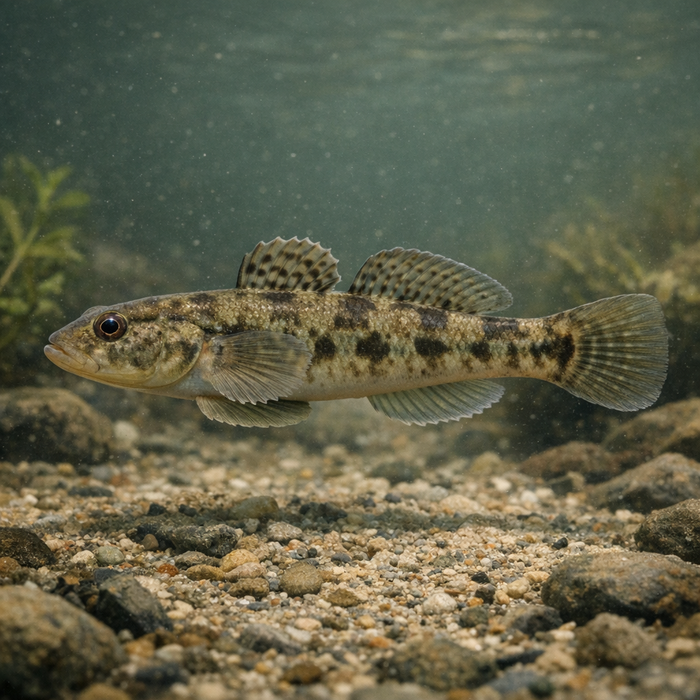
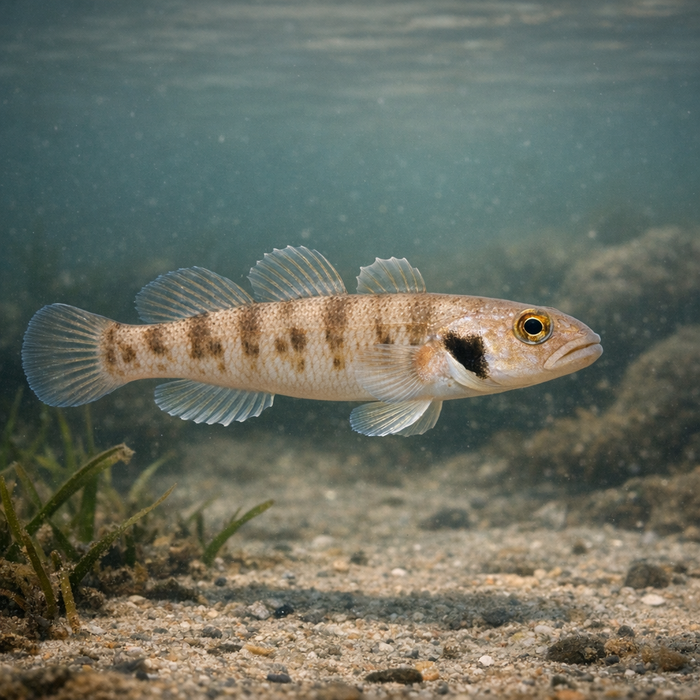
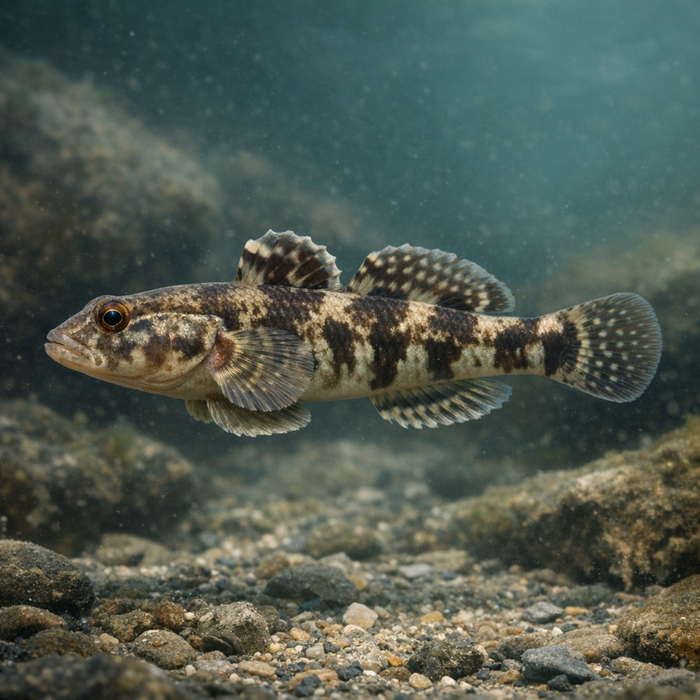
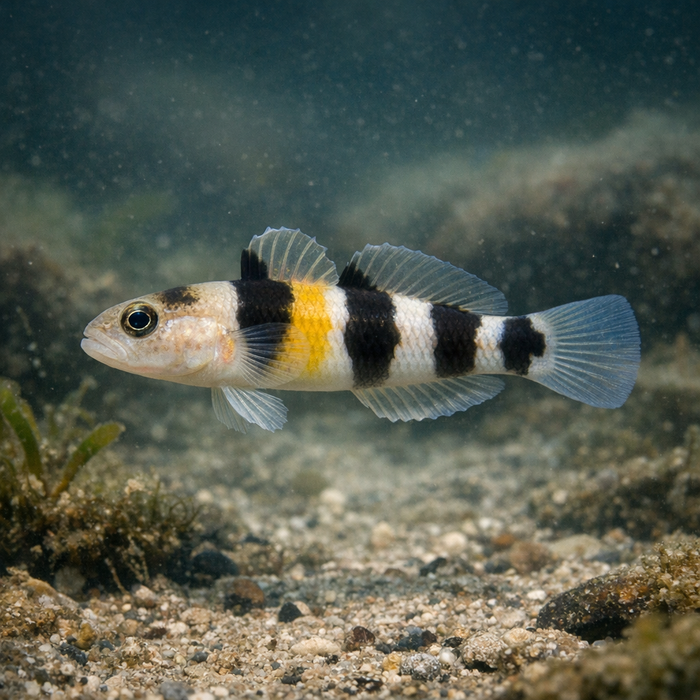
Amur Goby (Rhinogobius brunneus): Small Fish, Big Attitude In Fast WaterIntroductionThe Amur goby is proof that you don't need bulk to be bold. This pint-sized river bruiser clings to rocks in rushing current, snatches drifting morsels with sniper precision, and pulls way above its weight class in personality. Anglers who appreciate micro fishing and twitchy, close-quarters presentations love this species. New to tiny targets? The Amur goby will make you a believer fast.What Makes the Amur goby Unique?First, it's built like a suction-cupped linebacker. The pelvic fins fuse into a disc that glues the fish to stones where other species get blasted downstream. Second, the life cycle is amphidromous: larvae drift to sea, then juveniles trek back into fresh water to grow and spawn. That salt-fresh shuttle gives the Amur goby resilience and reach across connected coastal systems. Finally, breeding males sport sharp cheek bars and bright fin edges, an unexpected flash of swagger on a two-to-four-inch fish. Those are not just Amur goby facts for trivia night; they explain how and why this species thrives in high-energy water.Habitat & Global RangeThe Amur goby sticks close to structure in clear, moving water. Picture rocky riffles, cobble runs, and pocket-water edges, plus the lower reaches of rivers where tide stirs up brackish flow. It shows up from coastal streams to tidal creeks across East Asia and into parts of Southeast Asia. That amphidromous loop means you'll see juveniles pulsing upstream after time at sea, filling tributaries where current meets clean substrate. If you're scouting Amur goby habitat, think hard-bottom, steady flow, and plenty of micro-eddies the fish can claim.Behavior & TemperamentDespite the size, the Amur goby acts like it owns the rock it sits on. Individuals often defend small patches of cobble, darting out to pin invertebrates and tiny crustaceans, then snapping back to shelter. They don't cruise far; they post up. Low-light windows see more foraging, but small feeding bursts can happen throughout the day wherever current concentrates snacks. Hook one and you'll get a quick, jittery tussle. It's not a drag-war, but it's scrappy. For anglers, the game is finesse: tiny hooks, tiny baits, and precise placement.Ecological ImportanceThe Amur goby is an energy middleman in high-gradient systems. It converts drifting insects and small crustaceans into protein for larger fish and wading birds, while sending its own larvae downstream to coastal food webs. That sea-to-river commute spreads nutrients across habitats, stitching together ecosystems that many species treat like separate worlds. When Amur goby numbers are healthy, you usually have clean gravel, consistent flow, and intact connectivity between headwaters and estuaries.Conservation & Environmental PressuresOverall, the Amur goby trends stable, but that status leans on healthy rivers. Silt-laden runoff, dam-chopped migration routes, and urban contaminants can thin local populations. Because larvae drift to sea and juveniles return upriver, any break in the corridor matters. Channel hardening that smothers natural rock and cobble also strips away real estate the fish needs to cling and spawn. If you want thriving Amur goby numbers, you want fishable flows, clean stone, and open passages between salt and fresh.The FishyAF TakeThe Amur goby is the poster child for why micro fishing rocks. It demands accuracy, reads like a puzzle, and rewards anglers who slow down. You're not blasting casts; you're threading needles. For anyone who loves watching fish behavior up close, the Amur goby is a masterclass in current reading and structure use. It's also a perfect gateway to exploring new water: once you crack the tiny code, riffles and tidal creeks look like treasure maps. If you came for bass hero shots, cool, keep scrolling. If you're here to actually learn a fish, the Amur goby is your huckleberry. And if you wanted Amur goby habitat tips or Amur goby facts, you just got the good ones without the fluff.