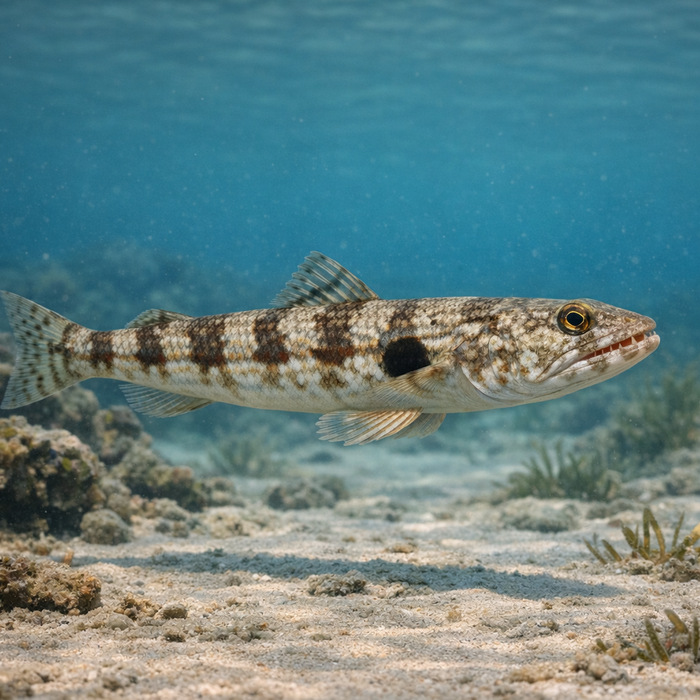
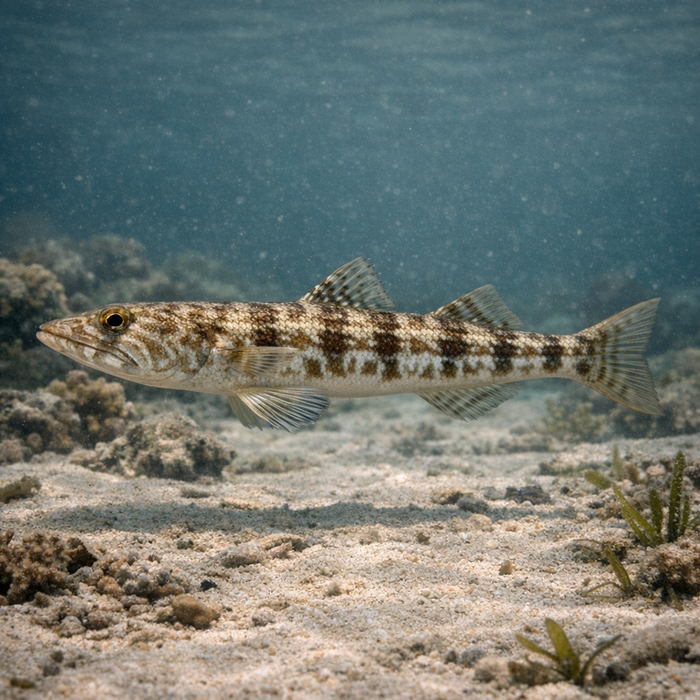
Atlantic lizardfish (Synodus saurus): A Bold, Memorable Hook LineIntroductionThe Atlantic lizardfish is the sneakiest ambush specialist you'll meet on a sandy shelf. Think torpedo with a lizard's grin, needle teeth, and a habit of vanishing into the bottom until your bait wanders too close. It's not glamorous, but it's plenty entertaining, and for light-tackle bottom rats it's a reliable player with a mean bite and zero ego.What Makes the Atlantic lizardfish Unique?Two words: ambush perfection. The Atlantic lizardfish lies motionless on sand or fine rubble, blending in so well that only the eyes and snout betray it. When the moment comes, it launches in a blur, jaws snapping like a zipper. Those jaws aren't just sharp; this fish packs teeth on both jaws and the tongue. Add a mid-body dorsal fin, high-set eyes, and a long, low-slung profile, and you've got a purpose-built predator that turns subtlety into success. Among Atlantic lizardfish facts, that tongue full of teeth is the crowd-pleaser.Habitat & Global RangeThe Atlantic lizardfish works the eastern Atlantic and the Mediterranean, patrolling continental shelves, bays, and reef edges where sand meets structure. Typical haunts are 10 to 100 meters, but they'll stretch deeper or slide shallower with seasons. They're especially fond of transition zones: patches of sand bordering rocks, seagrass breaks, wreck edges, and channel tongues. If you're scouting Atlantic lizardfish habitat, start where clean sand funnels food toward obvious relief and current.Behavior & TemperamentThis fish is patient bordering on smug. It buries or settles onto the bottom, eyes up, happy to wait while tide or boat movement delivers opportunity. When it decides to go, it goes hard, often inhaling baits or micro-jigs on the first burst, then relaxing like a resigned boot on the way up. They aren't schooling bruisers, but you'll often catch several from a productive patch. Dawn, dusk, and moving water concentrate the feed, but lizardfish are opportunists; if food is there, they'll eat.Ecological ImportanceThe Atlantic lizardfish slots neatly into the inshore food web. It trims populations of small fish and crustaceans, converts them into calories for larger predators, and recycles energy through a system that includes seabream, groupers, jacks, and seabirds. That lying-in-wait lifestyle is a perfect complement to roving hunters; while the sprinters chase, the lizardfish picks off the unlucky and unwary. They're also common bycatch, which means they quietly connect recreational, artisanal, and commercial gears to the same underlying prey base.Conservation & Environmental PressuresGood news: the Atlantic lizardfish is currently assessed as Least Concern, helped by wide distribution and flexible habitat use. Still, coastal realities matter. Habitat loss, trawling over nursery sand plains, and water-quality swings can nick local abundance. Because they're often bycatch, they rarely get species-specific management attention; they ride the coattails of broader shelf and reef regulations. Keep an eye on inshore degradation and chronic overfishing of their prey. If the buffet shrinks, ambush artists feel it.The FishyAF TakeThe Atlantic lizardfish will never headline a tournament, and that's part of its charm. Light rod, small jig, a patch of sand beside rock, and you're in business. They hit with confidence, they're photogenic weirdos, and they're honest about the fight: first punch, then compliance. Use them as a teaching fish for reading bottom transitions and current seams. If you're collecting Atlantic lizardfish facts to impress anyone, start with the teeth-on-the-tongue bit and the bury-and-blast routine. It's the blue-collar assassin of the shelf, and we respect that hustle.