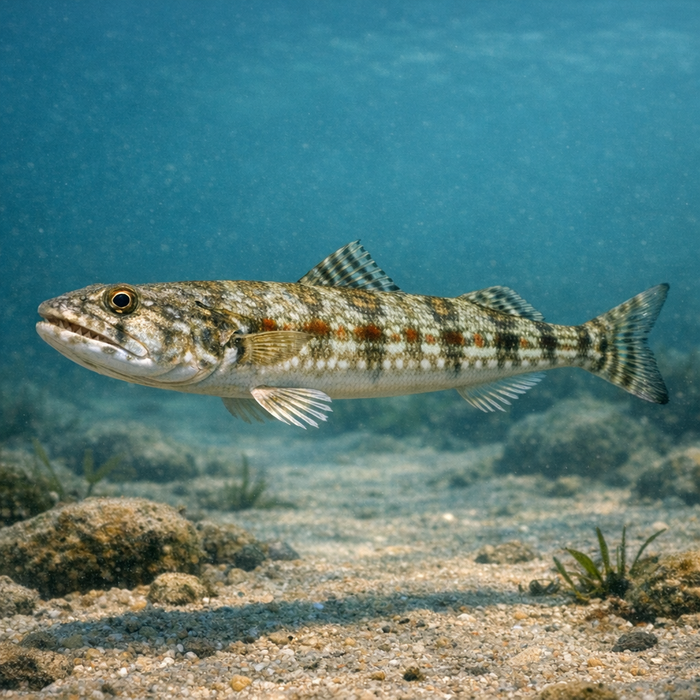
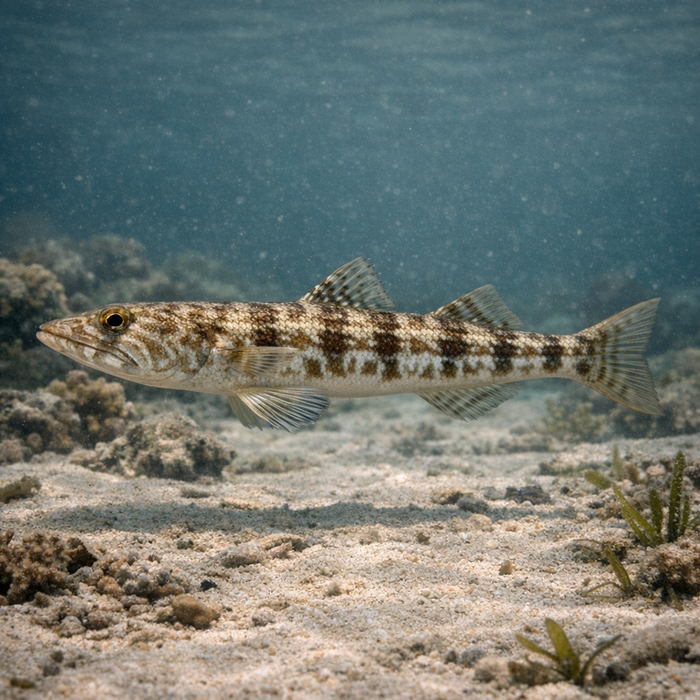
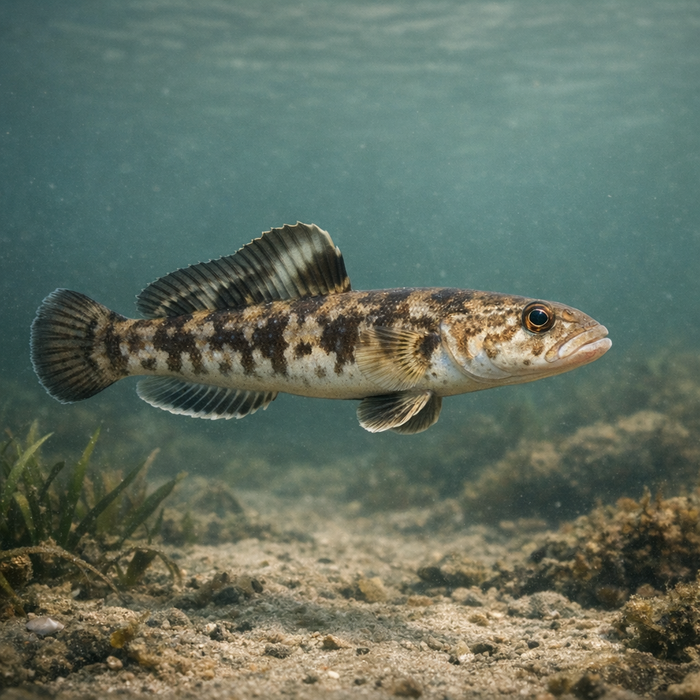
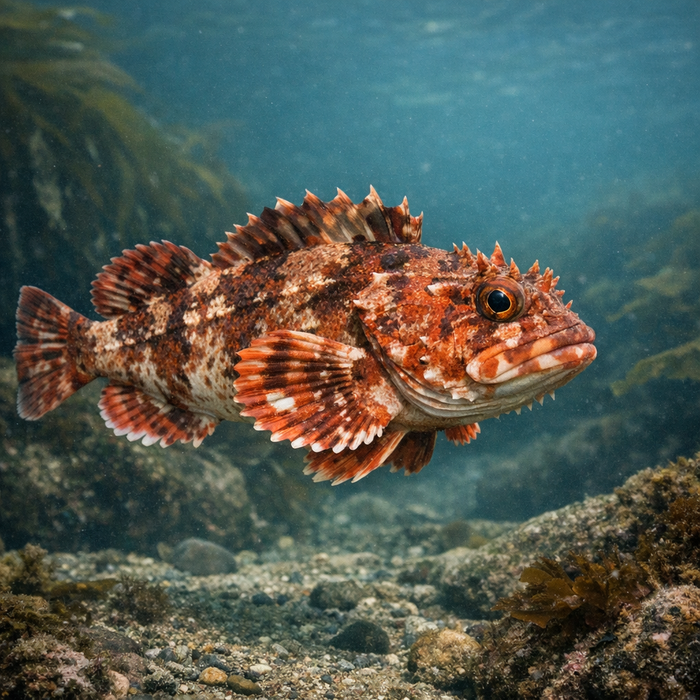
Largespot lizardfish (Synodus macrostigmus): A Bold, Memorable Hook LineIntroductionThe largespot lizardfish is the sand sniper you keep hooking when you swear you were aiming for something else. Sleek, toothy, and unapologetically bottom-hugging, this little predator flips the script on "bycatch" with ambush skills and a mouth full of needles. If you're hunting Largespot lizardfish facts or poking around about Largespot lizardfish habitat, welcome to the rabbit hole you didn't know you wanted.What Makes the Largespot lizardfish Unique?First, the calling card: a bold, dark blotch on the shoulder area that stands out even against mottled sand camo. That spot separates the largespot lizardfish from its many lookalike cousins. Second, the hardware. Synodus macrostigmus straps serried, recurved teeth to jaws that hinge wide and, yes, even onto the tongue. Prey go in; prey do not come back out. Third, the posture. This fish parks on its pelvic fins like kickstands, body angled just so, eyes up, waiting to launch. It's an ambush athlete built for half-second sprints, not marathons.Habitat & Global RangeThe largespot lizardfish works the sandy continental shelf, typically near edges of structure: the margins of reefs, channels, ledges, and rubble. Think clean sand flats with just enough texture to hide in, plus current strong enough to push groceries past its nose. You'll encounter them across the tropical to warm-temperate Western Atlantic, especially through the Southeast and Gulf, and into parts of the Caribbean, often in 20 to 200 feet. They don't fuss over real estate the way reef specialists do. Instead, they slide depth with season and conditions, hugging sand where baitfish and shrimp are milling.Behavior & TemperamentIf it moves on the bottom, the largespot lizardfish is thinking about eating it. These fish are opportunistic in the best way. They stage, they wait, and then they detonates forward in a short, savage burst. They're visual hunters with oversized eyes that hold their own in turbid or dim light. Schooling? Not really. You'll see loose clusters where food is concentrated, but they're more like grumpy neighbors than coordinated teams. On the line they're not freight trains, but they punch above their weight for a few seconds and often shake loose half-digested snacks as a bonus.Ecological ImportanceAmbush predators like the largespot lizardfish stitch together sandy habitats with the rest of the coastal food web. They convert shrimp, small fishes, and sand-loving critters into fuel for bigger predators that patrol the same real estate. They also contribute to the turnover of benthic prey communities, forcing bait to move and hide, which keeps energy flowing across flats, ledges, and reef edges. Their pelagic larvae drift before settling, spreading genetics across broad swaths of shelf waters and reseeding areas after storms reshuffle the bottom.Conservation & Environmental PressuresYou won't see the largespot lizardfish headlining a conservation campaign. It's small, widespread on suitable bottoms, and barely targeted. That said, it still lives where people work and play: trawl lanes, shipping channels, artificial reefs, coastal developments. Habitat smoothing, sediment plumes, and water quality issues all modify its hunting grounds. Add in warming trends that can shove temperature-sensitive forage around, and you get a fish that adapts by sliding depths or locations. It's resilient, but not bulletproof.The FishyAF TakeThe largespot lizardfish is the little assassin that keeps your day interesting. It's makeup-brush subtle until it isn't, hammering a jig you meant for something fancier, then baring a sharky grin that dares you to unhook it. As a target, it's perfect for dialing in bottom contact, testing micro-jigs, and learning current seams over sand. As a species, it's a reminder that "plain" habitats throw curveballs. When you can read sand like reef, you'll bump into the largespot lizardfish often. And when you do, admire the spot, respect the teeth, and admit it: bycatch never looked so unapologetically predatory.