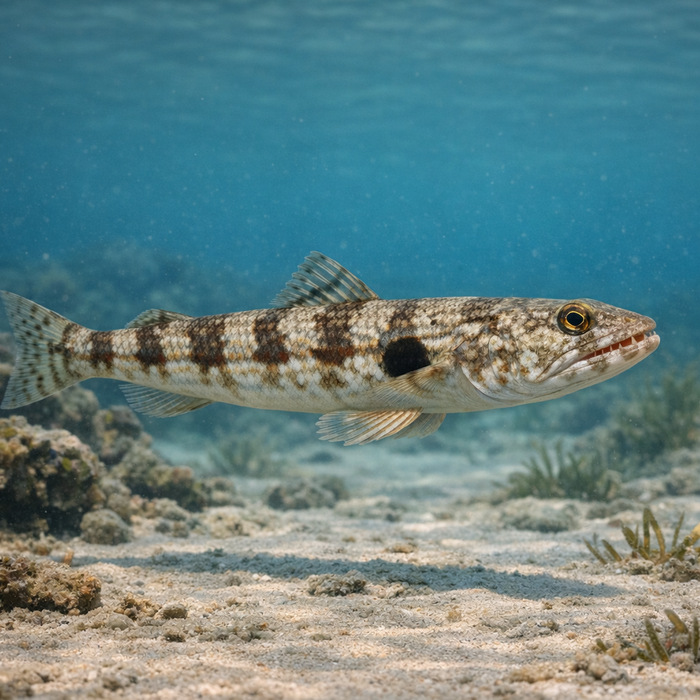
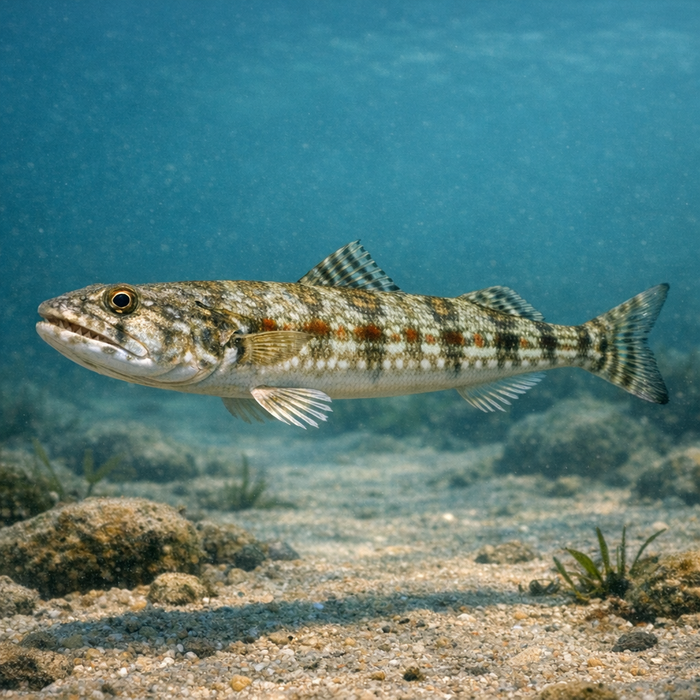
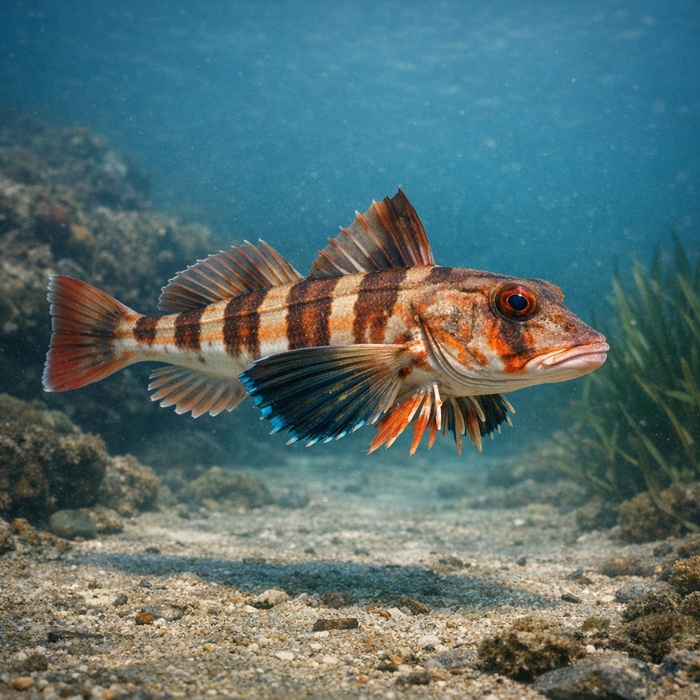
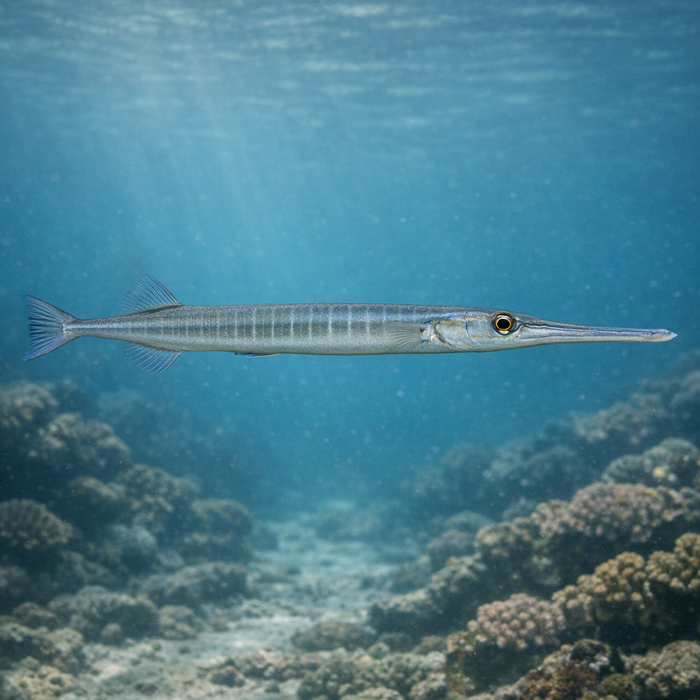
Sand Diver (Synodus intermedius): A Bold, Memorable Hook LineIntroductionThe sand diver is the fish equivalent of a landmine with fins. One second there's nothing but beige bottom, the next there's a sudden blur and your bait has vanished into a maw full of tiny knives. It's not a headline gamefish, but it's a masterclass in stealth and speed. If you want a fish that teaches you to watch your bottom, the sand diver has receipts.What Makes the Sand diver Unique?Three things: camouflage, launch speed, and dentistry. The sand diver uses chromatophores to fade into the sand and rubble until only those high-set eyes betray it. When the moment hits, it doesn't chase; it detonates, punching forward in a lightning burst to inhale prey. And yes, the mouth is a little horror show. Teeth line the jaws and even pepper the tongue, built to pin slippery baitfish with embarrassing efficiency. Toss in a quirky little adipose fin and an elongated, tripod-posing body, and you've got a lizardfish with serious ambush swagger.Habitat & Global RangeIf you're curious about sand diver habitat, think edges: the sandy seams near coral heads, patch reefs, channels, and open flats. The species works the Western Atlantic neighborhood, from the Southeast U.S. through the Gulf of Mexico and the Caribbean to parts of South America. Depth-wise it's a generalist, happily lounging in a few feet of clear, sunlit water or haunting deeper sand lanes abutting reefs. It's a coastal ambusher that loves clean sand and light rubble, a setup that practically dares baitfish to cross.Behavior & TemperamentThe sand diver plays statue until it doesn't. Most of its day is spent motionless, propped on pelvic fins or lightly buried with just eyes and snout exposed. It's a patient ambush predator that feeds by short, savage lunges, not long pursuits. Strikes are sudden, often followed by a dead stop as if nothing happened. They're typically solitary, rarely schooling, and they aren't particularly spooky unless you blunder right over them. For anglers, the first clue is usually a twitch on the line, then a quick set, and the briefest of dustups before the fish goes limp and confused, classic sand diver behavior.Ecological ImportanceWhile overshadowed by flashy reef stars, the sand diver is a vital middle link in the food chain. It trims back small baitfish and shrimp populations, converting them into snacks for bigger celebrities like snappers, groupers, and barracuda. Its habit of burying reduces energy output, letting it thrive where calories are scattered. That keystone ambush role stabilizes sandy-lane communities, keeping traffic flowing between reefs, flats, and channels. If you want thriving reef edges, you want a healthy population of small, sneaky predators like the sand diver.Conservation & Environmental PressuresGood news: Synodus intermedius isn't under intense directed fishing pressure. Most catches are bycatch, curiosity, or impromptu live bait. The usual villains still apply. Habitat degradation from coastal development, sedimentation after storms or dredging, and poor water quality can trash the clean-sand highways this fish needs. In some regions, anchor scarring and heavy beach grooming reshuffle sand structure, which flattens out the little contours ambushers adore. Climate shifts can shuffle depth and distribution, but for now the species remains stable where reefs and sandy lanes stay intact.The FishyAF TakeThe sand diver proves not every fun fish needs to be big, glamorous, or Instagram-famous. It's a bite-sized lesson in patience, positioning, and timing. If you're working sandy edges and your jig keeps disappearing, don't blame ghosts. That's a sand diver, doing sand diver things. They're not going to spool you, but they will make you sharper about reading bottom texture and micro-structure. File this one under sneaky satisfaction. You'll remember your first one, even if the photo looks like you dropped your lure on a stick with teeth. For anglers chasing Sand diver facts or scouting Sand diver habitat, the story is simple: find the clean sand by the structure, slow down, and respect the ambush. It's not a trophy; it's a teacher.