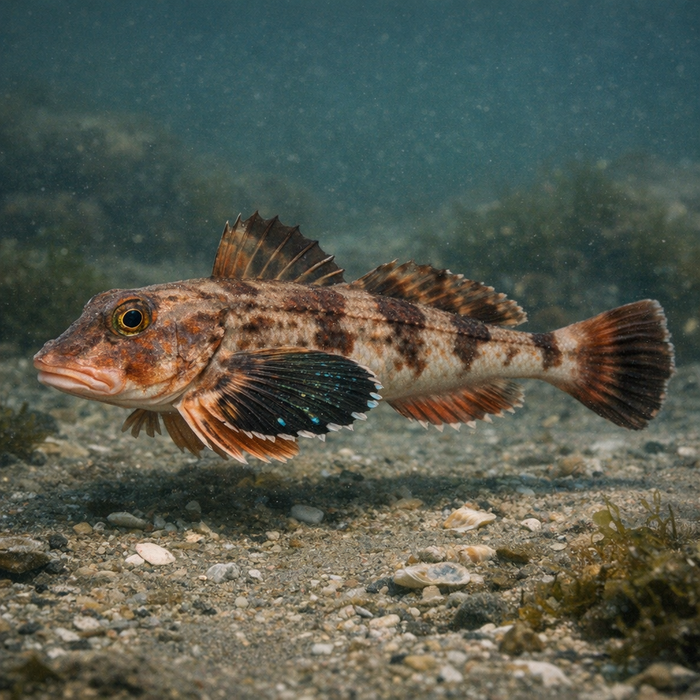
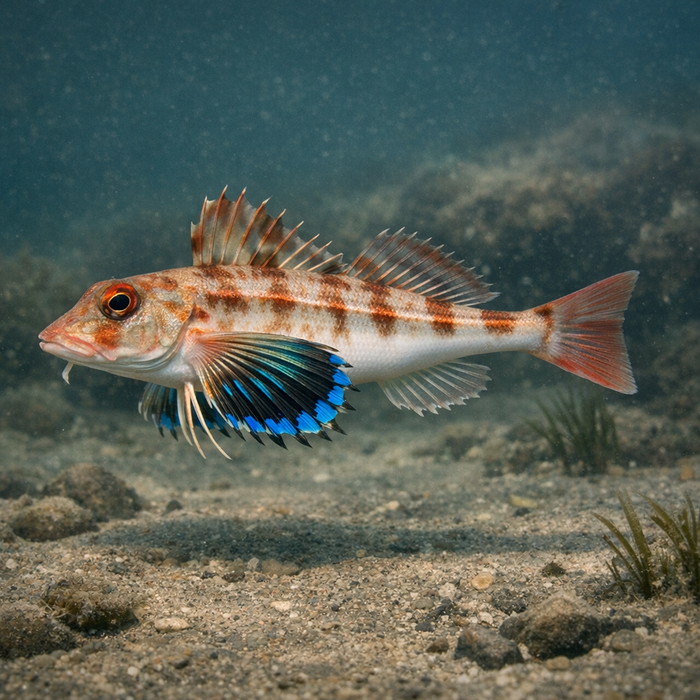
Striped Searobin (Prionotus evolans): The Bottom-Walking Winged DrummerIntroductionThe striped searobin is that chatty, armored weirdo you meet while bouncing bait for fluke or weakfish. It grunts at you, spreads dragon wings you didn't expect, and tries to steal every strip of squid you own. Whether you curse it or admire it, this fish owns the nearshore sand like nobody else. If you're here for striped searobin facts or just curious about what's making noise in your fish box, welcome to the show.What Makes the Striped searobin Unique?Two things: legs and lungs that sing. Technically, those "legs" are three detached pectoral fin rays that act like nimble fingers. They poke, prod, and taste the bottom to find crabs and worms, then the striped searobin vacuums them up. And yes, it talks. Specialized muscles vibrate the swim bladder, producing grunts you can hear on deck and sometimes even through a hull. Add a helmet of bony plates and spines plus oversized, winglike pectorals it can flare like a cape, and you've got one unmistakable fish.Habitat & Global RangeCall this the nearshore sheriff. The striped searobin works sandy and muddy bottom from shallow surf zones to deeper channels, including inlets, shoal edges, and bay flats. It is a staple of Atlantic coastal waters in the Northeast and Mid-Atlantic, stretching through the Southeast and brushing the Gulf. If you're searching "Striped searobin habitat," think soft bottom, subtle contour, and moving water. It's perfectly happy under boats, beside piers, or miles down a beach trough; structure helps, but sand is home base.Behavior & TemperamentThe striped searobin cruises tight to bottom, often solo or in loose groups, "walking" on its finger rays as it combs for snacks. Aggression sits right in the sweet spot for bottom anglers: not picky, not shy, reliably curious. It hits baits more than lures, though a small bucktail tipped with meat will get whacked. The fight is short and bulldoggy, with head shakes and stubbornness out of proportion to its size. And when it hits the deck, get ready for some very opinionated grunting.Ecological ImportanceThis isn't just bycatch with an attitude. The striped searobin is a hard-working predator on small crustaceans and fishes, recycling energy up the food chain while feeding larger predators in turn. Its bottom-probing behavior ventilates and stirs sediment, a tiny but perpetual housekeeping service across huge swaths of coastal seabed. Pelagic eggs and drifting larvae spread recruits broadly, then juveniles settle back to nearshore nurseries and keep the engine running.Conservation & Environmental PressuresYou don't see striped searobin headlining management plans, and that's partly because they're common and not heavily targeted. Still, they live where people play: dredging, shoreline hardening, eutrophication, and contamination can degrade their bread-and-butter-clean, oxygenated soft bottom. Warming shifts timing and distribution, nudging peak bites earlier or farther north. They're tough, but not bulletproof. Healthy estuaries mean healthy searobins, and vice versa.The FishyAF TakeWe love a fish with personality, and the striped searobin has extra to spare. It walks, it drums, it mugs for the camera with cape-like fins, and it'll smash a squid strip meant for something fancier. Anglers gripe because they're not the target, then quietly keep a couple for dinner and smile. If you fish coastal sand, you'll meet this creature. Learn its tells, tip your jigs with meat, and enjoy the weirdness. The striped searobin might not be a trophy, but it's the most talkative five-alarm bycatch on the beach-and that's worth celebrating.