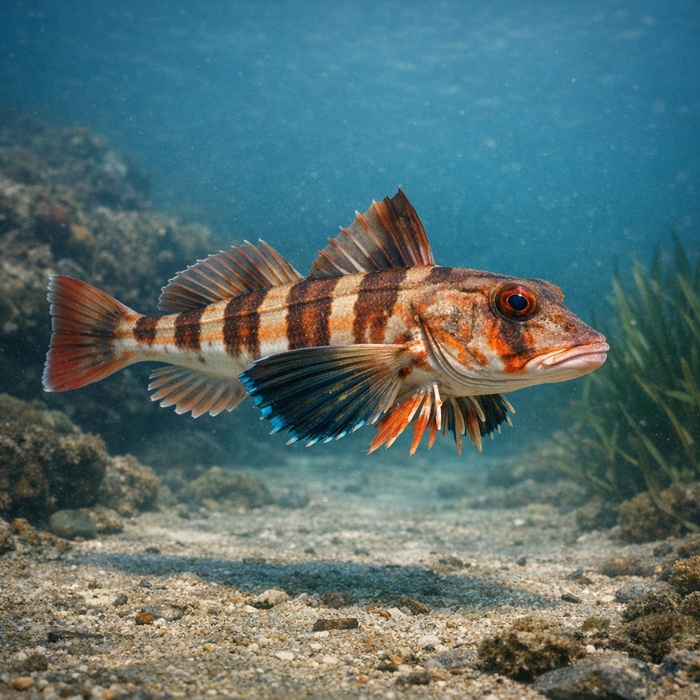
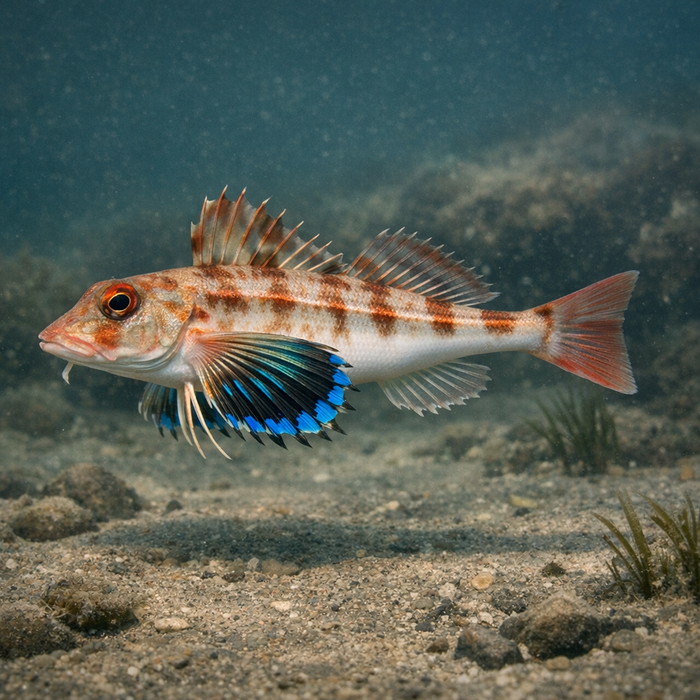
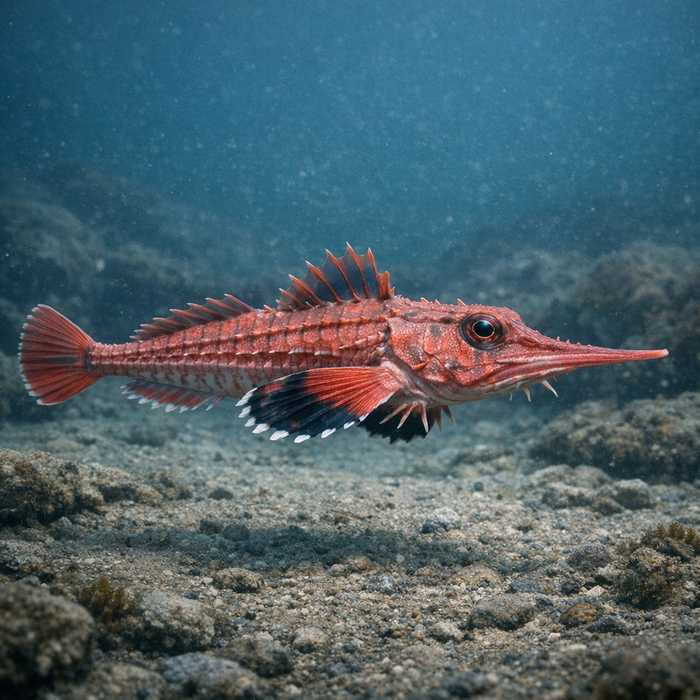
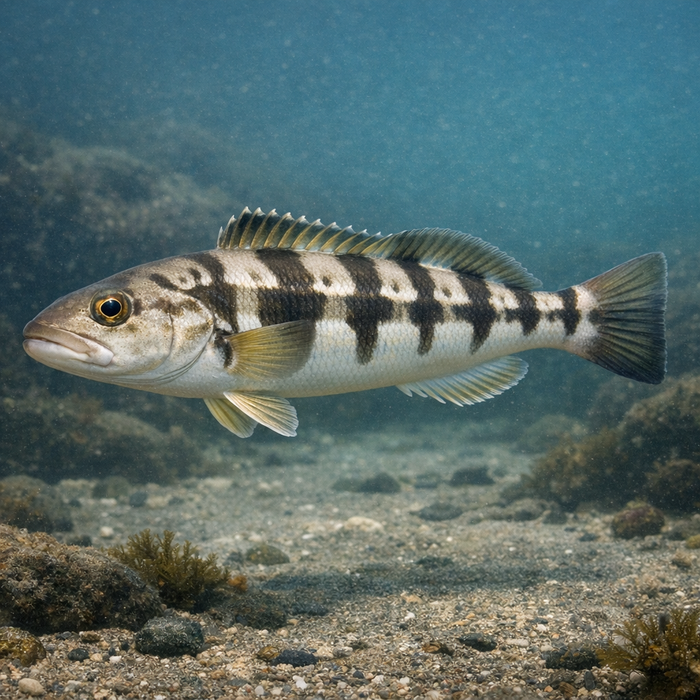
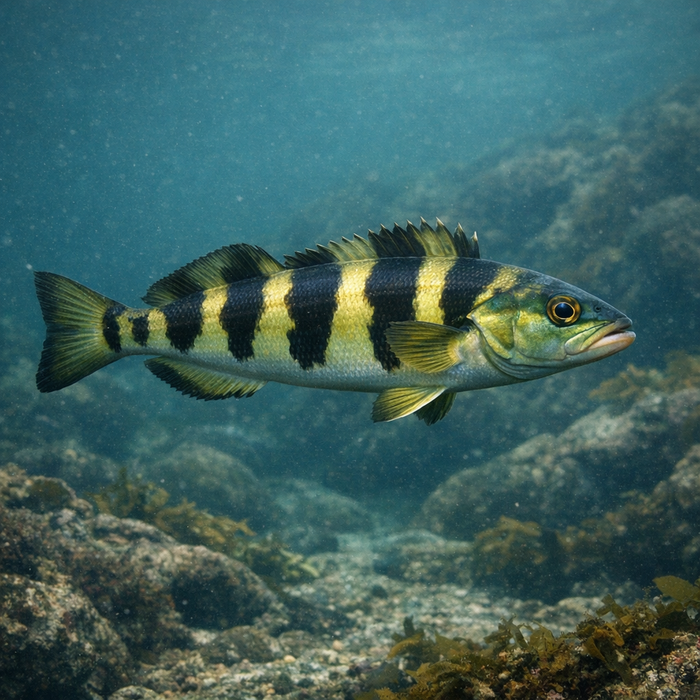
Lumptail Searobin (Prionotus stephanophrys): A bottom-walking oddball with surprising swaggerIntroductionIf a fish could roll its shoulders and say, "Yeah, I live down there," it would be the lumptail searobin. This small, armored bottom-hopper prowls sandy lanes with fanlike wings and finger-rays that literally walk. It croaks at the dock, startles predators by flashing those wings, and vacuums snacks from the bottom like it owns the place. Not a glamour species, sure, but ignore it and you'll miss a masterclass in weird, well-adapted design.What Makes the Lumptail searobin Unique?Start with the hardware. The lumptail searobin's head is a fortified bunker of spines and bony ridges, purpose-built for life grinding through grit. Three detached pectoral fin rays act like fingertips, loaded with taste buds and nerve endings for probing, walking, and pinning prey. Then there's the namesake tail: knobby plates near the base that look like someone hot-glued armor onto a fish. When threatened, it throws open its huge pectoral fins like a cape, adding a dramatic flourish to a fish that otherwise blends perfectly into sand. These aren't random oddities. They're integrated tools for a creature writing the book on bottom-hunting stealth.Habitat & Global RangeThe lumptail searobin works the Eastern Pacific's nearshore scene, from the U.S. West Coast's southern stretch through Baja California and deep into Central American waters. Picture channels and troughs near beaches, harbor mouths, and soft-bottom edges around jetties and reefs. Depths range from the surf line to well offshore on the continental shelf, but the species is most familiar to anglers in 10 to 150 feet where small hooks and cut bait rule. If you're looking for Lumptail searobin habitat by name, think sandy highways with scattered shell, not coral mazes or kelp thickets. This fish is part scavenger, part ambusher, all-in on the bottom.Behavior & TemperamentThe lumptail searobin is a patient creeper. It cruises nose-down, tasting through those finger-rays, then snaps its wide mouth for a quick vacuum inhale. It grunts audibly when handled, thanks to muscles drumming on the swim bladder, and it will flare its pectorals to create a sudden "boom" visual if something big gets too close. While not known for blistering runs, it pulls with a stubborn, head-shaking thump that feels larger than its size. These fish feed in short windows linked to tide, light, and easy current, with a slight preference for low, slacking flow that keeps sand from blasting their sensory gear.Ecological ImportanceCall it the janitor with fangs. The lumptail searobin turns detritus zones into productive feeding lanes by stirring, tasting, and snapping up invertebrates and small fish. That activity recycles nutrients, keeps tiny prey moving, and creates micro-disturbances that other predators exploit. In turn, bigger fish and birds snack on searobins. Plenty of "trash fish" labels get pinned to small bottom species; in reality, this one is a clean cog in the coastal machine. If you're building a food web diagram, it earns a central seat.Conservation & Environmental PressuresMost anglers meet lumptail searobin as bycatch. That lack of targeted pressure helps, but coastal realities still bite. Habitat siltation, polluted runoff, heavy trawling, and warming events that scramble invertebrate communities all matter. The species itself sits in the data-light zone, which usually lands it as Not Evaluated rather than finely assessed. Translation: no panic, but pay attention. Healthy sandy-bottom habitat keeps lumptail searobin numbers stable, and anything that cleans water and reduces bottom drag improves their odds.The FishyAF TakeHere's the deal: if you appreciate oddball engineering, the lumptail searobin is a gem. It's the Swiss Army fish of sandy bottoms, with walking fingers, armored jaws, and a flair for drama when it throws those wings. It's not a headline trophy, but it's a killer teaching fish for reading bottom texture, feeling subtle bites, and dialing light-tackle finesse. File under: underrated, overqualified, and perfect for anglers chasing real Lumptail searobin facts without the hype. When you're ready to graduate from only chasing poster fish, this quirky bottom-crawler hands you a masterclass in coastal nuance.