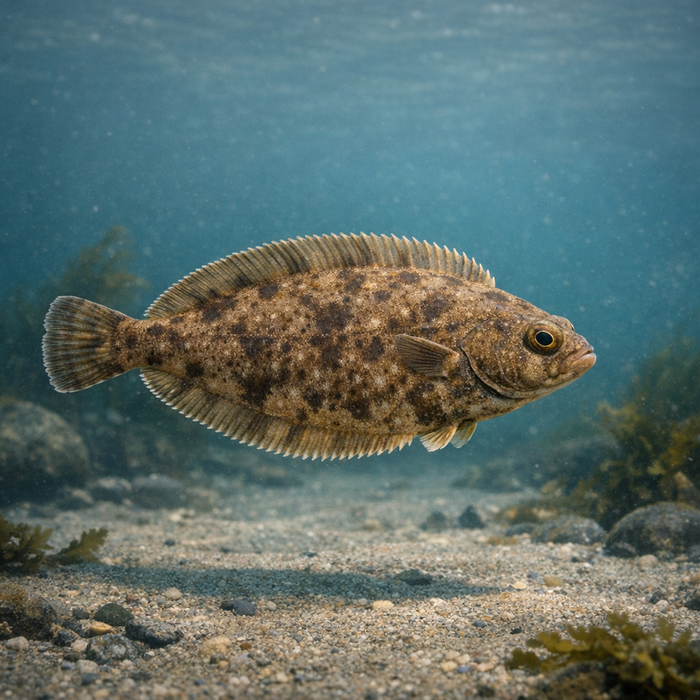
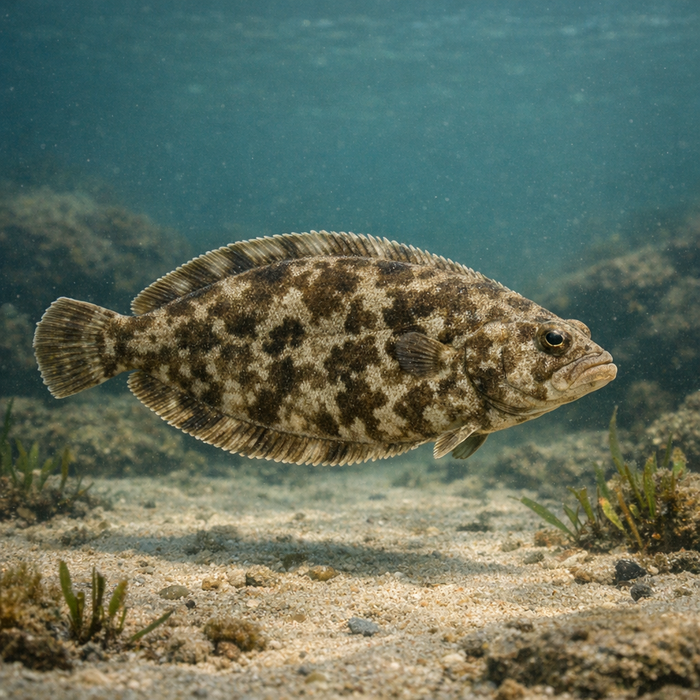
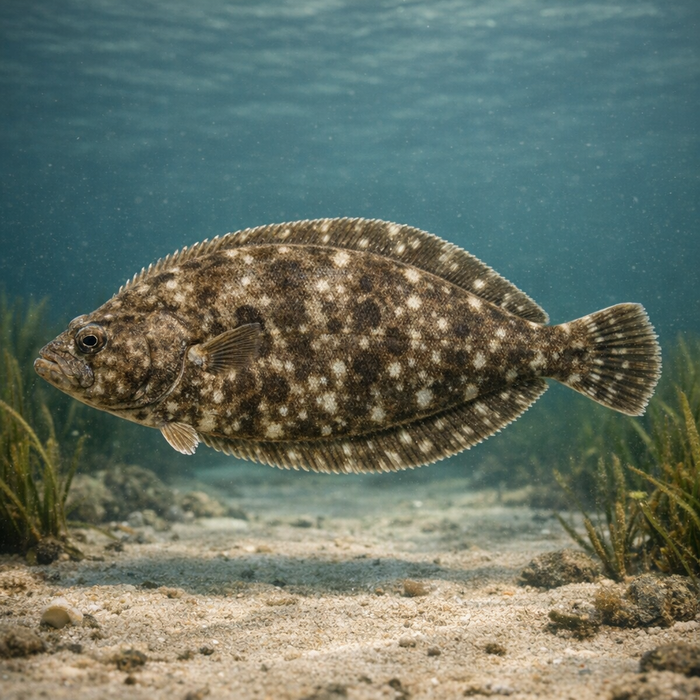
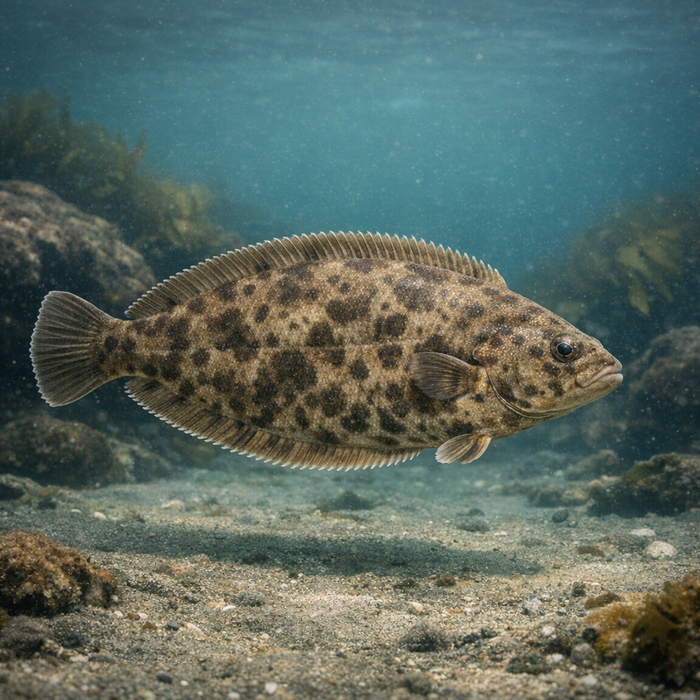
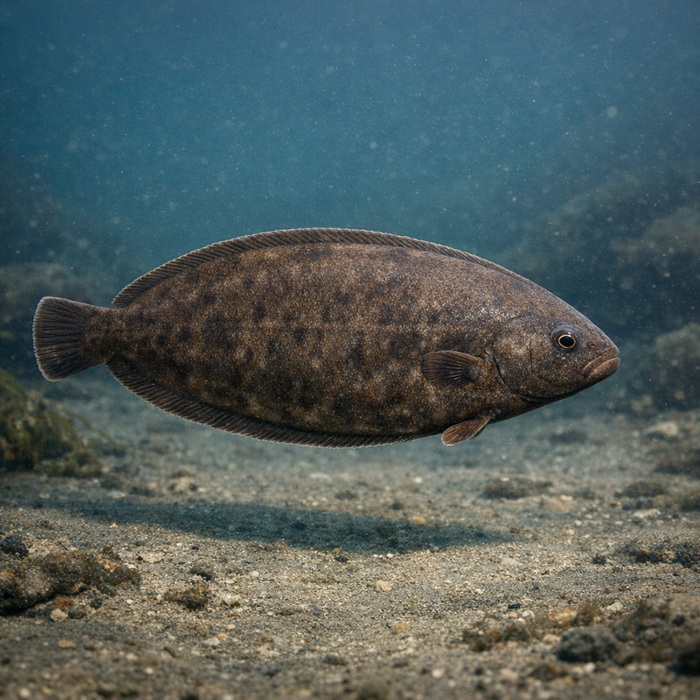
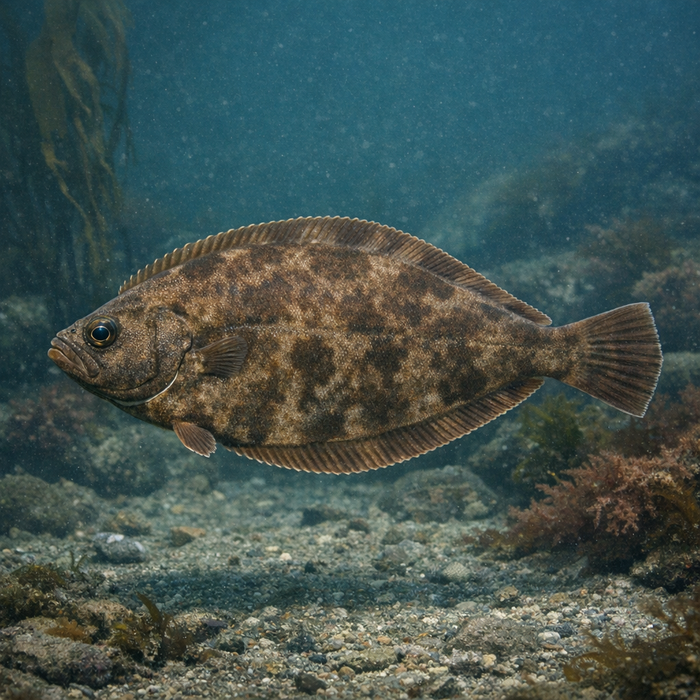
Fantail Flounder (Xystreurys liolepis): A Bold, Memorable Hook LineIntroductionThe fantail flounder is the sneakiest pancake you'll never see until it twitches. Built like a camouflaged doormat with a fan-shaped tail, this West Coast flatfish buries into soft bottom, waits for dinner to stroll by, and then proves why light-tackle anglers love a good ambush bite. If you're after real Fantail flounder facts, you're in the right place.What Makes the Fantail flounder Unique?Start with the namesake tail. While plenty of flatfish carry rounded fins, the fantail flounder's broad, almost paddle-like caudal fin is a quick ID cue. It's also a left-eyed flounder, meaning both eyes sit on the left side of its head after metamorphosis. Those eyes operate independently like periscopes, swiveling while the fish stays motionless and buried. Add a high-arched lateral line and a surprisingly big mouth for its size, and you get a compact ambush predator built for snap decisions.Habitat & Global RangeThe fantail flounder patrols sandy and muddy bottoms along the eastern Pacific, showing up from colder northern waters to the sunburned edges of Baja. You'll bump into it on coastal shelves, in open sandy pockets near reefs or kelp edges, and around harbor channels where current funnels food. Depth-wise it's a generalist, comfortable from shallow nearshore zones to deeper shelf contours. If someone asks about Fantail flounder habitat, the short answer is simple: clean sand and light current, with a side of baitfish traffic.Behavior & TemperamentLike most ambush artists, the fantail flounder doesn't waste moves. It settles, blends in, and waits. When something snack-sized cruises past, it fires from the sand with a short burst powered by that wide tail. It's not a long-distance sprinter, but acceleration off the bottom is legit. Bite windows often align with moving water, dawn, and dusk, when prey gets sloppy. The fight is a short wrestle with head shakes and a stubborn pinwheel near the surface. On light tackle, it's just enough drama to keep you honest without the rodeo.Ecological ImportanceThe fantail flounder keeps coastal food webs tidy by thinning small fishes and crustaceans that surge through shallow and mid-depth zones. Juveniles use calmer inshore habitat as nurseries, in turn feeding larger predators. That bottom-dwelling lifestyle also makes this fish a living indicator for sediment quality; if a bay or shelf gets smothered in pollution or low-oxygen events, you'll see fewer flatfish, fantail flounder included.Conservation & Environmental PressuresThis species isn't the poster child for overfishing and is generally considered stable, but it doesn't live in a bubble. Coastal development, stormwater runoff, and chronic sediment contamination can chew up nursery habitat. Hypoxia events and algae blooms hit bottom fish first. Bycatch from trawls can also impact local age structures, especially where sandy flats overlap with working grounds. The good news: simple measures-cleaner waters, mindful dredging, smart bycatch handling-go a long way. Recreationally, most anglers take only what they'll actually eat, which helps.The FishyAF TakeThe fantail flounder is the blue-collar flatfish that shows up, handles business, and doesn't demand a parade. It rewards anglers who read bottom contours, trust slow presentations, and let the bait crawl. It's not a tackle-destroyer, but the bite is addictive: a tap, a thump, a brief pause, and then steady weight as the fish clamps down. Land a few and you'll start seeing the sand differently-edges, troughs, seams-all the subtle geometry where a fantail flounder might be lurking. File this one under underrated, accessible, and way more interesting than it looks at first glance.