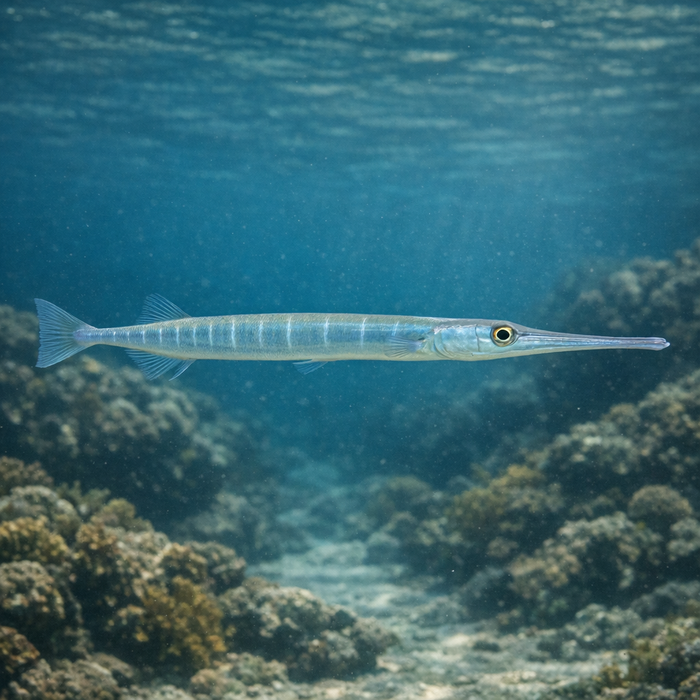
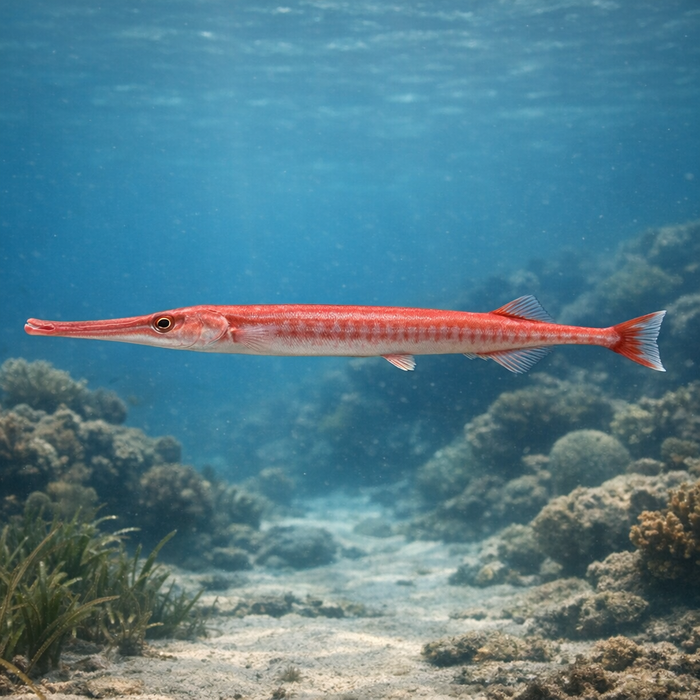
Cornetfish (Fistularia tabacaria): A Bold, Memorable Hook LineIntroductionThe cornetfish is what happens when evolution can't stop doodling long lines. It looks like a yardstick with eyes and a vacuum for a mouth, sliding the reef like a slender torpedo that forgot to bulk up. Anglers spot that thin silhouette on flats and patch reefs, then do the double-take: Is that thing really six feet long? Welcome to the wonderfully odd world of the cornetfish, a stealth predator built for ambush over horsepower. If you came here for quick-hit Cornetfish facts or the lowdown on Cornetfish habitat, settle in.What Makes the Cornetfish Unique?Three things. First, that tubular snout is a precision suction rig. The mouth flares and inhales small fish and shrimp in a blink, no jaw-crushing needed. Second, its body plan is absurdly efficient for sneaking. Long, round, and blade-thin from the front, it practically vanishes when it turns broadside-to-narrow against a shadow line. Third, the cornetfish is a master of deception. It can hover vertical like a sea whip, cruise beside bigger fish to steal their cover, or flash from bronze to chrome to match background glare. It's not built to brawl; it's built to make baitfish panic silently.Habitat & Global RangeThe Atlantic cornetfish roams warm, shallow saltwater across the tropical and subtropical Atlantic. Think coral and rocky reefs, turtle grass flats, mangrove edges, sandy cuts, and coastal lagoons. You'll see them from the Gulf Coast and Caribbean islands down through northern South America, and across the pond along West African coasts and islands. Depth-wise, they're homebodies of the shallows, usually within snorkel range, but they'll slide out to reef edges when the bait does. Current seams, pier lights, and the bright-dark boundary on flats all set the stage for a stealthy pass. If it's calm, clear, and fishy, a cornetfish is probably ghosting through it.Behavior & TemperamentCornetfish hunt like pickpockets. They drift, align, and strike only when the odds go 90-10. Instead of sprinting, they'll tail a school, sidle next to a bigger fish, or hang vertical until a silverside makes a bad turn. Dusk and dawn are prime, but a mid-day slick can be just as deadly. They're curious yet cautious; a careless cast or heavy leader wakes them right up. Hookups feel strange: a tap, a faint weight, then a long, wiggly run without much torque. With that tiny mouth and long lever of a body, they're notorious for short strikes if your hook is oversized.Ecological ImportanceAs mid-level predators, cornetfish trim the edges of baitfish schools, shrimp clouds, and juvenile reef fish populations. That sounds minor, but it helps keep explosive blooms of small prey from overwhelming nursery habitat. They, in turn, fuel bigger machines: groupers, barracuda, and sharks. You won't read about them anchoring food webs, yet their stealthy culling and energy handoff matter, especially on pressured nearshore reefs where every bite-sized transfer counts.Conservation & Environmental PressuresThe species is listed as Least Concern, and that checks out. Cornetfish aren't heavily targeted and show up across a wide swath of warm Atlantic coastlines. Still, their stage is fragile. Seagrass loss, mangrove clearing, and reef degradation erase the backdrops they depend on. Turbidity from runoff and sediment kills the clear-water lanes they hunt. Bycatch in nets and nighttime spearfishing take a local toll, and warming seas shuffle where and when bait stacks. They'll adapt better than many specialists, but a silent hunter still needs quiet water and intact structure.The FishyAF TakeThe cornetfish is a prank played on impatient anglers. It's long, obvious, and somehow still hard to catch. If you like cracking codes, sight-fish it with finesse: small hooks, light fluorocarbon, and a slow, sideways slide that says, "Nothing to see here." The fight won't rip braid off your reel, but the visual eat - a skinny shadow extending, then poof - is worth every rejected cast. Among reef oddities, the cornetfish is a top-tier weirdo with serious game. Add it to your list, and when it finally sticks, enjoy one of those rare wins where subtlety beats muscle. That's the flavor you remember when you think back on true Cornetfish facts: the best trick in fishing might be invisibility.