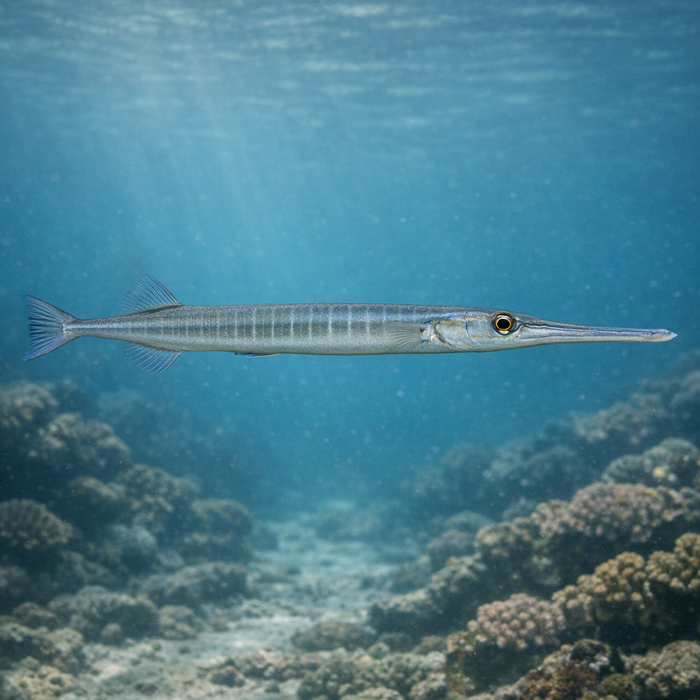
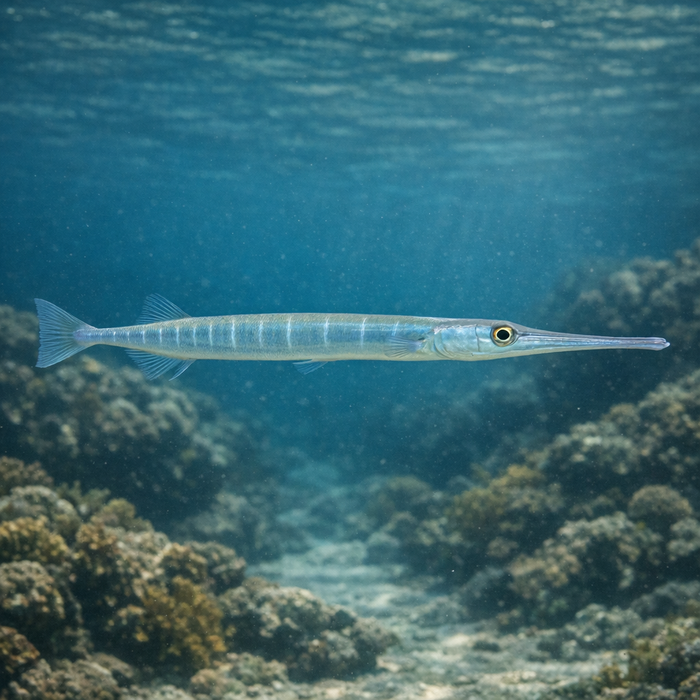
Red Cornetfish (Fistularia petimba): A Bold, Memorable Hook LineIntroductionMeet the long, weird, reefside vacuum cleaner. The red cornetfish looks like a yardstick with fins, capped by a trumpet-shaped snout and a tail filament that screams science project. Most anglers bump into one at night under dock lights or along a reef edge, then immediately wonder what they just pulled from the deep. This profile lays out the real red cornetfish facts without the fluff.What Makes the Red cornetfish Unique?Start with shape. The red cornetfish is so outrageously elongated it makes needlefish look chunky. That long, tubular snout isn't decoration; it's a precision suction rig that snaps open and inhales prey before they blink. Then there's the tail filament, an extension of the lateral line. It's not a streamer for flair. It's a water-vibration sensor, letting the fish read the room like sonar. Add chameleon-like color shifts from coppery red to gray-brown and you've got a master of stealth that's built for the ambush game.Habitat & Global RangeIf your question is red cornetfish habitat, think warm water edges. They haunt coastal reefs, dropoffs, ledges, and the dim space where sunlight fades to blue-green. You'll see them gliding along reef faces, sliding over sandy corridors, and occasionally roaming deeper slopes. Their distribution is broadly tropical and subtropical across much of the globe, so you might meet one in the Atlantic, Indian, or Pacific if you poke around the right structure. They can be surprisingly pelagic at times, ghosting over open water, but reefs and adjacent slopes are home base.Behavior & TemperamentThe red cornetfish is a specialist at slow-motion stalking. They'll hang motionless, pivoting with tiny pectorals, then glide like a whisper toward baitfish. When they strike, the jaw flares and creates a vacuum gulp. They often tail bigger fish, using them as mobile blinds. At night, they get bolder around lights where small bait stacks up. Hook one and you won't get blistering runs; it's more of a wobbly, resistant tussle with plenty of leverage lost to that pencil-thin frame. Still, they can shake free if you rush the net and they're notorious for last-second slips.Ecological ImportanceThink of the red cornetfish as a precision predator that trims down small-fish populations around structure. Because they're long and lightly built, they run lean rather than heavy. They feed midwater more than on the bottom, connecting reef microhabitats with the open water food web. That sensory tail filament and stealth posture also make them a useful bellwether: if cornetfish are cruising and calm, the local bait scene is probably balanced and active.Conservation & Environmental PressuresThe species is typically listed as Least Concern, helped by low commercial interest and limited targeted sport pressure. But they still live where human mess piles up. Reef degradation, warming events, and coastal pollution can scramble bait patterns and squeeze the shaded edges they prefer. Night lights around marinas and resorts create artificial feeding zones that change behavior. They're also easily snagged in nets meant for other fish. No crisis headlines here, just the usual reef-life reminder: when reefs suffer, the oddballs and specialists take a hit too.The FishyAF TakeThe red cornetfish is the fish you show your buddies when they ask why you night-fish the pier with micro jigs. It's not a bulldog. It's not a marquee trophy. It's a living magic trick: five feet of almost nothing, a vacuum for a mouth, and a sensory antenna for a tail. If you're collecting species or chasing the strange, few fish deliver a better story. And if you just came here for Red cornetfish facts, here's the cheat sheet: slow, sneaky, structure-adjacent, and way cooler than its weight suggests. Catch one, take a good photo for ID, then let it ghost back into the reef gloom.