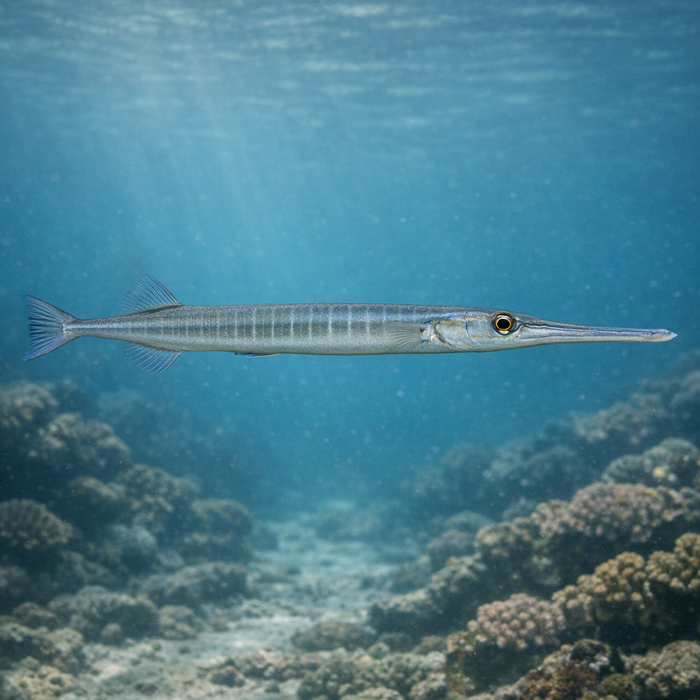
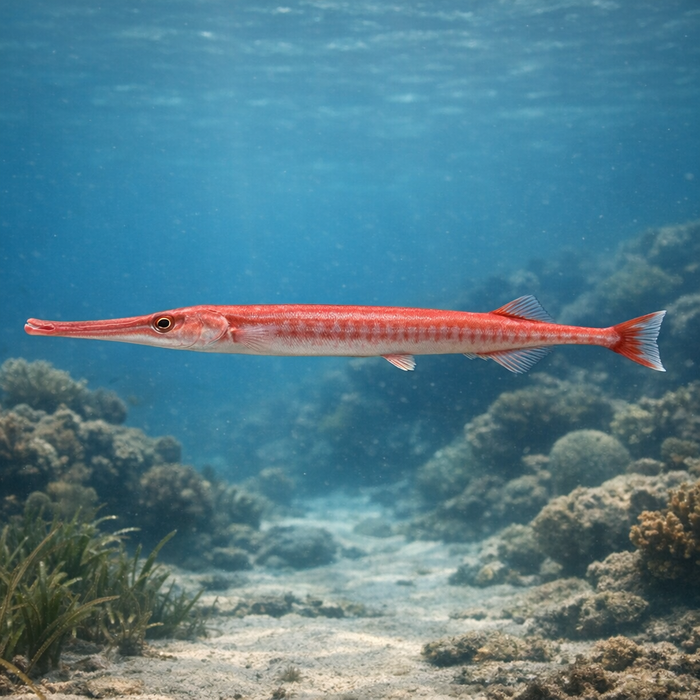
Pacific Cornetfish (Fistularia corneta): A Bold, Memorable Hook LineIntroductionThe Pacific cornetfish looks like a fishing rod grew a mouth and decided it wanted a turn. Long, pencil-thin, and armed with a rigid snout that slurps prey like a vacuum, its a reefside oddball that turns casual bycatch moments into stories. Anglers chasing snappers, jacks, or roosterfish occasionally cross paths with this stealthy predator, and the first reaction is always the same: what on earth is that thing?What Makes the Pacific cornetfish Unique?Two big traits separate this fish from the usual suspects. First, the snout. Fistularia corneta hunts with a narrow, tubular beak that produces potent suction, snapping up small fish and shrimp that wander too close. Second, the tail filament. That fine thread extending off the caudal fin isnt just decoration; its the lateral line carried into a whip-like sensor, boosting awareness of micro-vibrations. Combine those with camo-friendly color shifts and you get a specialist built for quiet, surgical strikes. You wont outmuscle a Pacific cornetfish. Youll out-sneak it.Habitat & Global RangeWhen people ask about Pacific cornetfish habitat, the answer is "edges." Reef edges, kelp or rocky edges, channel drop-offs, marina walls that sit next to sand flats. The species is anchored to the Eastern Pacific: from Southern California through Baja and the Gulf of California, down past Central America to Peru, plus the Galapagos. It prefers shallow to moderate depths with good visibility, slipping between coral, rock, and open pockets of sand. Think inshore clarity with options: the freedom to roam midwater, but the security of cover when its time to disappear.Behavior & TemperamentCall it a patient stalker. The Pacific cornetfish cruises in slow motion, sometimes hitchhiking beside turtles, rays, or bulky reef fish to mask its profile. When the opportunity pops, it lunges just enough to generate suction and the deal is done. Theyre rarely aggressive in the run-and-gun sense. If anything, they spook from crude presentations, especially heavy leaders or clunky hardware flashing in clear water. Most roam solo or in very small loose groups. Dusk and dawn see the best activity, when contrast softens and bait moves up in the water column.Ecological ImportanceAs a slender mid-level predator, the Pacific cornetfish trims the edges of bait schools, controlling small, quick species that bloom around structure. That tail filament lateral line is not just a party trick; it turns the fish into a roaming sensor array, keying into subtle movement that bigger, noisier predators might miss. Their broadcast spawning throws eggs into currents, moving genes around a huge coastline, connecting reef micro-communities in quietly important ways. No headlines, but plenty of function.Conservation & Environmental PressuresThe species isnt high on commercial hit lists, and theres little directed sport pressure. Thats good. But the Pacific cornetfish still depends on clear, healthy inshore waters with functioning reef structure. Coastal development, sediment runoff, and warming events that bleach or knock back reefs will thin their real estate. Because they are visual hunters, chronic turbidity and heavy pollution can kneecap their feeding efficiency. Protected areas and thoughtful coastal zoning matter here, even if this fish wont ever anchor a tourism brochure.The FishyAF TakeIf fish were tools, the Pacific cornetfish would be a precision scalpel inside a pool noodles body. It doesnt smash your drag or leap sky-high; it just makes you dial down, match-the-hatch, and sneak. Youll fish lighter leaders, smaller hooks, and softer retrieves than you wanted to. Do it right and youll watch a long, ghostly silhouette slide in and vacuum your offering like it never happened. If youre here for brute force, pick another page. If you want a strange, elegant reef ninja that rewards patience and finesse, the Pacific cornetfish delivers. And yes, now youve got a few more Pacific cornetfish facts to flex when someone says, "what is that thing?"