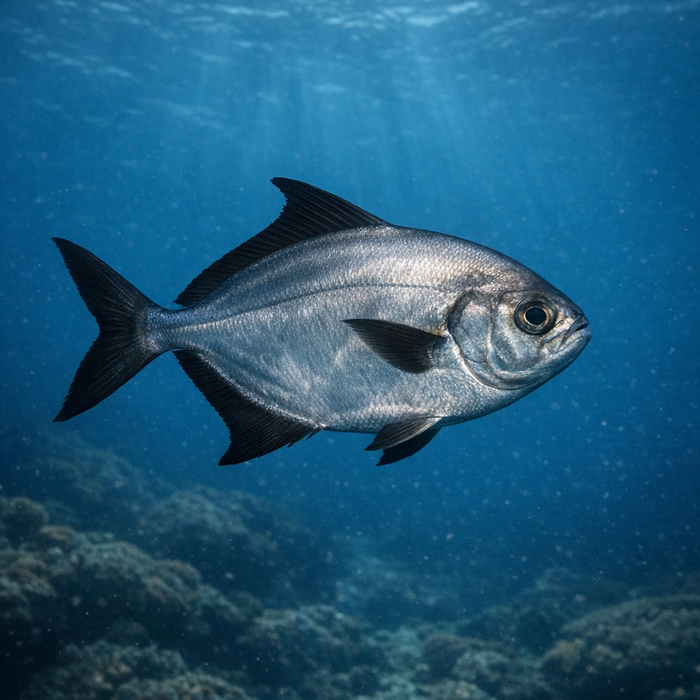
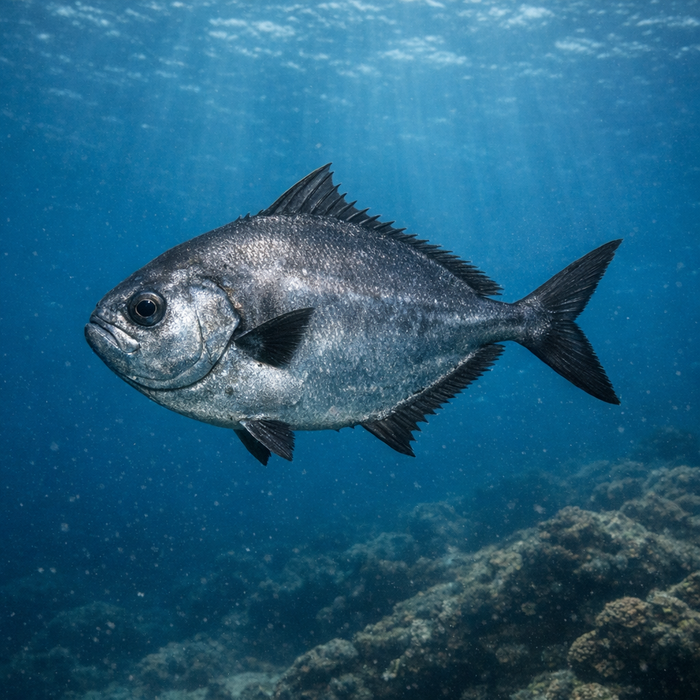
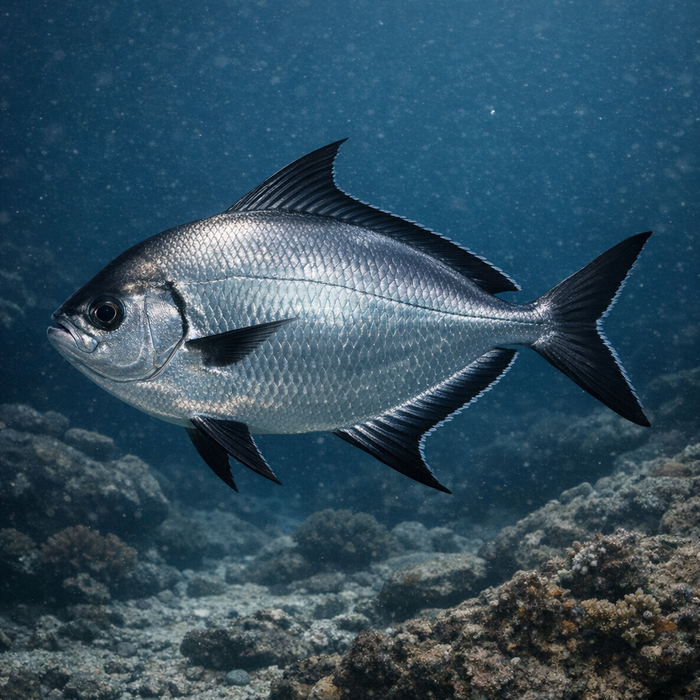
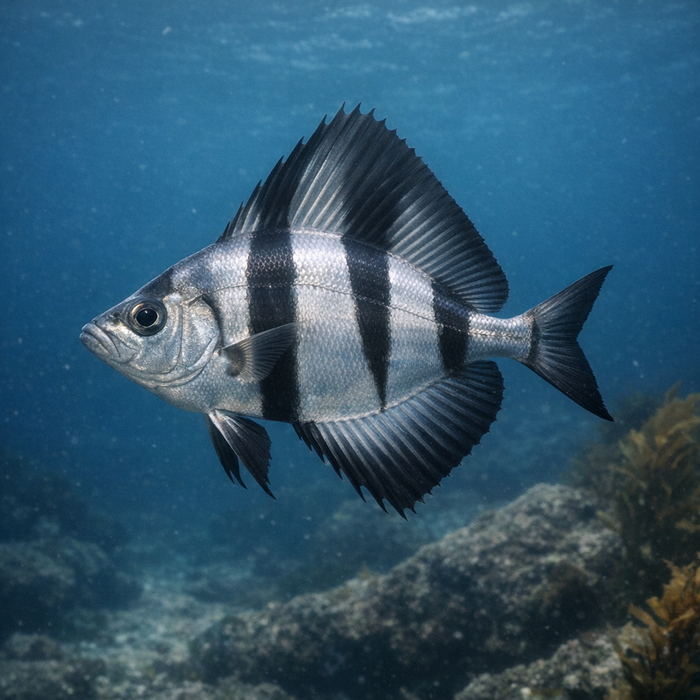
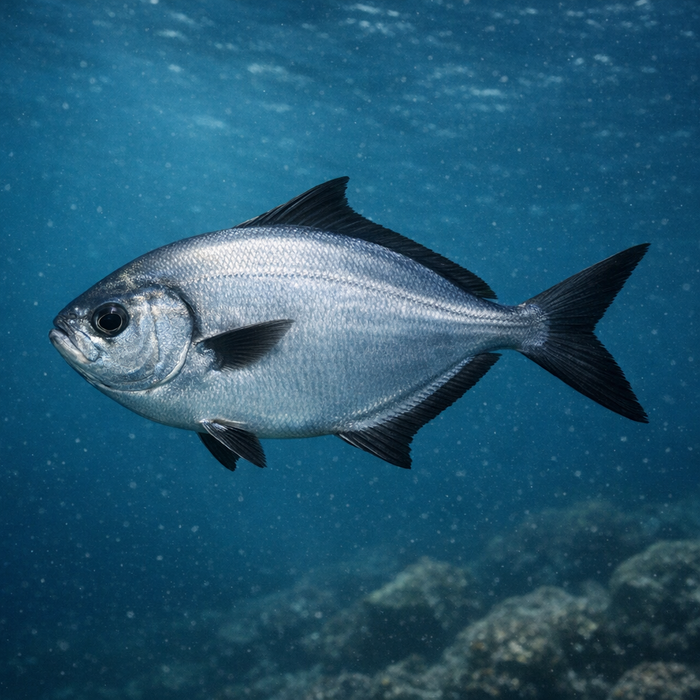
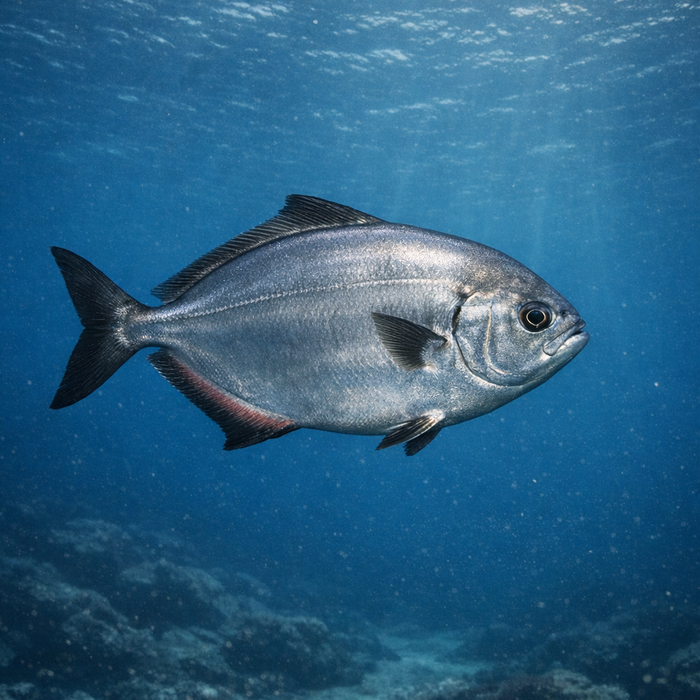
Atlantic Pomfret (Brama brama): A Bold, Memorable Hook LineIntroductionIf you fish offshore long enough, the ocean throws you a curveball. Enter the Atlantic pomfret, a deep-bodied silver slab that slides up from the twilight zone, smashes a jig, and leaves you wondering what just happened. It is not a headline species like tuna or wahoo, but when it shows, everybody on deck crowds the rail. This fish is pelagic, muscular, and undeniably weird in the best way.What Makes the Atlantic pomfret Unique?Two things: the shape and the lifestyle. The Atlantic pomfret looks like a chrome shield with fins, packing big shoulders and long dorsal and anal fin bases that scream midwater power. Then there is the vertical commute. This species rides the nightly elevator, moving hundreds of meters toward the surface after dark and sliding back down by day. Those migrations put it in striking distance for jigs, deep-trolled baits, or a lucky bait rig in the right water column. It is not just another open-water passenger; it is a specialist built for the blue, one reason Atlantic pomfret facts always surprise anglers.Habitat & Global RangeDespite the name, the Atlantic pomfret is a world traveler. Brama brama occurs across temperate belts of multiple oceans, hugging offshore structure like continental slope edges, submarine canyons, and seamounts. Think gradients: temperature breaks, bait-rich fronts, and that shadowy band from the upper to mid mesopelagic layers. In practice, that means you are looking at deep color changes, rips with life, and the perimeters of big underwater features. If you ever needed a quick definition of Atlantic pomfret habitat, it is simple: blue water, deep contours, and moving food.Behavior & TemperamentThe pomfret is a midwater hunter with solid acceleration. It keys on squid and small fish when the light drops and will move long distances to intercept bait pushed by current. Single fish and loose packs are common. It is not a surface chaser by nature, but it will rise high at night around strong lights or dense bait. Hooked fish dig hard, use their flanks, and test your knots with grinding, stubborn circles. They are not the sprinting chaos of a wahoo, but they punish sloppy drag settings and weak hooks.Ecological ImportanceThe Atlantic pomfret is one of those middle-link predators that stitches together deep and shallow energy. It eats vertically migrating squid and fishes, then feeds larger apex players like tunas and billfish. That up-and-down commute moves nutrients between dark water and the epipelagic zone. Its role is easy to miss because you do not see it crashing bait on the surface daily, but in the pelagic food web, it is a key courier.Conservation & Environmental PressuresBrama brama is typically listed as Least Concern, and there is no widespread alarm bell tied to this species right now. Still, it is not immune to modern ocean problems. Bycatch in pelagic longlines and midwater trawls adds up, and shifting oceanography can shuffle the deck on where and when pomfrets gather. Temperature bands and current strength influence their nightly movements, which means climate-driven changes could tweak distribution and encounter rates over time. Good data are thinner than for marquee species, so local experiences vary.The FishyAF TakeThe Atlantic pomfret is the offshore wild card you want on your resume. It is a deep-bodied brawler with a night job and a flair for showing up where gradients get spicy. Anglers who connect usually do it with clean presentations in the right band of water, not because they camped a reef or chummed the beach. When one lands, the deck goes quiet, then loud, then someone says what is that and smiles for real. File it under uncommon, strong, and absolutely worth dropping a jig when the screen blips midwater. If you needed one more reason to keep a heavy metal ready at the canyons, here it is: Atlantic pomfret do not read the plan, they just crash it.