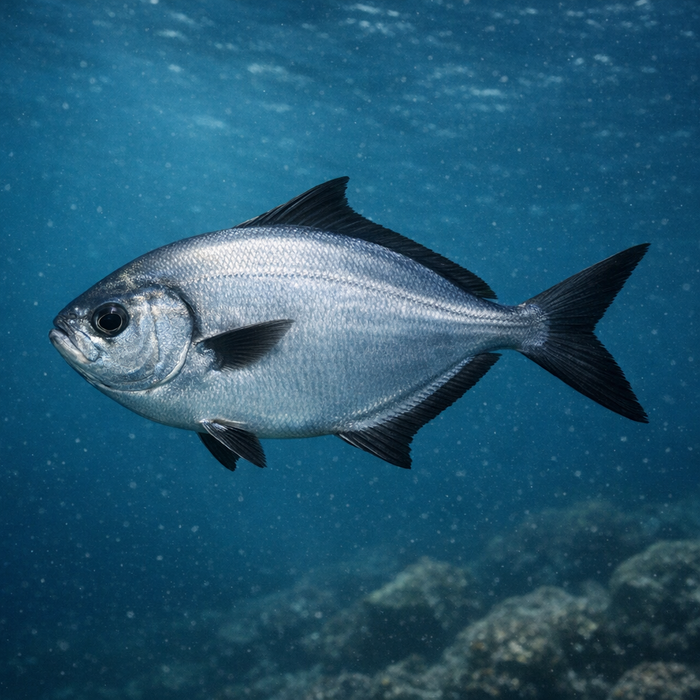
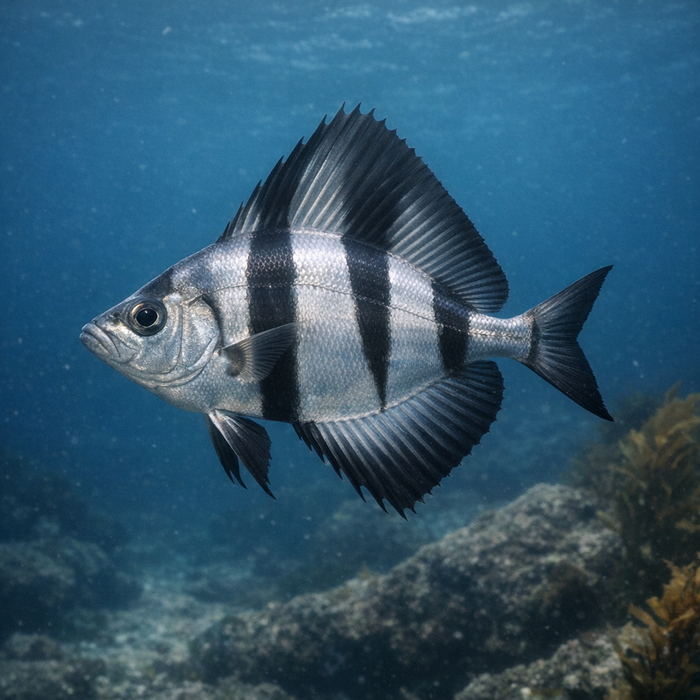
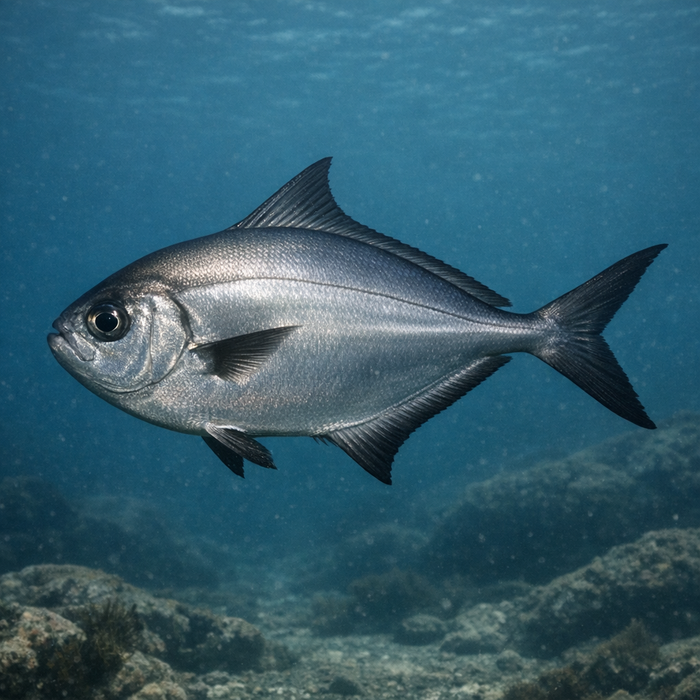
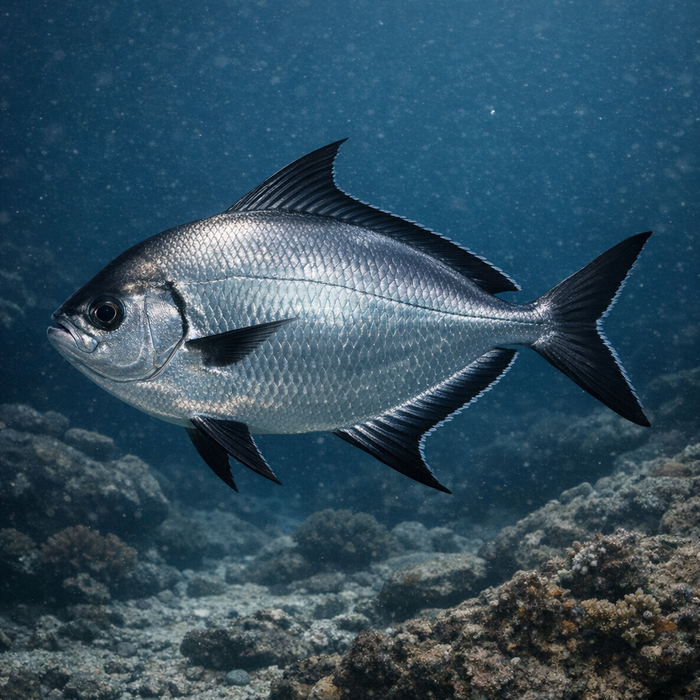
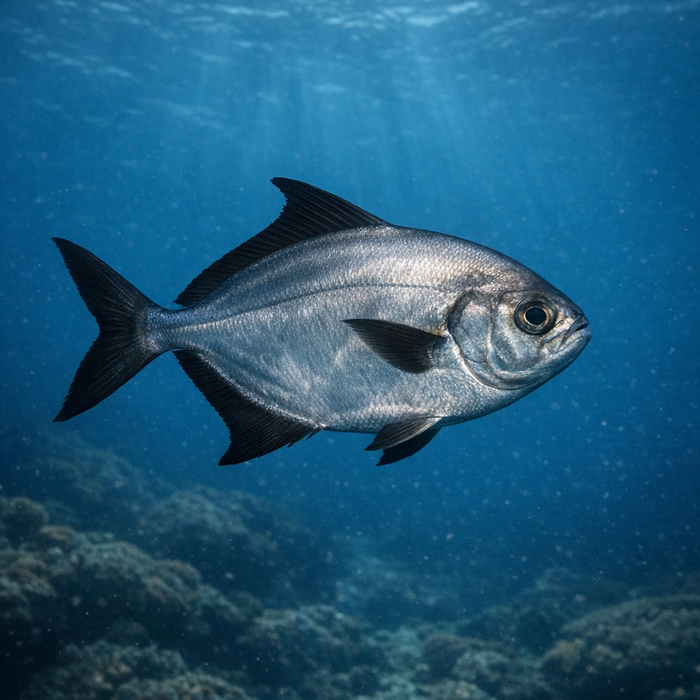
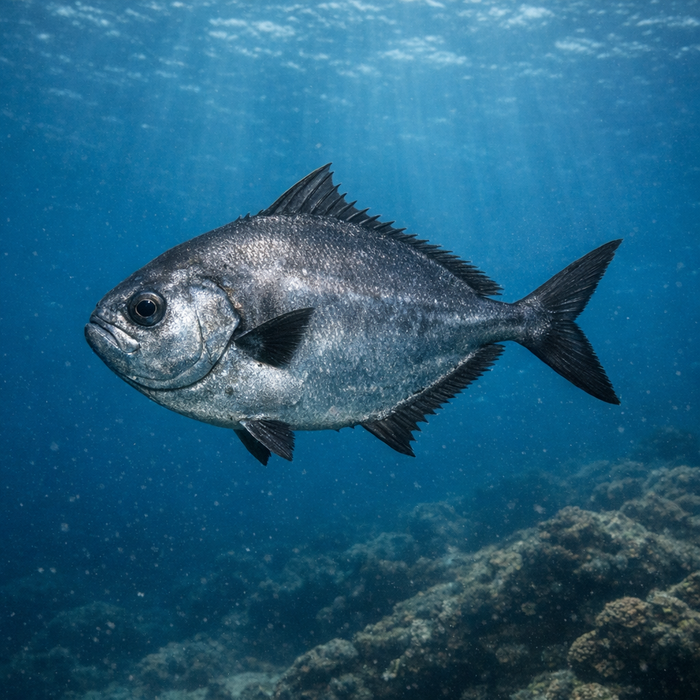
Pomfret (Taractes rubescens): A Bold, Memorable Hook LineIntroductionThe sickle pomfret is the kind of deepwater surprise that makes a slow day offshore snap to attention. One second it's just the ocean, the next there's a slab-sided, gunmetal flash rocketing up from the blue. People in Hawaii call it monchong and treat it like culinary gold. Anglers call it elusive, because the Pomfret lives where sunlight goes to die and reels get hot.What Makes the Pomfret Unique?First, the shape. This fish is deep-bodied, compressed, and built like a chrome dinner plate with wings. Those long, falcate dorsal and anal fins aren't decoration; they're sickle-blades that cut the water cleanly when it charges. Second, the flesh. The Pomfret packs a high-oil, firm texture that stays moist, which is why chefs love it and anglers brag about bringing one home. Finally, presence. Hook one and you'll feel that heavy, stubborn arc as it digs and surges in big, deliberate sweeps, not frantic head shakes.Habitat & Global RangeWhen people ask about Pomfret habitat, think deep pelagic edges. Taractes rubescens roams the dark midwater over continental slopes, seamounts, and offshore banks, especially through the central and western Pacific. Hawaii has a legit reputation for monchong because the islands sit amid ideal structure, with current washing rich water across steep drop-offs. The fish cruises hundreds to thousands of feet down, often pushing higher in the column at night. You won't spot them daisy-chaining on the surface beside the boat; this is a below-the-thermocline operator that keeps its business away from the sun.Behavior & TemperamentThe Pomfret is a methodical predator, more bulldozer than greyhound. It doesn't go in for acrobatics or blistering runs; it leans hard and tries to win with leverage. The big eyes and dark coloration fit a low-light hunter that tracks bait where the ocean starts to feel bottomless. Schools are usually small or loose, so you're not working vast blizzards of fish like tunas. Still, get your rig in the right band of water and you can encounter doubles as a few fish work the same contour.Ecological ImportanceDeep-scattering layer players like the Pomfret move energy between zones we barely see, pushing midwater forage into predators and people. They're part of a quiet economy along slopes and seamounts, channeling nutrients upward when nightly vertical migrations compress bait. Their role isn't as obvious as reef ambush artists or topwater showboats, but the contributions add up, from feeding apex hunters to fueling regional fisheries grounded in deep-dropping.Conservation & Environmental PressuresTaractes rubescens isn't a headline species for conservation, largely because it's taken incidentally by longlines and targeted by small fleets with deep handlines or electric reels. Data gaps are real. As with many deepwater fishes, life history details are murky, which complicates stock assessments. Climate-driven shifts in currents and oxygen layers can jiggle the deck for species tied to slope habitats. Responsible harvest, clean handling, and not treating big fish as disposable bycatch all help when formal management trails the fishery.The FishyAF TakeIf you're chasing a Pomfret, you're already playing the deep game: patience, precision, and a willingness to grind. This isn't about optics or Instagram flair; it's about believing in a dark zone you can't see and trusting your sounder. Drop clean baits or a glow jig where the slope kinks, manage your angles, and be ready for that heavy dogfight on the way up. Want Pomfret facts? Here's one: it's not common, but when it happens, it flips a whole trip from "meh" to legendary. The fish is beautiful, delicious, and stubborn enough to make you earn it. That's our kind of offshore win.