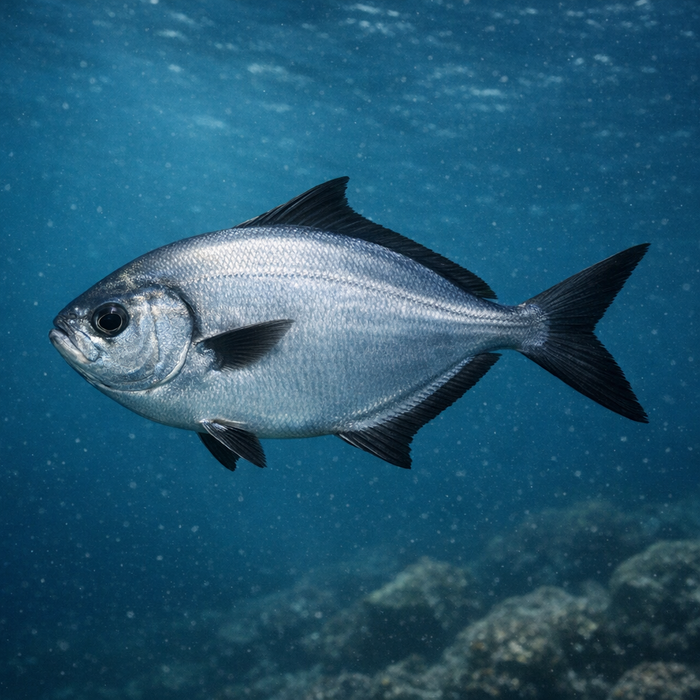
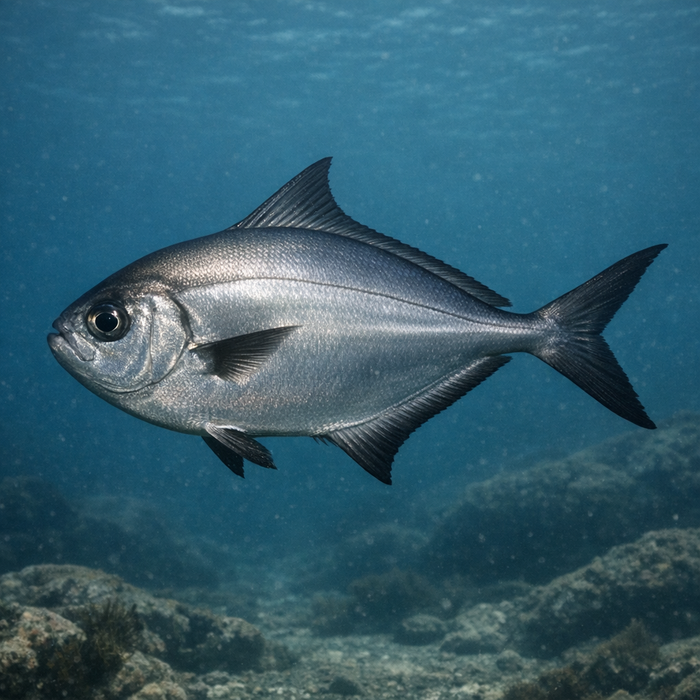
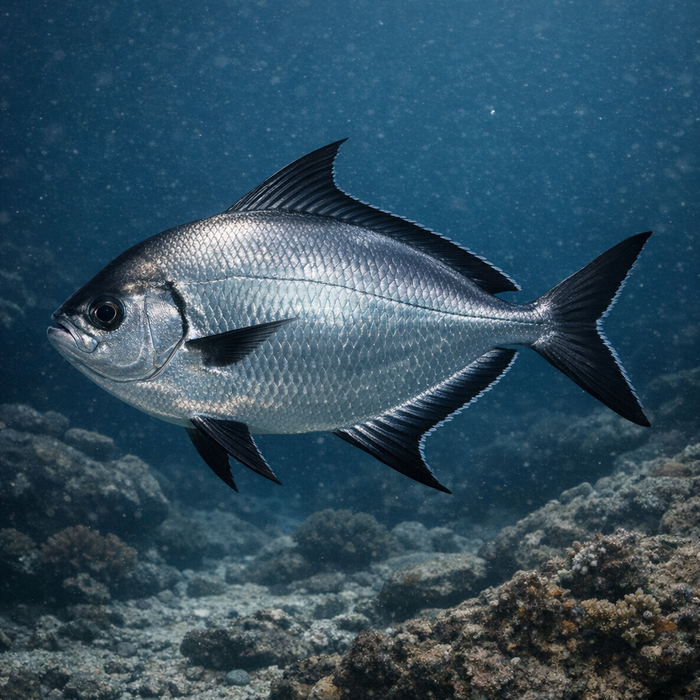
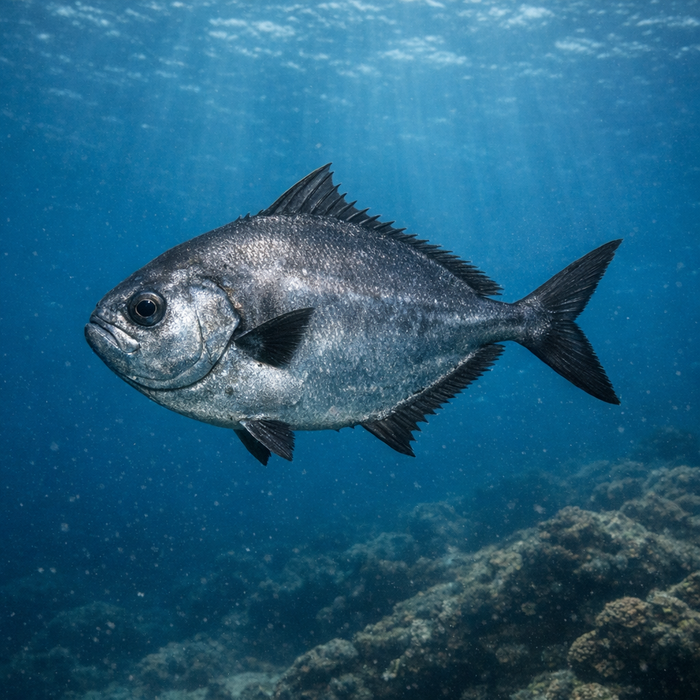
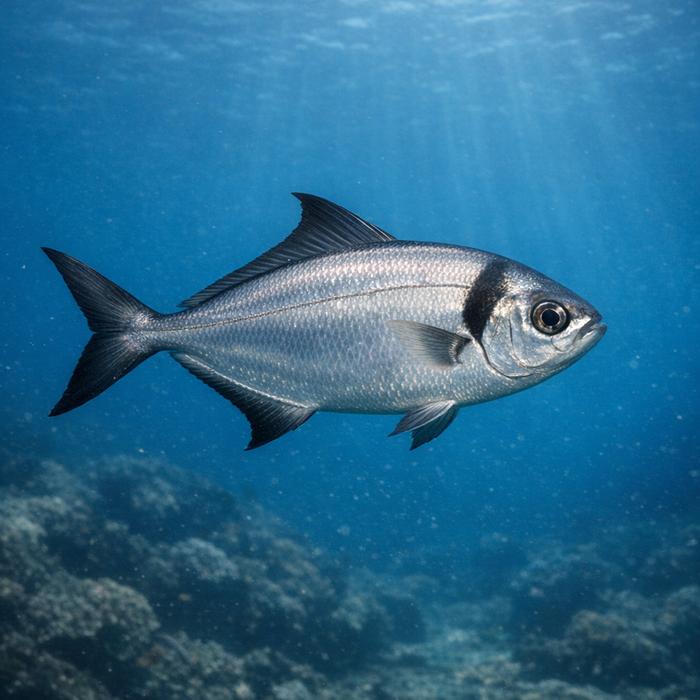
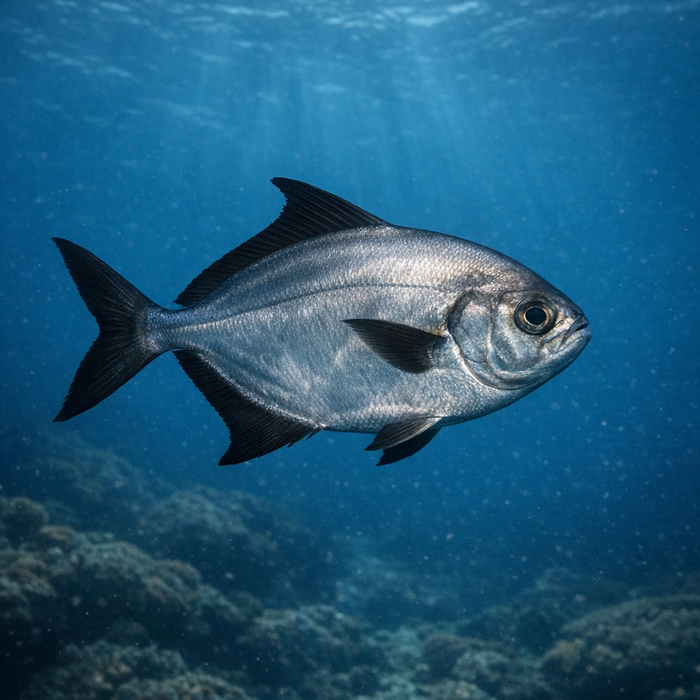
Atlantic fanfish (Pterycombus brama): A plate-shaped oddball with sail-sized fins and serious open-ocean swaggerIntroductionMeet the Atlantic fanfish, the pelagic misfit that looks like a silver dinner plate grew a tail and learned to hustle. You don't target it so much as cross paths with it while doing other offshore things. Still, the Atlantic fanfish is built for bluewater living, and when one appears beside your spread or chomps a jig out of nowhere, it's the kind of curveball that turns a good day into a story.What Makes the Atlantic fanfish Unique?Two outrageous fins. That's the headline. The dorsal and anal fins start way up near the head and arc back like twin sails, giving the Atlantic fanfish a deep-bodied, fan-shaped profile that's impossible to mistake. Those big fins aren't just for looks; they act like control surfaces, letting this fish pivot, brake, and go broadside to flash and confuse would-be predators. Juveniles are even wilder, shadowing jellyfish and flotsam for cover. Add a small, forward-projecting mouth tuned for snatching squid and tiny fishes, and you've got a niche player dialed for the midwater buffet. If you want Atlantic fanfish facts that stick, remember this: it's a pelagic plate with precision steering.Habitat & Global RangeThe Atlantic fanfish keeps it simple: blue water, midwater. It roams the Atlantic from temperate to subtropical zones, including the Mediterranean, riding currents, temperature breaks, and bait layers. Think offshore edges, seamount halos, and that messy, productive zone where clean blue meets greener water. Depth-wise, the Atlantic fanfish works the upper mesopelagic by day and often rises higher at night with the migrating plankton-and-bait parade. Stumble into the right line of Sargassum or a crisp frontal edge, and one might be riding shotgun with the life there.Behavior & TemperamentThey're cruisers, not brawlers. The Atlantic fanfish is a midwater opportunist, more about glide and ambush than blistering sprints. When pressured, it flips broadside to show maximum profile, then slips edge-on and simply disappears into the blue. It's rarely schooled thick, more ones and twos orbiting bait clouds. Nighttime often boosts activity as the deep layers rise, which is why deep-droppers and jig-heads sometimes meet the species under the glow of deck lights.Ecological ImportanceCall it a connector. The Atlantic fanfish munches on small fishes, squid, and pelagic crustaceans, then donates those calories up the food chain to bigger pelagics and billfish. Its jellyfish-hugging juveniles add another twist, cycling nutrients between drifting macrofauna and open-water predators. It's a middling predator that keeps the open ocean's energy highway moving.Conservation & Environmental PressuresThere's no drumbeat of crisis around the Atlantic fanfish at this time, but the ocean it depends on is changing. Shifting currents and temperature regimes shuffle the bait deck. Bycatch in pelagic longlines and midwater trawls likely accounts for most human interactions. Data are thin. For now the species sits in the background, a quiet passenger whose fortunes mirror the health of offshore food webs. Keep an eye on the usual suspects: warming, debris loads, and any fishery that vacuums the midwater strata.The FishyAF TakeThe Atlantic fanfish is proof that not every cool offshore fish needs to be fast or famous to be awesome. It's weird, aerodynamic, and honestly kind of elegant. If you're hunting tuna or swords and a fanfish eats, don't roll your eyes. You just met a specialist that thrives in the same wild edges you should be fishing anyway. Snap a photo, grab a length and weight, and pad your bluewater trivia bank. Curious about Atlantic fanfish habitat or actual Atlantic fanfish facts? Here's the cheat sheet: ride the fronts, watch the bait, and respect the plate with fins. It's not common, but when it shows, you're already where you should be.