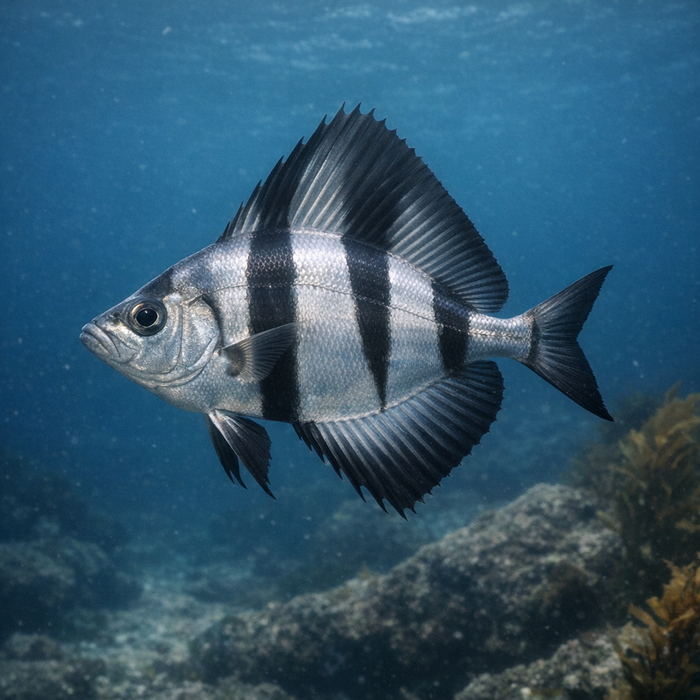
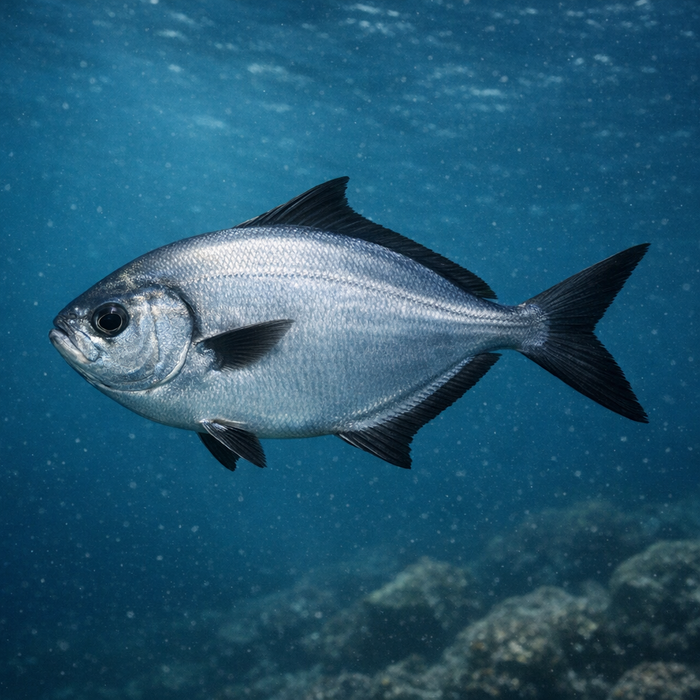
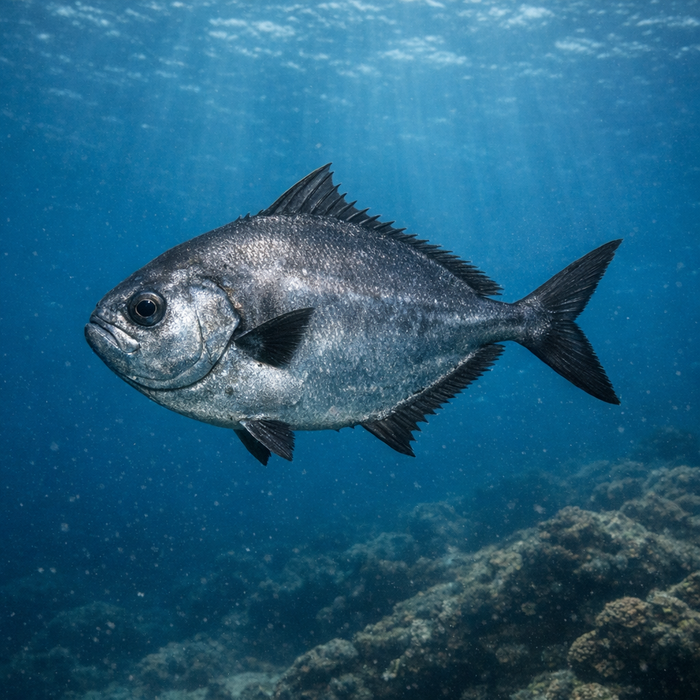
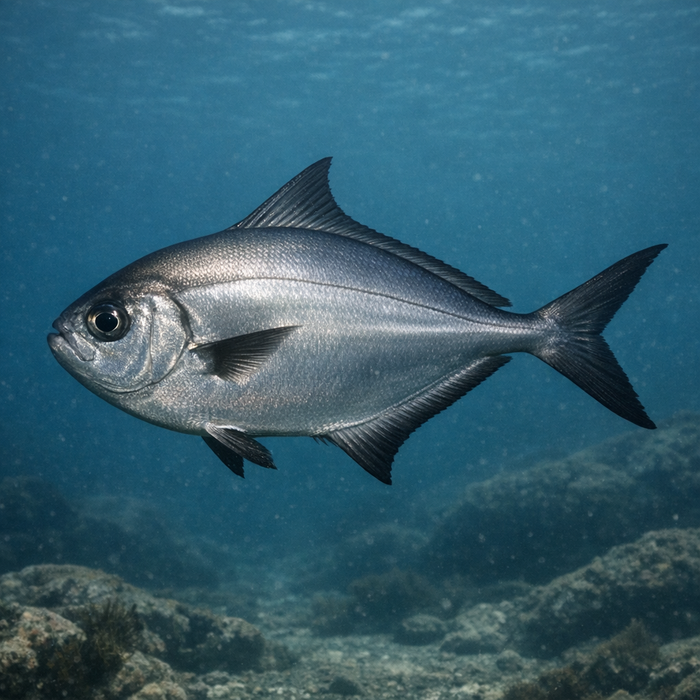
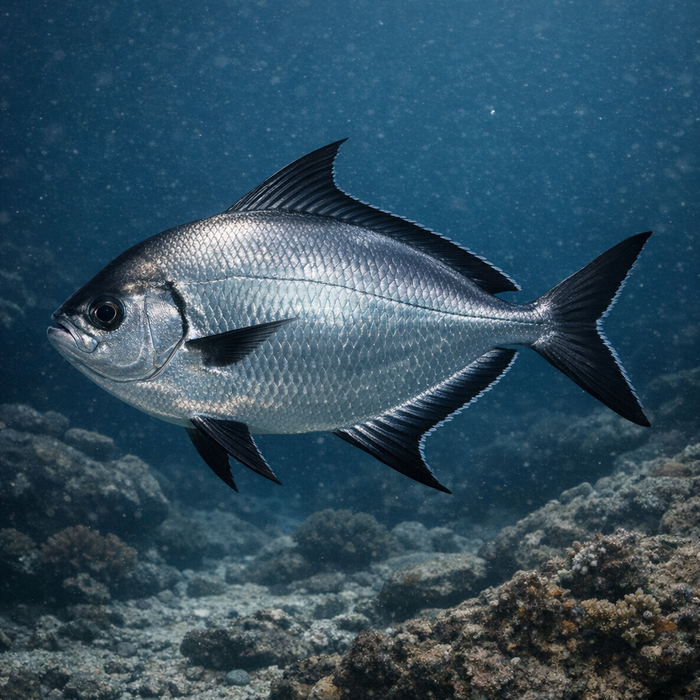
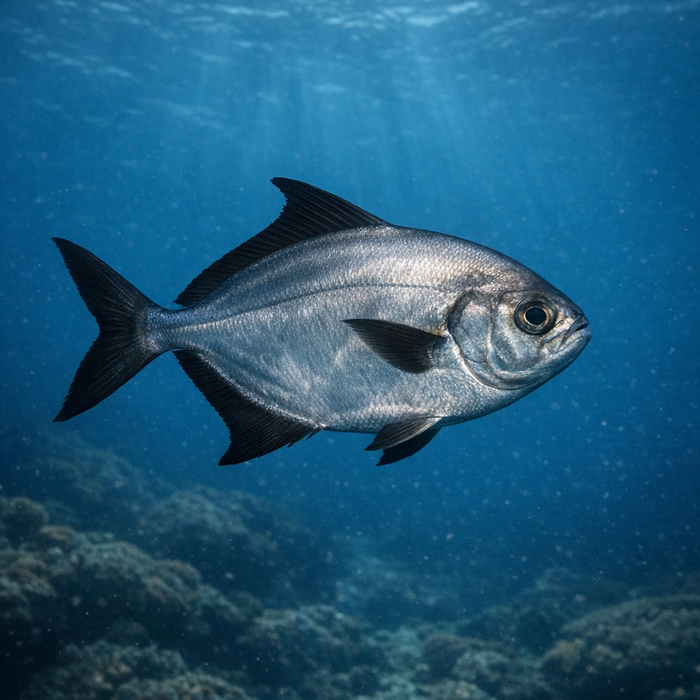
Lesser Bream (Brama dussumieri): Silver dinner plate from the bluewater elevator.IntroductionThe lesser bream is the offshore curveball that photobombs tuna spreads and jig drops. One minute you're thinking skipjack, the next a bright, flat, silver slab pinwheels up from deep water. It's fast, surprisingly strong for its size, and perfectly built for life between surface light and the shadowy midwater. If you want a pelagic side quest with real personality, lesser bream will happily crash the party.What Makes the Lesser bream Unique?Two things jump out. First, the shape: deep-bodied, razor-thin sideways, and loaded with long, scythe-like dorsal and anal fins. It's a hydrodynamic blade designed to hold station in current and turn on a dime. Second, the lifestyle: this species is a midwater commuter, riding nightly vertical migrations to chase squid and lanternfish toward the surface. That elevator routine is why lesser bream suddenly show on sounders, then vanish when they pivot edge-on. Add big, black-rimmed eyes tuned for dim light and you've got a stealthy hunter most anglers meet by "accident."Habitat & Global RangeTalk lesser bream habitat and you're really talking bluewater layers, not reefs or banks. They roam offshore in the Indian and western Pacific basins and across much of Southeast Asia and Oceania, often in the same neighborhoods as skipjack, small tuna, and billfish. They prefer the open ocean and adjacent deep edges where currents stack bait. The typical play is midwater by day, higher in the column at night, especially around floating debris, FADs, and anchored lights. Currents, upwellings, and temperature breaks concentrate prey, so those same ocean textures concentrate lesser bream.Behavior & TemperamentThe lesser bream is a schooling opportunist with quick-burst speed and serious glide. It tracks bait loosely, not glued to structure, and responds to both scent and flash. You'll see them slash small baits, grab a jig mid-fall, or smack a trolled feather meant for something burlier. They're not spooky like inshore fish, but they can be infuriatingly here-then-gone because midwater packs move fast and tilt out of sonar. Hooked fish fight clean, with tight circles, short sprints, and plate-like resistance that taxes light tackle.Ecological ImportanceThis species is a key courier between the deep scattering layer and the rest of the food web. By raiding squid and mesopelagic fishes at night and getting raided by larger predators in turn, lesser bream help shuttle energy upward. Tuna, marlin, sharks, and even marine mammals treat them as snackable silver calories. They're not headliners, but take them out and the bluewater buffet gets thinner and weirder in a hurry.Conservation & Environmental PressuresLesser bream show up in commercial catch as bycatch on longlines, purse seines, and drift gear targeting tuna and squid. Stock status data are patchy, and the species isn't among the best-studied pelagics. That said, wide distribution and fast midwater lifestyles offer some resilience. Pressures include incidental harvest, plastics in the open ocean, and warming seas that shuffle prey layers. Because lesser bream aren't the main target, management often ignores them, which means data-poor decisions by default. It's not a five-alarm fire, but it deserves watchful eyes.The FishyAF TakeWe like the lesser bream because it's honest bluewater: no pomp, just flash and function. It shows when currents flip the switch, eats what looks alive, and leaves before you've bragged to the crew. If you're offshore chasing bigger names, keep a jig ready and your spread versatile. When a school of dinner plates blitzes the midwater, grab the moment. For anglers compiling real lesser bream facts or scouting lesser bream habitat, the tip is simple: think current lines and night lifts. It's a pelagic cameo worth applauding.