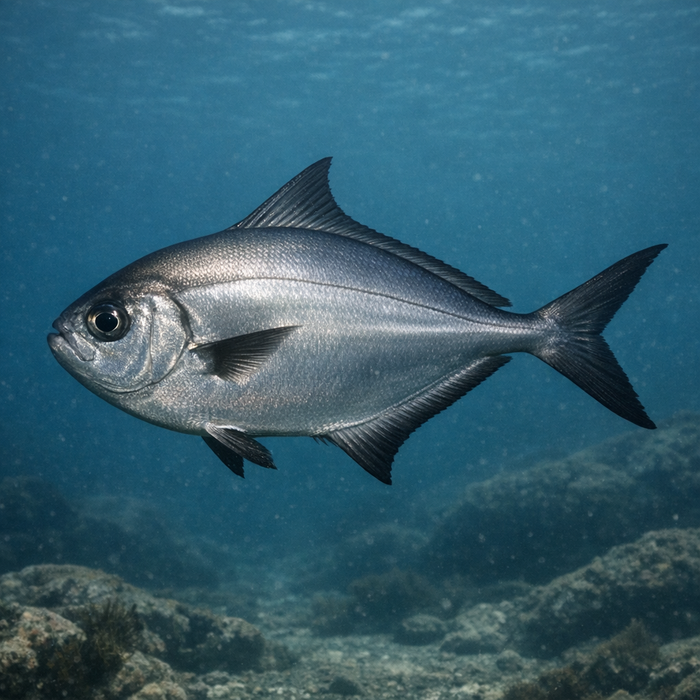
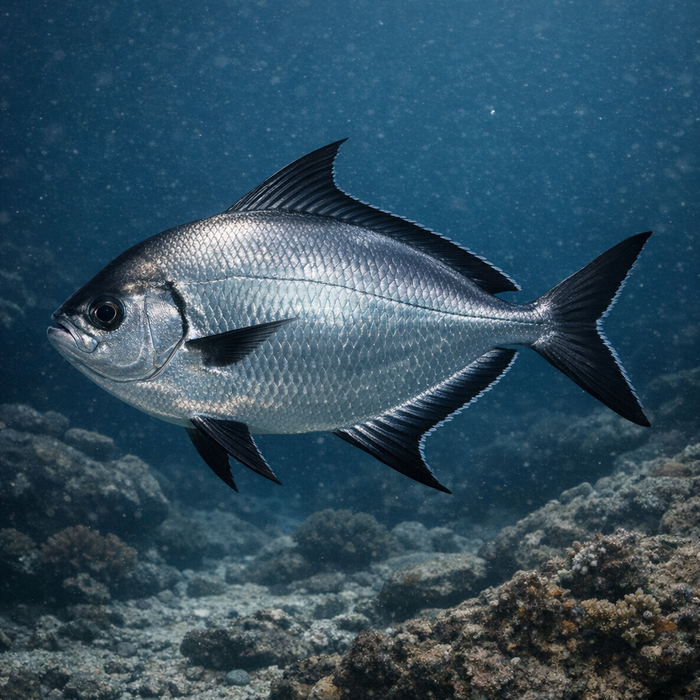
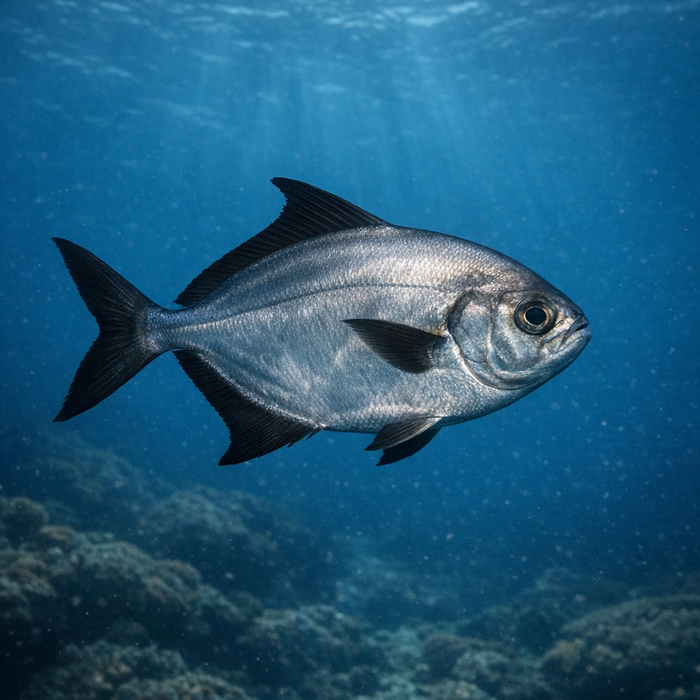
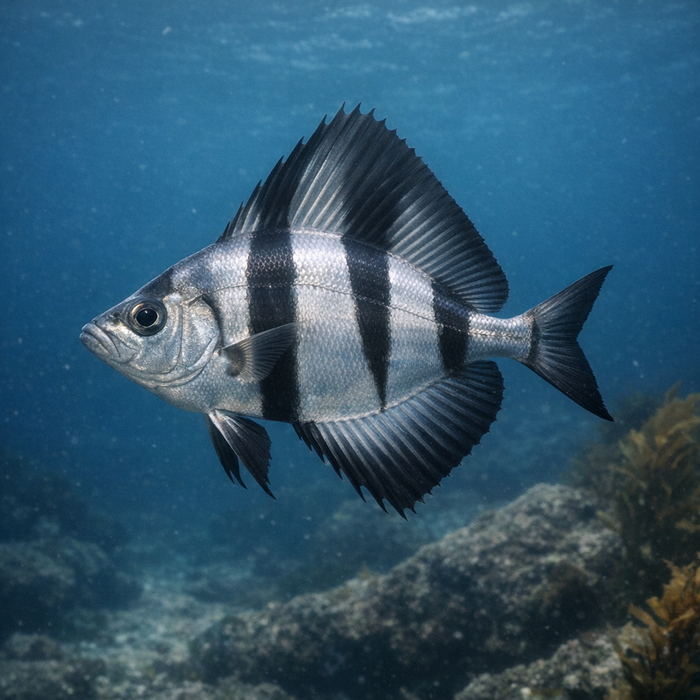
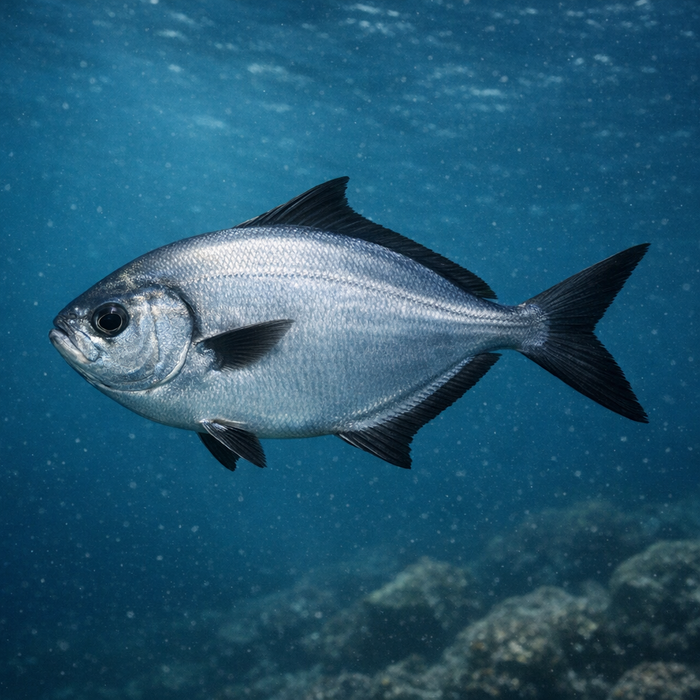
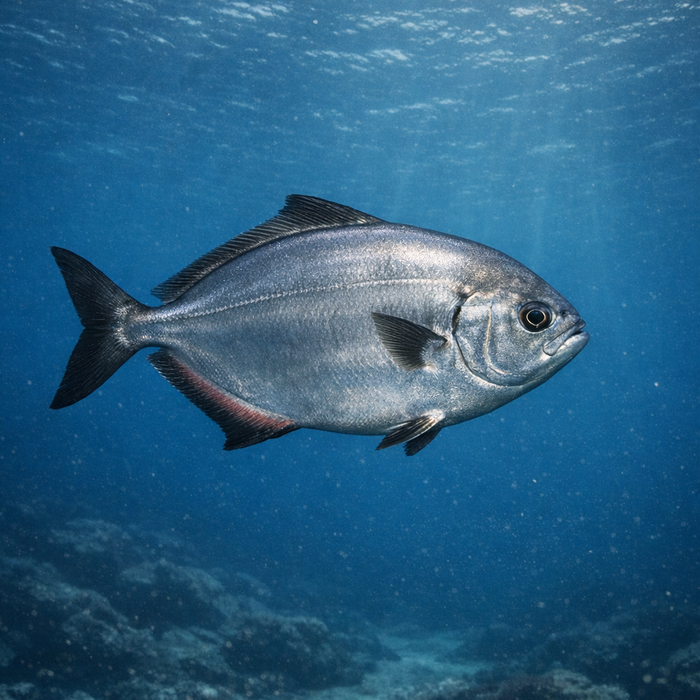
Rough Pomfret (Taractes asper): A Bold, Memorable Hook LineIntroductionThe rough pomfret is that surprise guest at the offshore party who shows up dressed in black armor and swings hard. You don't plan a trip for it, but when one crashes the spread or smashes a jig mid-drop, everyone wakes up. This deep-bodied bruiser packs a lot of fight into a compact slab, and its sandpaper-tough skin gives away the name before you even ask. If you're chasing bluewater oddities and want real Rough pomfret facts without fluff, you're in the right place.What Makes the Rough pomfret Unique?Start with the hide: those gritty ctenoid scales feel like 40-grit paper and can scuff leader fast. The profile is all muscle-short, tall, and thick-with a jet-dark finish that can look almost metallic at sea. Unlike headline pelagics that live fast at the surface, the rough pomfret is a midwater operator, just as happy shadowing a floating log as prowling a seamount's blue edge. Hook one and you'll get a stubborn, vertical fight, a deep thump-thump that says you're tethered to something dense and determined.Habitat & Global RangeIf you're wondering about Rough pomfret habitat, think open ocean layers instead of shorelines. Taractes asper roams tropical and warm-temperate waters worldwide, wandering between the surface and a few hundred feet down. They often stage around FADs, current lines, and offshore structure like banks and seamounts, where bait stacks up and the food chain tightens. Their range is truly bluewater, so finding them has more to do with currents, temperature breaks, and midwater bait than any coastal landmark.Behavior & TemperamentThe rough pomfret is opportunistic, not reckless. It feeds on squid and small, fast baitfish, surging upward through the water column when prey gets pinned. They'll whack a chrome jig on the flutter or inhale a drifting strip of squid, then bulldog deep, using that slab body like a brake. Solitary or in loose groups, they aren't fussy about structure, but they do love anything that corrals bait: FADs, weed lines, even trash rafts. Low light perks them up, and steady current is almost always a green light.Ecological ImportanceIn midwater food webs, rough pomfret sit as efficient predators and equally efficient meals for bigger pelagics. They convert squid and small fish into dense protein for tunas, sharks, and billfish, moving energy up the ladder. Their habit of keying on convergences and floating objects turns ocean flotsam into mini ecosystems. That rough hide isn't just tough-it limits parasite load and physical damage in a zone where speed and abrasion are daily business.Conservation & Environmental PressuresYou won't see the rough pomfret on conservation posters, but it shares the same risks as many offshore wanderers. Pelagic longlines and driftnets scoop them as bycatch. Floating plastics can masquerade as habitat, concentrating life but also trash. Climate-driven shifts in currents and temperature can reorganize the midwater highways that move prey-and pomfrets-around the globe. Formal assessments lag behind the glamorous species, so anglers' reports and clean documentation matter more than usual for understanding trends.The FishyAF TakeThe rough pomfret is bluewater jazz: not the headliner, but when it riffs, everyone listens. If you're the type who chases seamount edges, tickles FADs with metal, and lives for curveball hookups, this fish is your jam. It's tough, it's pretty in a gothic way, and it hits like a truck when the jig stalls just right. You won't catch a pile, but one quality specimen can make the day. For searchers who love an underdog pelagic, the rough pomfret is a satisfying, slightly mysterious checkmark on the list-and a slab of underrated sashimi back at the dock.