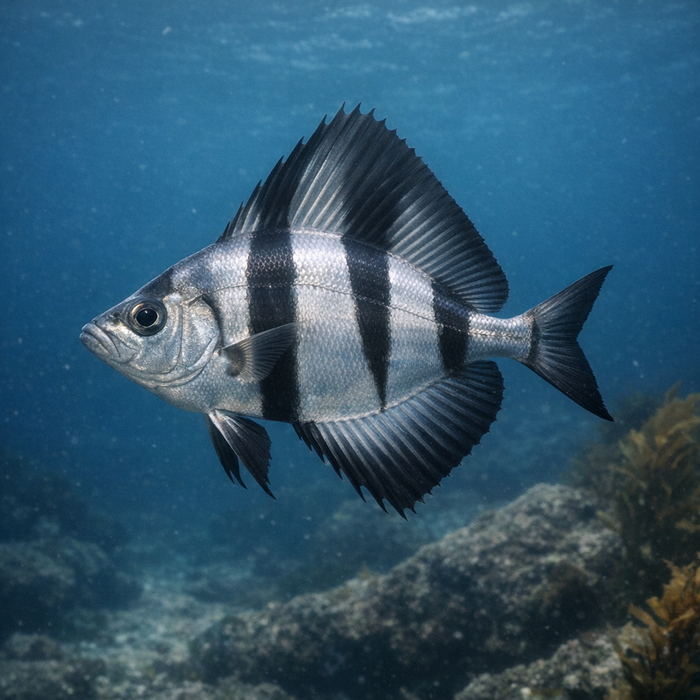
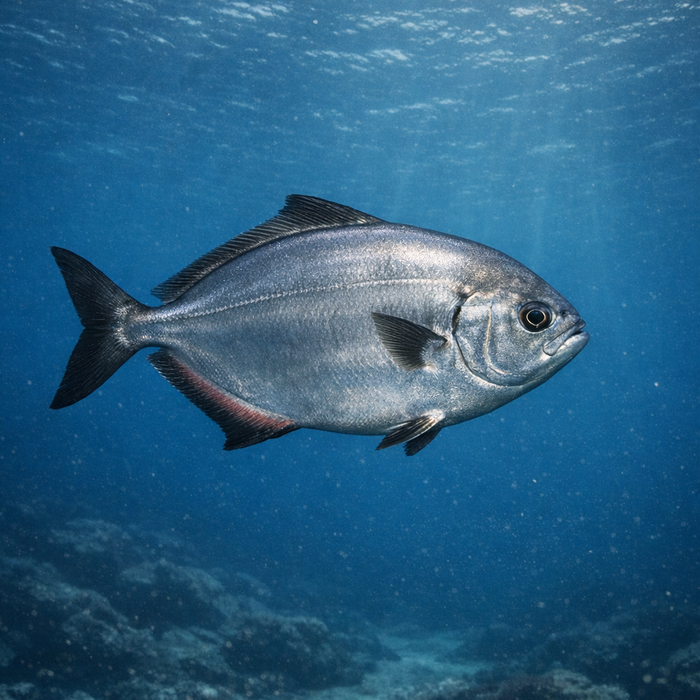
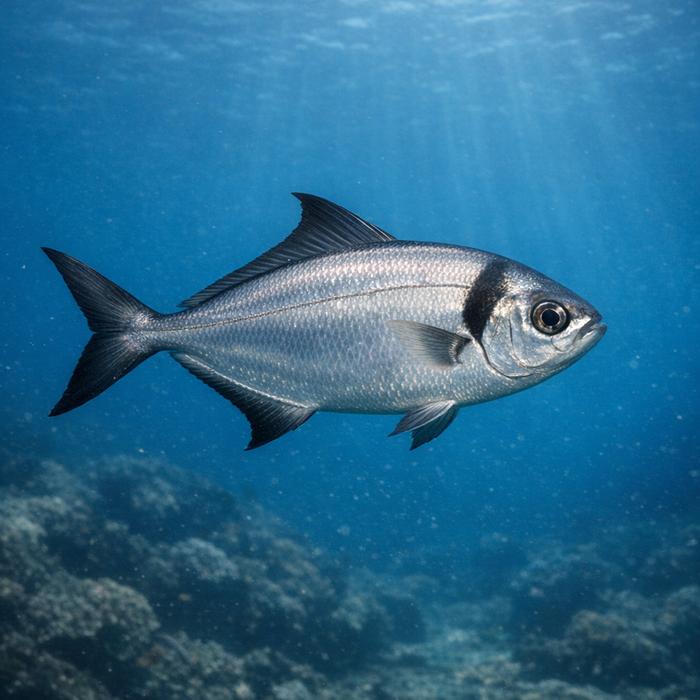
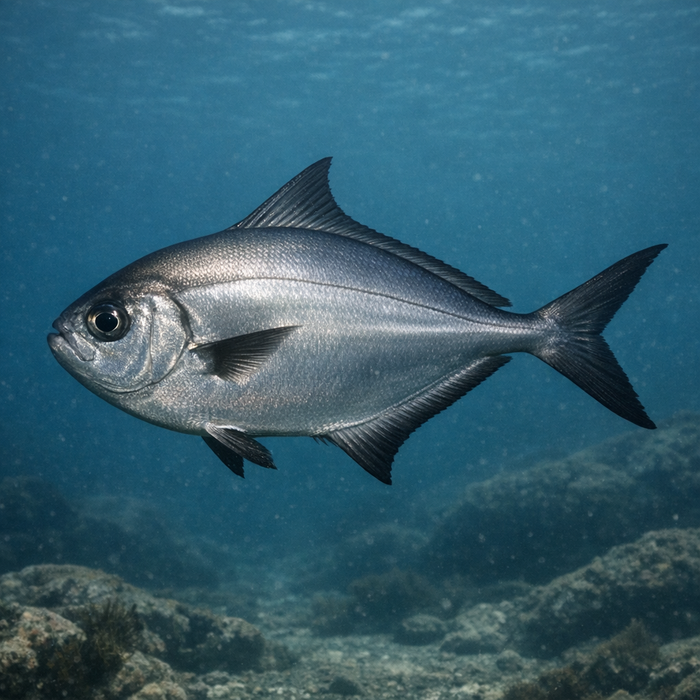
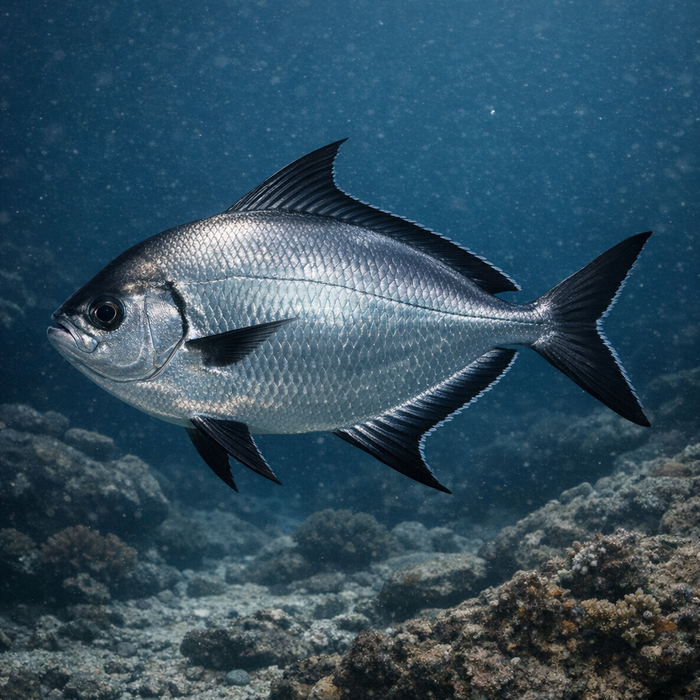
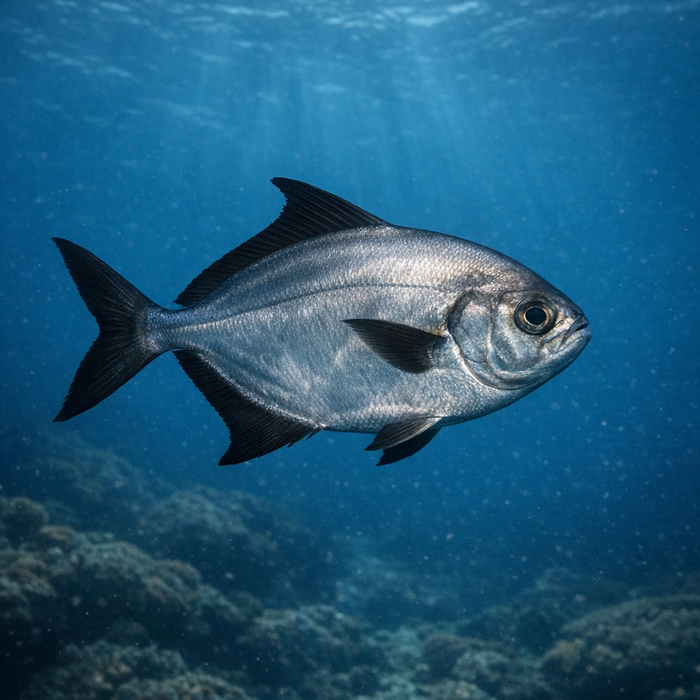
Pacific pomfret (Brama japonica): A Bold, Memorable Hook LineIntroductionThe Pacific pomfret is that chrome dinner plate streaking through the midwater like it stole something. It is not a headline celebrity like tuna or marlin, but when one hits a jig, you instantly respect it. This pelagic wanderer runs the cool corridors of the North Pacific, rising at night to feed and sulking deep by day. For anglers who love weird, open-ocean surprises, the Pacific pomfret delivers.What Makes the Pacific pomfret Unique?Start with the shape: tall, deep-bodied, and built for stability, with long dorsal and anal fin bases acting like twin keels. Add a mouth lined in smoky black and small, grippy teeth tailored for squid and lanternfish. Then there is the routine: Pacific pomfret power through nightly vertical migrations, climbing hundreds of feet under darkness to slash bait along slicks, rips, and temperature breaks. It is a specialized midwater player that shows up when pelagic food factories fire. If you are digging for Pacific pomfret facts, here is the closer: they can be thick as thieves one year and ghosts the next, tracking climate-driven shifts across entire ocean basins.Habitat & Global RangeIf you are mapping Pacific pomfret habitat, think North Pacific highways: Japan and the Kuril-Kamchatka region across the subarctic gyres to Alaska and down the American West Coast in productive years. They favor cool, nutrient-rich water and gravitate to convergence zones, eddies, and fronts. Depth is a moving target. By day, fish often hold deep in dim layers; at night, they ghost upward to feed near the surface. They are true open-ocean fish, occasionally sliding within range of deep offshore canyons and current edges that brush continental margins. Structure matters less than the interplay of temperature, current, and bait.Behavior & TemperamentPacific pomfret are roamers first, schoolers second. When bait concentrates, they stack and blitz with tidy efficiency. Aggression spikes at night around floating lights, glow jigs, or tight temperature breaks. They are not tackle-destroyers like wahoo, but on midweight gear they pull clean and stubborn, with a strong first run and deep circles near the boat. Presentation is less about finesse and more about intersecting their depth and timing. Hit the right water column at the right moment and they eat decisively.Ecological ImportanceMidwater is the ocean's conveyor belt, and the Pacific pomfret rides it hard. They connect energy from plankton-fueled production zones to larger predators by hammering lanternfish, small squids, and other mesopelagic forage. Their diel migrations move nutrients vertically, and their broad range ties together food webs from Asia to North America. They are also frequent incidental catch on high-seas gear, making them a useful indicator of pelagic community shifts.Conservation & Environmental PressuresThe species is not on many regulatory posters, but that does not mean it is bulletproof. Historic high-seas driftnet fisheries raked vast numbers before bans curbed effort. Today, Pacific pomfret still intersect longlines and other pelagic gears as bycatch. Their distribution and abundance swing with ocean climate cycles, so warming, marine heatwaves, and shifting currents can shuffle where and when they appear. Data are patchy compared to marquee pelagics, which makes continued monitoring worthwhile.The FishyAF TakeThe Pacific pomfret is the offshore curveball you did not know you wanted. It is the kind of fish that converts a slow tuna night into a story, especially when the graph lights up midwater and a small metal jig gets freight-trained. It rewards anglers who read water and chase edges: temperature breaks, nighttime lights, and bait marks hovering in the 150 to 400 foot zone. If you are chasing variety, it is a premium box-checker with legit table appeal and a knack for showing up when you are paying attention. Not the loudest fish in the ocean, but absolutely one of the most satisfying surprises.