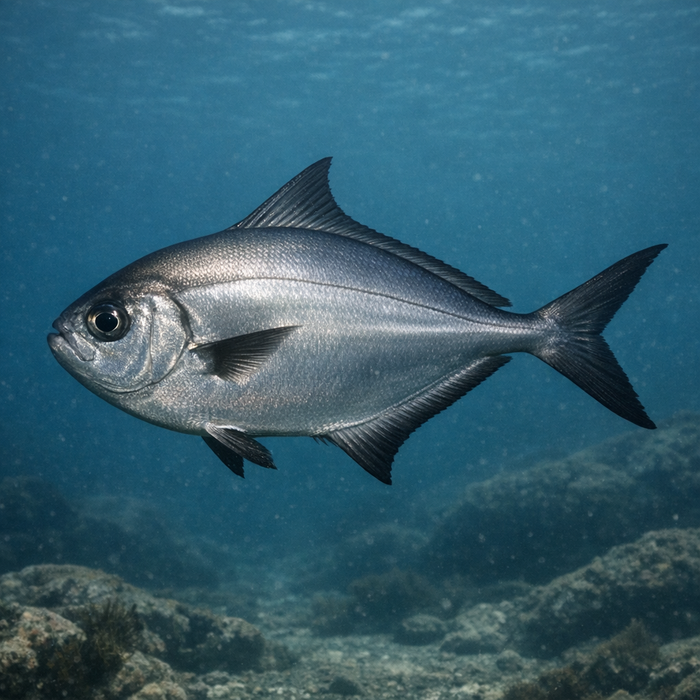
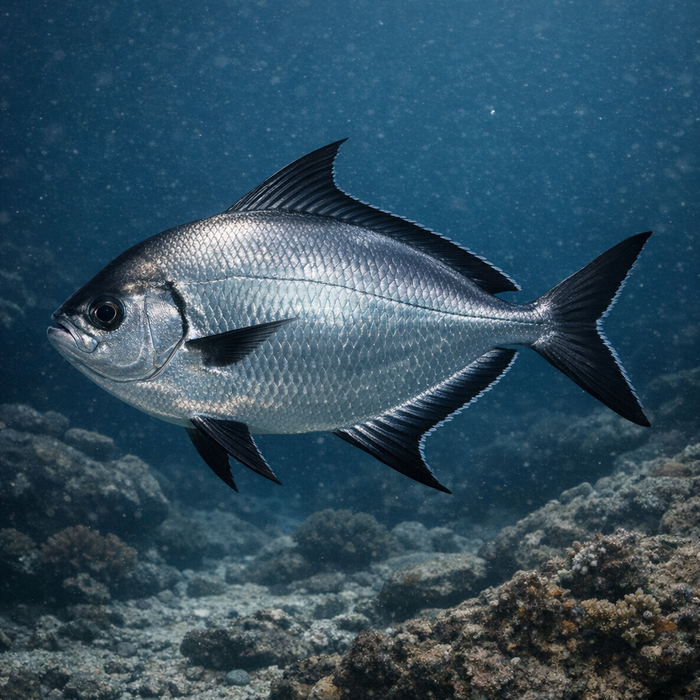
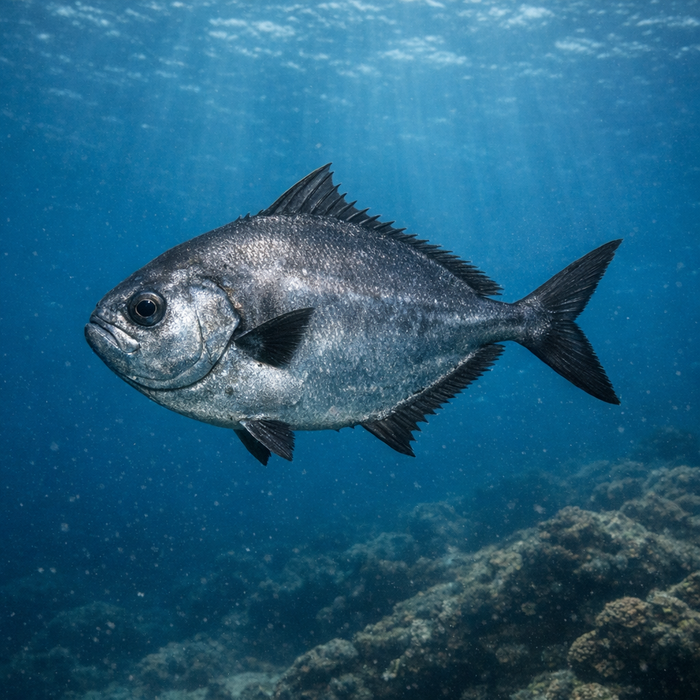
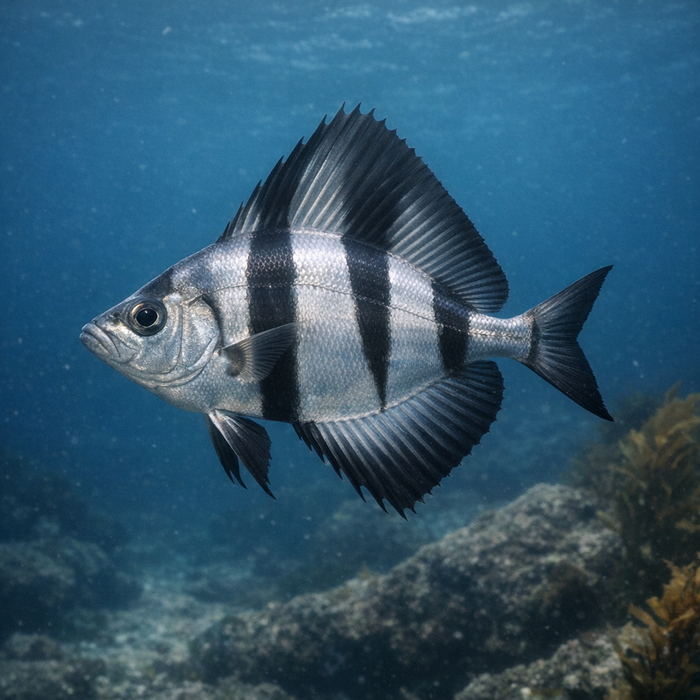
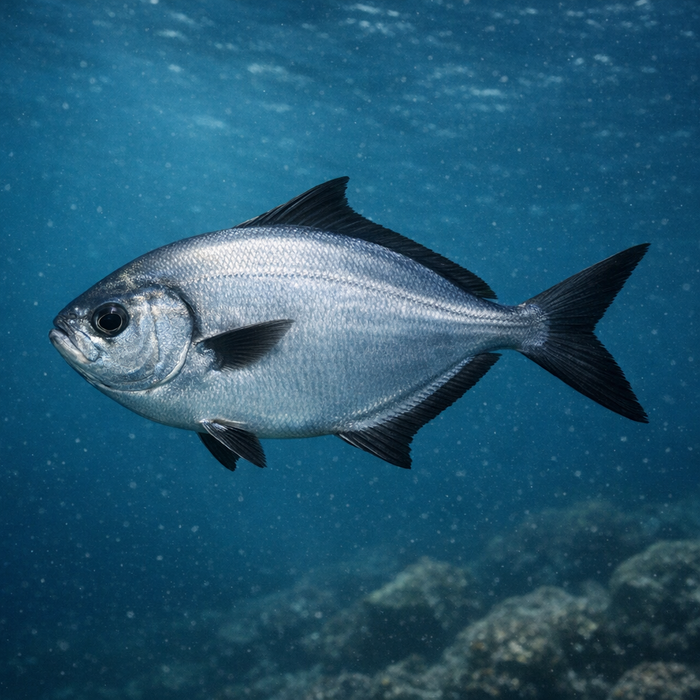
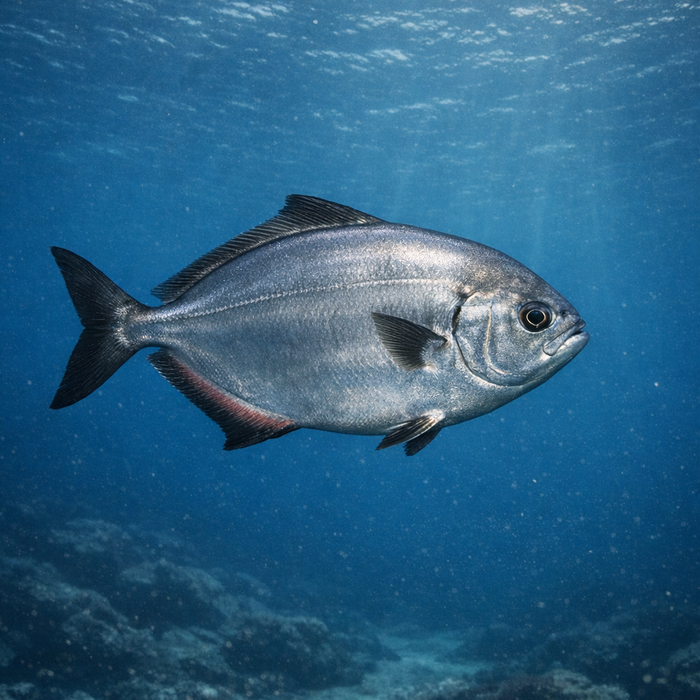
Caribbean pomfret (Brama caribbea): A silver, deep-sea dinner plate with jet-fuel staminaIntroductionThe Caribbean pomfret is that surprise guest on offshore trips: a gleaming slab from the twilight zone that shows up when you're busy chasing something else. It's compact, muscular, and built like a shiny cymbal. Hook one in the dark water between sunlight and abyss, and you'll feel that steady, bulldog grind all the way to the surface. If you're here for Caribbean pomfret facts, you're in the right place.What Makes the Caribbean pomfret Unique?First, that body. The Caribbean pomfret is razor-thin side-to-side but deep from belly to back, all hydrodynamic compromise and leverage. Long dorsal and anal fins run nearly parallel, acting like midwater wings so it can hold steady in ripping currents. Second, the eyes. Big and tuned for weak light, they let this fish operate in the oxygen-thin layers where most predators fade. Third, the strategy. The species roams open water, often making nightly commutes toward the surface to shadow lanternfish and small squid. It's an offshore specialist that doesn't care about reefs, beaches, or fancy structure.Habitat & Global RangeIf you're mapping Caribbean pomfret habitat, think trench edges, deep passes, and the broad blue deserts between. The western Atlantic is its wheelhouse, especially around the Caribbean Basin, the Gulf Stream rim, and major channels like the Windward Passage and the Yucatan Channel. You won't spot them from the pier. They work the midwater column over 300 to more than 1,000 feet, often around current seams, temperature breaks, and bait-rich rips. They're true pelagics with zero interest in your coastal mangroves.Behavior & TemperamentThis fish doesn't rush. It grinds. Hooked pomfrets lean on their tall frames and forked tails, delivering steady pressure without wild aerobatics. Schooling tendencies are mood-driven; you might pluck one from a loose pack or bump into scattered singles. They eat precision targets: slender baitfish and bite-size cephalopods. Many Caribbean pomfret catches align with low light, night drifts, and vertical jig passes that intersect rising bait.Ecological ImportanceIn the offshore food web, the Caribbean pomfret is both hunter and hors d'oeuvre. It converts deep pelagic biomass like lanternfish into protein for larger predators including tunas, billfish, and sharks. That midwater shuttling also moves energy vertically through the water column. Humble? Maybe. But remove these compressed cruisers and the twilight zone's conveyor belt starts to sputter.Conservation & Environmental PressuresThere's no screaming headline here, just quiet caution. The species isn't a heavily targeted sportfish, but it intersects commercial gears and deep-dropping fleets as occasional bycatch. Warming seas can shuffle currents and alter where and when bait stacks. Offshore plastics and sargassum shifts change the drift game for juveniles. Data gaps remain, which means prudent handling and selective harvest habits matter even more.The FishyAF TakeYou won't plan a whole trip around the Caribbean pomfret, but you'll brag when one hits the deck. It's the unexpected extra reel scream at 800 feet, the silver plate that says your spread or jig passed the right bait cloud at the right time. Respect the grind, ice it fast, and enjoy that rich, clean flavor later. The Caribbean pomfret is proof that offshore isn't only about headliners; sometimes the supporting cast steals the scene.