Atlantic white marlin (kajikia albida): A Bold, Memorable Hook Line
Introduction
The Atlantic white marlin is the smallest marlin in the Atlantic and arguably the rowdiest pound-for-pound. Hook one, and you’ll get air show, drag burn, and pure chaos delivered on a glittering blue stage. If you’re shopping for Atlantic white marlin facts, here’s the headline: it demands clean rigging, sharp eyes, and snappy teamwork. Miss any of those, and you’ll be left staring at empty wakes and ghosted baits.
What Makes the Atlantic white marlin Unique?
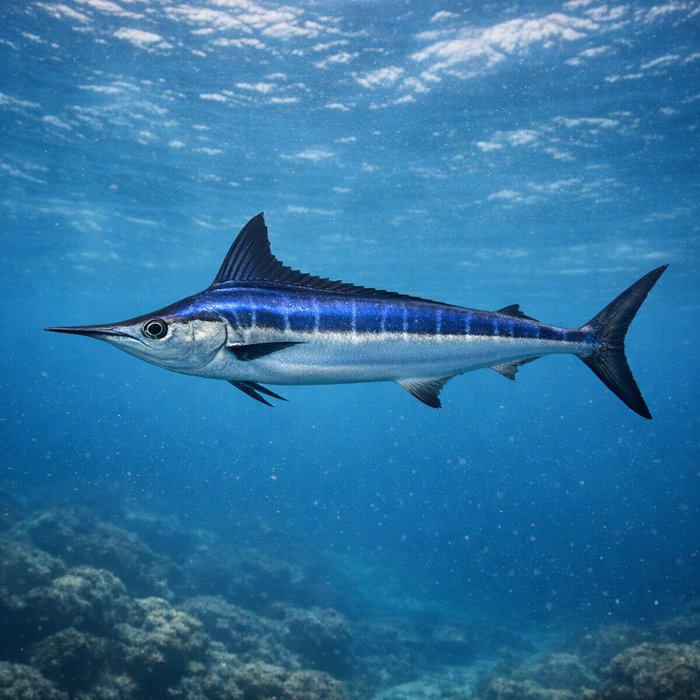
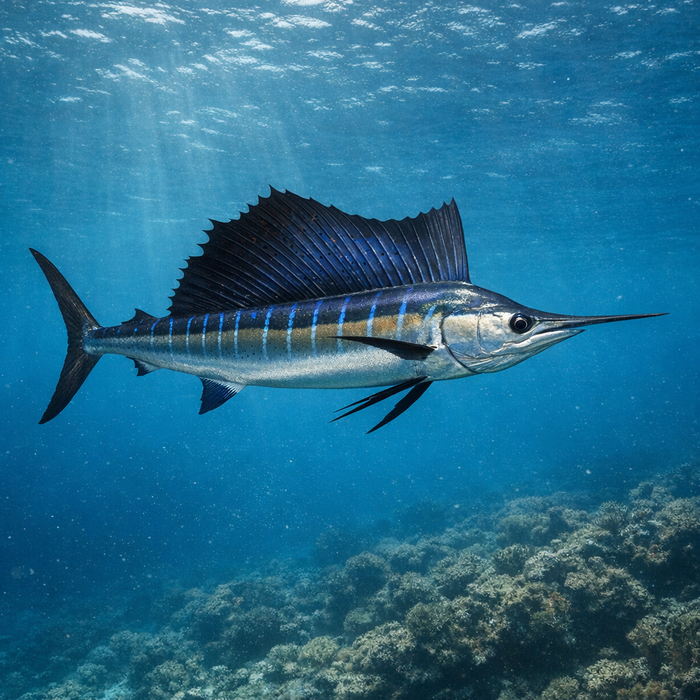
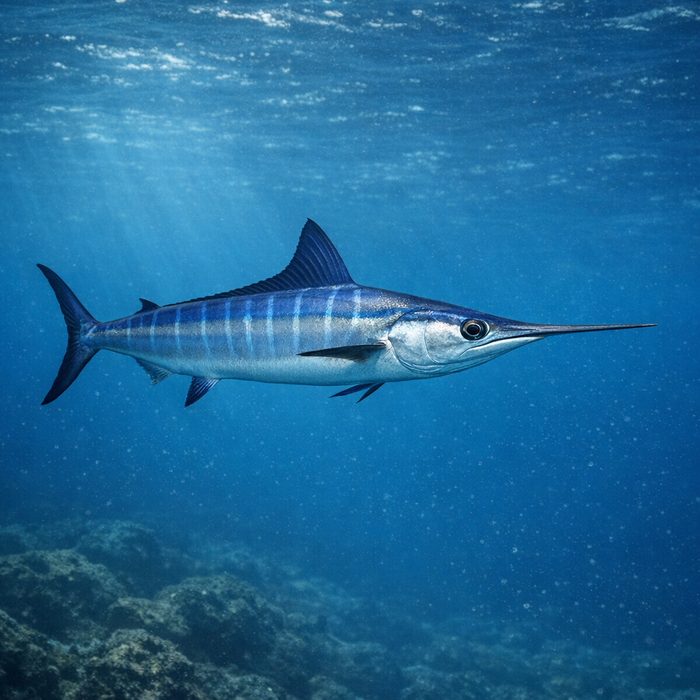
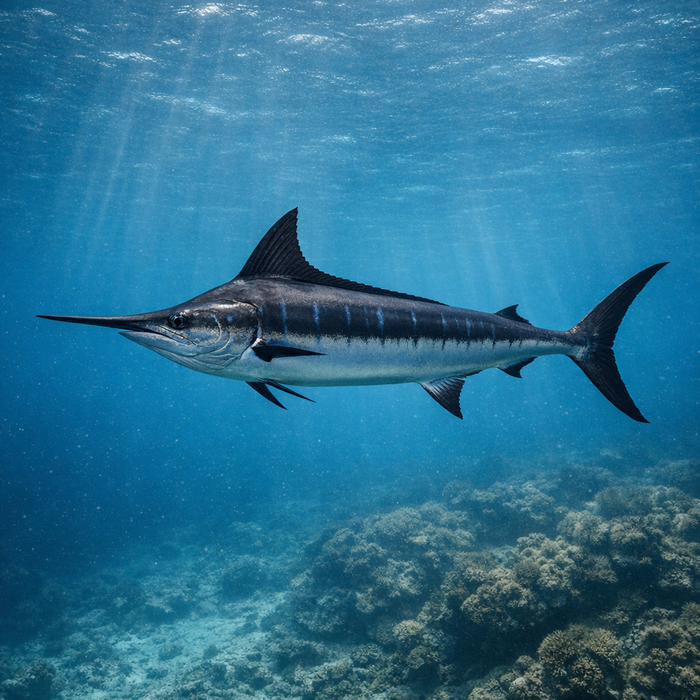
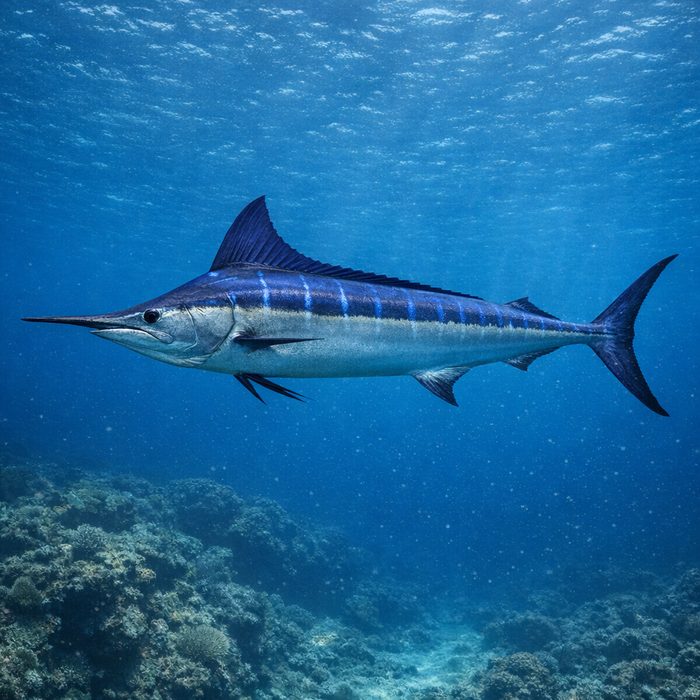
First, the eat. White marlin don’t hammer like tuna; they tease, slash, and sip. They’ll window-shop your teasers, then drift in to nibble a ballyhoo with maddening subtlety. That delicate bite forces anglers to master drop-backs and circle-hooks. Second, they light up. When a white turns on, its body flashes electric-blue bars, the ultimate tell that the game is on. Third, the species is tailor-made for pitch-baiting. See a dorsal behind a dredge, slide a perfectly rigged dink ballyhoo to its face, and watch the spread transform into adrenaline.
Habitat & Global Range
The Atlantic white marlin is a pelagic hunter that roams bluewater highways. Think edges of the Gulf Stream, current rips, temperature breaks, and Sargassum lines near the shelf edge and deep canyons. Typical hunts happen over deep water, often within the top 100 feet, where flyingfish, halfbeaks, small mackerel, and squid gather. From the Mid-Atlantic canyons down past the Bahamas and Dominican Republic, and across to the Azores and tropical Brazil, the white marlin works warm corridors that match classic Atlantic white marlin habitat. Seasonal pushes follow warm currents, so timing your trip to those pulses is everything.
Behavior & Temperament
White marlin are cruisers with quick tempers. They often travel solo or in small wolfpacks, and when a pack piles into your spread, doubles and triples erupt. The fight is acrobatic: tail-walks, greyhounds, sudden direction changes, and a stubborn pinwheel at color. They’re aggressive but not reckless; you’ll see more window-shoppers than smash-and-grab artists. Success hinges on teaser discipline, clean pitch-bait handoffs, and not yanking the bait away when the fish is still slashing with its bill. Fly anglers live for this species because a dialed teaser game can put a lit-up fish 40 feet off the transom, perfectly set for a 12-weight shot.
Ecological Importance
As a mid-to-upper pelagic predator, the Atlantic white marlin helps shape open-ocean food webs. It culls weak and scattered bait, pushing prey into dense schools and driving spectacle under weedlines. It also acts as a mobile indicator for ocean health; showings of whites often track with robust Sargassum, clean temperature gradients, and steady current. Healthy white marlin runs signal that the engine room of the offshore ecosystem is humming.
Conservation & Environmental Pressures
White marlin have taken hits from bycatch in pelagic longline fisheries and habitat changes that disrupt weedlines and current structure. International bodies like ICCAT set quotas and management measures, while many nations require circle hooks with natural baits to protect billfish. Misidentification with roundscale spearfish has complicated stock assessments, but trends have driven a conservative stance. For traveling anglers, that means prioritize releases, rig circle hooks, and log clean data for tournaments and tagging programs.
The FishyAF Take
The Atlantic white marlin is the gateway drug to the bluewater circus. It’s technical without being cruel, athletic without requiring bodybuilder tackle, and visual in all the best ways. You don’t luck into them from a beach chair; you earn them with properly tuned dredges, crisp teasers, and a pitch bait that swims like it owes you money. If you’re chasing a first billfish, this is your huckleberry. If you’re hunting mastery, relentless refinement of spread geometry and drop-back timing with white marlin will make you better at every other pelagic game. That’s not hype. That’s how bluewater anglers are built.