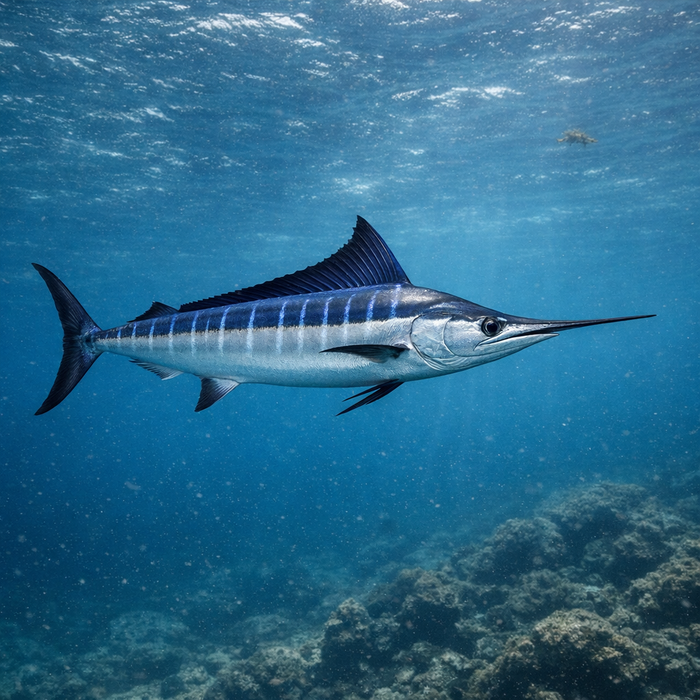
Indo-Pacific blue marlin (makaira mazara): The ocean’s heavyweight sprinter with a sword and a bad attitude
Introduction
If offshore fishing had a poster child for chaos, it would be the Indo-Pacific blue marlin. This is the fish that turns grown adults into giddy kids, and pristine cockpits into crime scenes of leader shavings, lure skirts, and high-fives. It’s speed, muscle, and spectacle built into a cobalt torpedo. You come for a bite and leave with a story you can’t retire. If you’re hunting Indo-Pacific blue marlin facts, you’re in the right wake.
What Makes the Indo-Pacific blue marlin Unique?
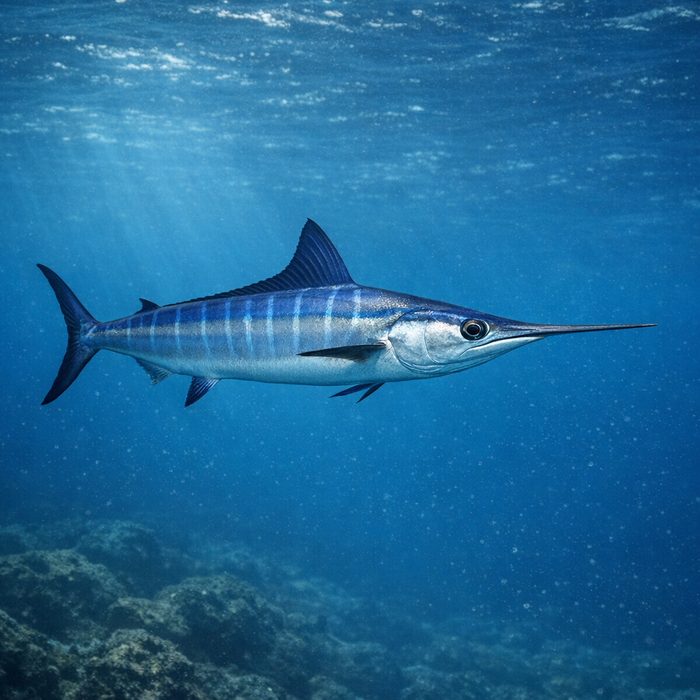
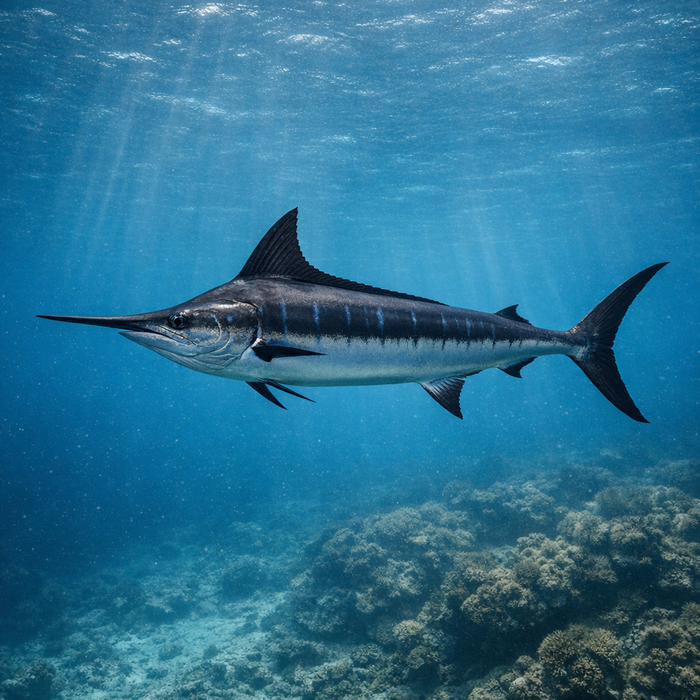
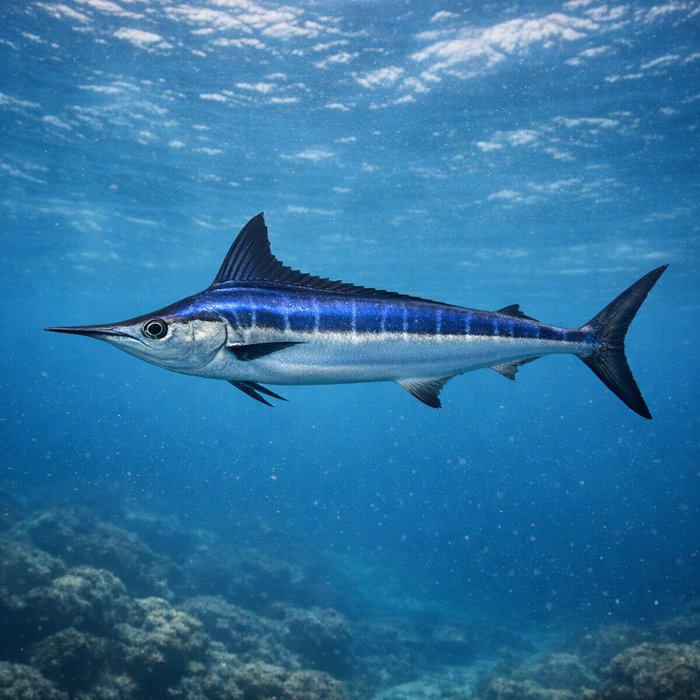
Two things: horsepower and showmanship. Lots of fish are strong; few explode on a lure at nine knots, tail-walk 200 yards, then sound to 1,000 feet like they’re inspecting the seafloor. The bill isn’t a spear but a scalpel, slashing prey into submission. And when a fish lights up, vertical blue bars blaze across its flanks like neon war paint. Among billfish, sexual dimorphism is dramatic: females grow gigantic while males stay comparatively small. That’s why true giants are almost always ladies.
Habitat & Global Range
The Indo-Pacific blue marlin roams warm bluewater across the Indian and Pacific basins, surfing currents like the Kuroshio, East Australian Current, and equatorial flow. They love the Indo-Pacific blue marlin habitat cocktail of temperature breaks, bait-rich rips, and hard edges: drop-offs, seamounts, and island shelves. This is open-ocean hunting at scale. Find clean water, bait schools, birds with purpose, and you’re in the game. Tagging has shown transoceanic wanderers connecting distant island chains and returning to productive grounds season after season.
Behavior & Temperament
Predator doesn’t cover it. Apex bully is closer. Blue marlin use blistering speed and the bill to wound, then wheel back to inhale. They’ll pin skipjack near the surface, blitz squid midwater, and ambush in the prop wash like ghosts. The fight is a mood swing: aerial chaos followed by deep, stubborn arcs that melt drags. They’re mostly solitary or run in small packs, but when the bait is stacked, multiple knockdowns happen. Precision matters less than presence; you need to be where the life is, trolling clean and confident.
Ecological Importance
As apex predators, Indo-Pacific blue marlin help shape pelagic food webs by pressuring mid-trophic prey and keeping bait distributions dynamic. Their movements trace ocean health: temperature anomalies, current shifts, and forage booms show up in marlin catch rates before headlines catch on. They’re also a bellwether for responsible offshore practices, from circle-hook use to revival techniques that cut post-release mortality.
Conservation & Environmental Pressures
The species swims through a gauntlet of commercial longlines, bycatch risks, and variable management across a patchwork of jurisdictions. Climate shifts can scramble bait highways, making once-consistent zones fickle. Recreational pressure concentrates around a few famous hotspots. The upside: tag-and-release culture is strong, tournaments reward releases, and modern rigging reduces harm. Best practice is simple: circle hooks on natural baits, short fight times, heavy tackle, big barbless dehookers, and minimal air exposure.
The FishyAF Take
If your bucket list has only one billfish, make it the Indo-Pacific blue marlin. It’s violent theater in broad daylight, all screaming drags and flying water. The recipe isn’t mystical: clean water, good current, bait, birds, and a spread that swims right. But bringing one to leader? That’s earned. Respect the fish, respect the ocean, and bring a plan. Because when she shows, you’ll have about three heartbeats to prove you belong. That’s the real Indo-Pacific blue marlin—part hurricane, part miracle, and 100 percent addictive.