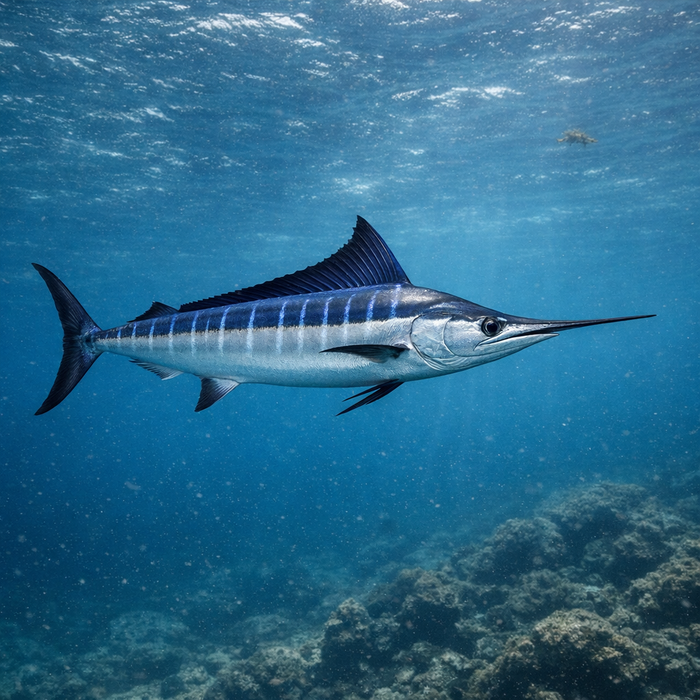
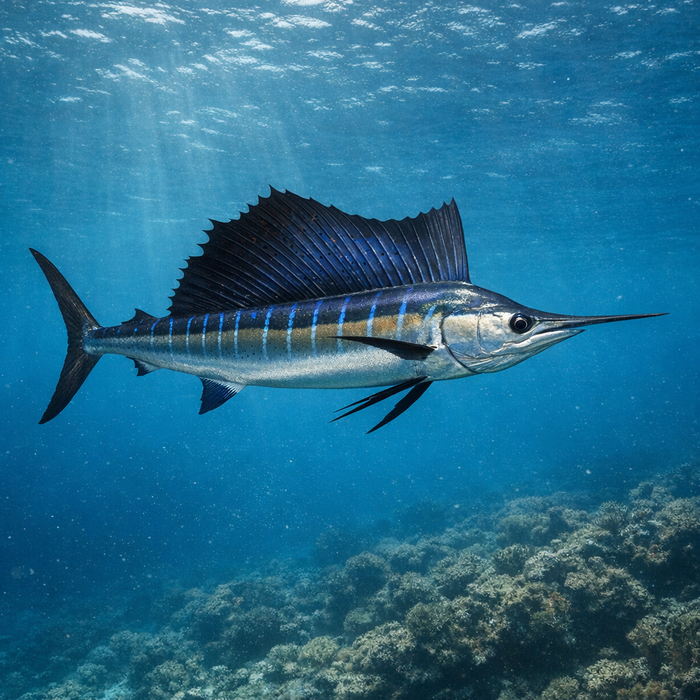
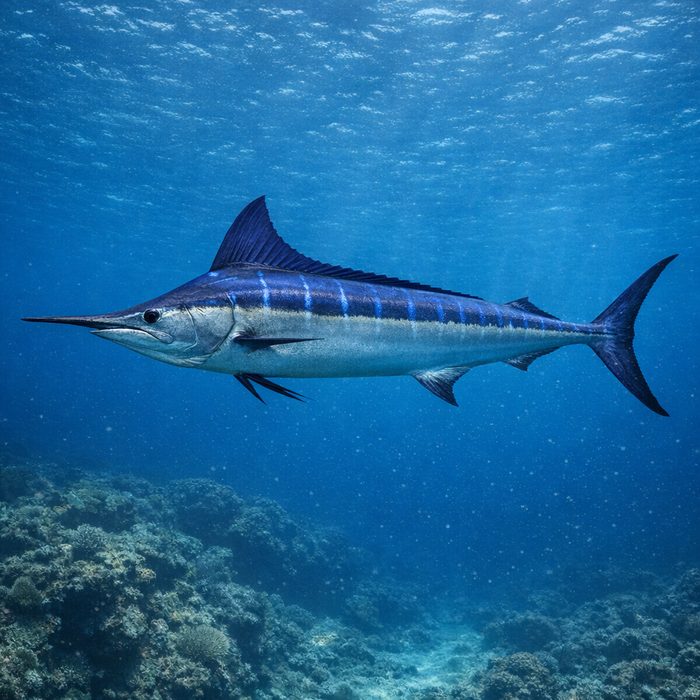
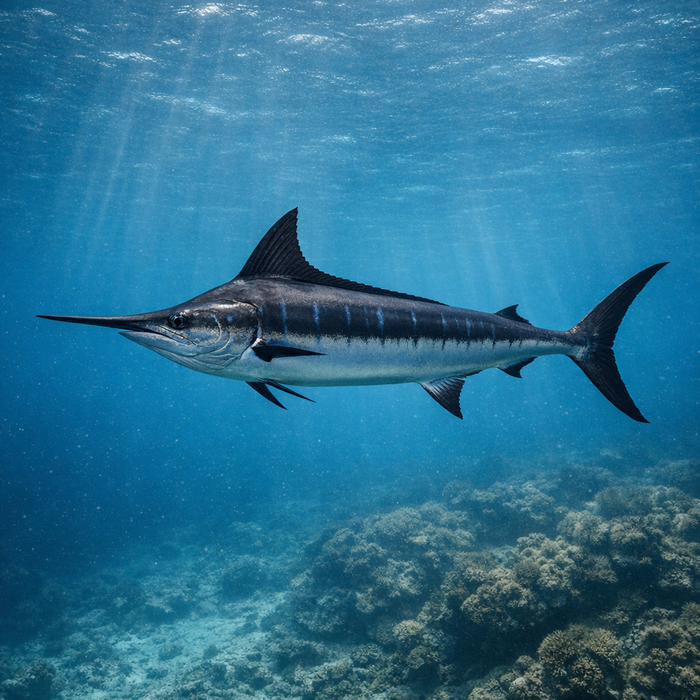
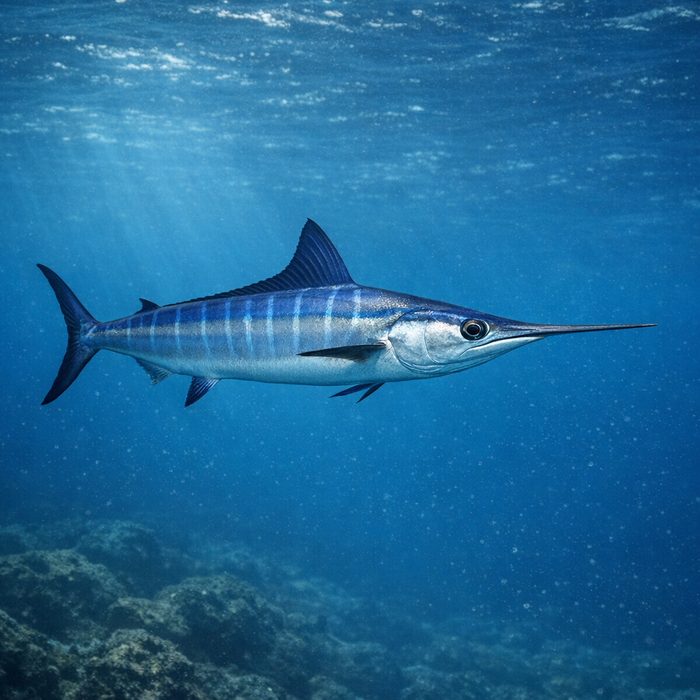
Shortbill Spearfish (Tetrapturus angustirostris): The bantamweight billfish that loves crashing small lures at big-league speedsIntroductionIf marlin are heavyweight sluggers, the shortbill spearfish is the wiry featherweight that jabs fast and vanishes quicker. It's the billfish most anglers don't realize they wanted until it detonates a rigger bait and starts windmilling across the surface. Smaller than the headline marlin but every bit as electric, the shortbill spearfish is a bluewater curveball that keeps crews honest and spreads tuned.What Makes the Shortbill spearfish Unique?Start with proportions. The shortbill spearfish wears a noticeably shorter, rounder bill than marlin or sailfish, and a first dorsal that climbs steeply up front before tapering hard. It's a sleek, high-octane shape built to ambush flyers and micro-tunas in inky-blue lanes. Another standout: this is the smallest routinely caught billfish, a detail that lures anglers seeking a clean billfish slam or a lighter-tackle fight. And while it's pound-for-pound spicy, it's also notorious for short strikes, teasing lures, and making crews tune hook-sets and leaders with more finesse than they planned on.Habitat & Global RangeShortbill spearfish habitat is the clear, cobalt corridors of the open ocean. Think temperature breaks, current rips, and offshore edges where bait stacks up. The species roams the Indo-Pacific, with Hawaii and the Central Pacific serving as poster-child waters, but it also shows in parts of the Indian Ocean and around scattered Pacific Islands. It's a classic bluewater drifter, living in the epipelagic zone where sunlight and bait meet, then ghosting deeper to midwater when glare, pressure, or forage shifts demand it. If you're hunting shortbill spearfish habitat, ride the rips, watch birds, and trust your SST charts.Behavior & TemperamentThe shortbill spearfish is a hit-and-run artist. It loves small, active prey like flying fish and squid and often reacts to movement and flash more than bulk. When fired up, it lights the neon bars, slashes, then charges through the spread. Hooked fish jump early and often, then fight with quick surface runs and sharp direction changes rather than deep bulldogging. Singles are most common, but loose pairs or small packs aren't unheard of when bait is thick. It's a classic roamer: no dockside haunts, no structure babysitting, just miles of blue water punctuated by life-rich edges.Ecological ImportanceIn the pelagic food web, the shortbill spearfish is a mid-to-upper tier predator that trims baitfish schools and moves energy up the chain. It shares lanes with tunas, wahoo, and dolphins, all surfing the same frontal boundaries and current seams. Its presence is a biological ticker tape of ocean health: where you've got rips, temp gradients, micro-forage, and oxygen-rich water, you've got a shot at a lit-up shortbill spearfish. The species also spreads reproductive bets over wide distances via pelagic eggs and larvae, a smart tactic in a shifting ocean.Conservation & Environmental PressuresCompared to marquee marlin, shortbills see less direct sport pressure, but they do intersect longline fleets targeting tuna and swordfish. Data can be messy, with misidentification in commercial logs and release rates that make assessments tricky. Climate swings that warp currents and SSTs can move the goalposts on where and when these fish show, affecting both anglers and scientists. While not the poster child of crisis, the shortbill spearfish rides the same roller coaster as other offshore predators: warming seas, shifting bait dynamics, plastic in the gyres, and the blunt force of mixed-fleet bycatch.The FishyAF TakeThe shortbill spearfish is bluewater mischief, period. It's the fish that punks a mahi lure, cartwheels across your wake, and suddenly has the whole cockpit paying attention. If you're chasing billfish variety, this one is a must-have notch; if you're just out hunting life on a rip, it's the best kind of surprise. Keep it simple: tight spread, sharp hooks, leaders that won't spook small eyes, and an eye on the birds. You might be aiming for wahoo, but when a shortbill spearfish shows up, act like you meant it. That's how you rack up shortbill spearfish facts the fun way: one screaming clicker at a time.