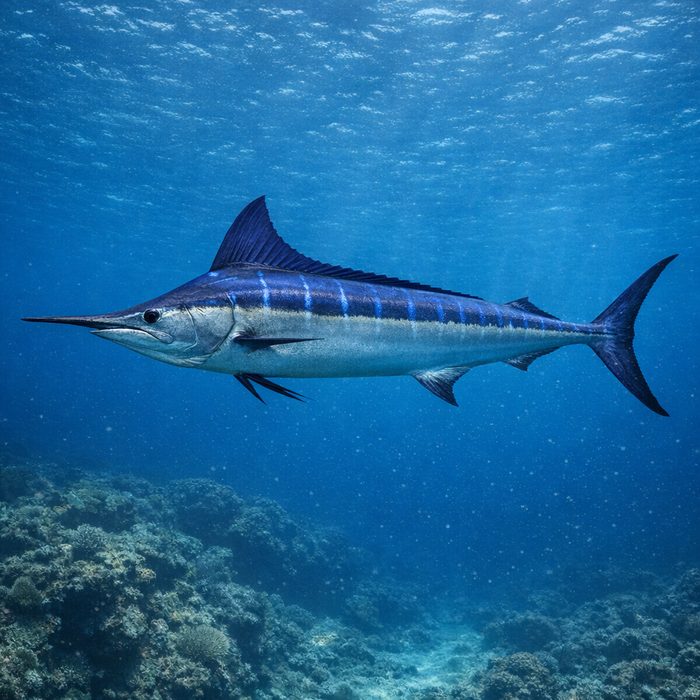
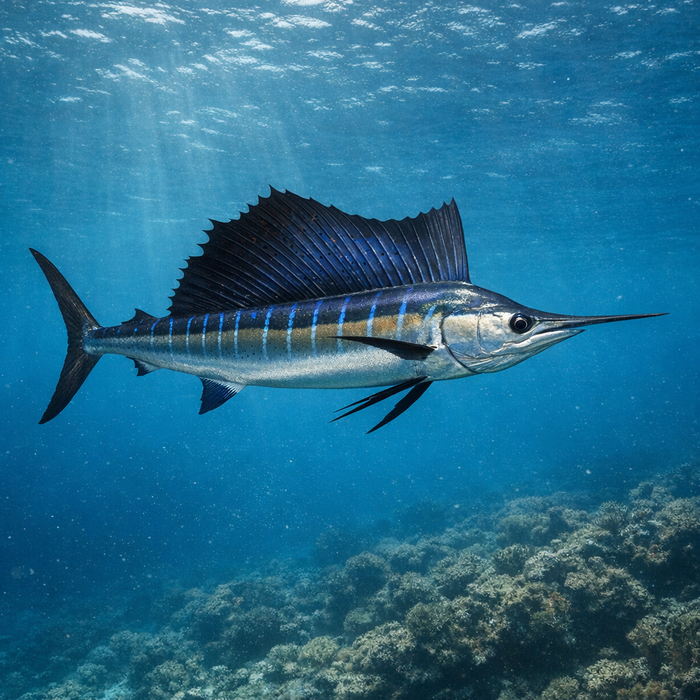
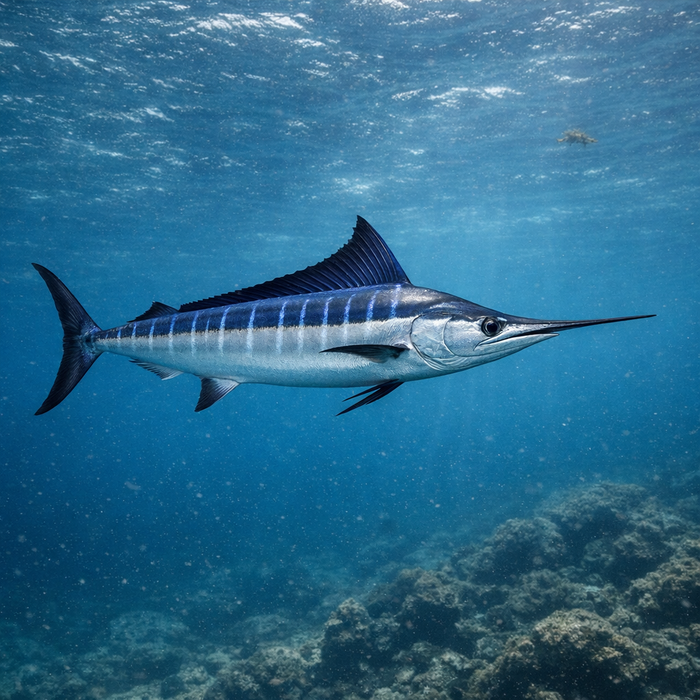
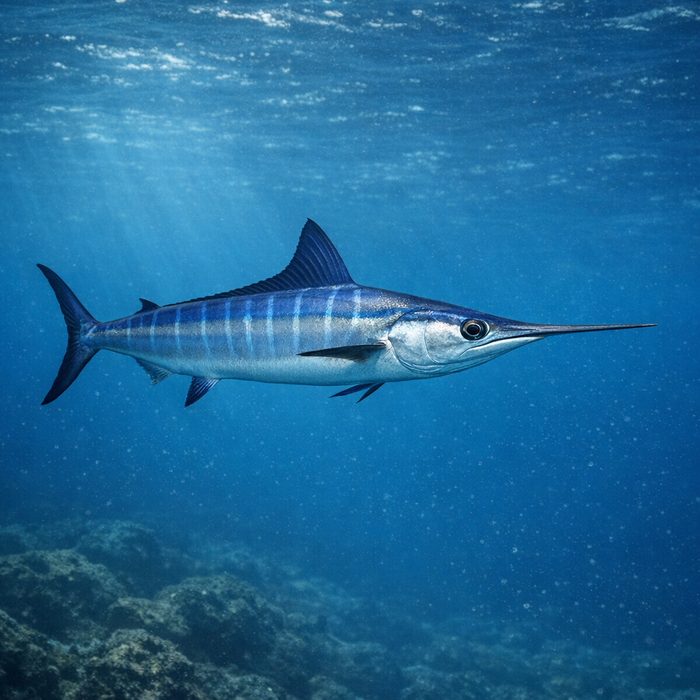
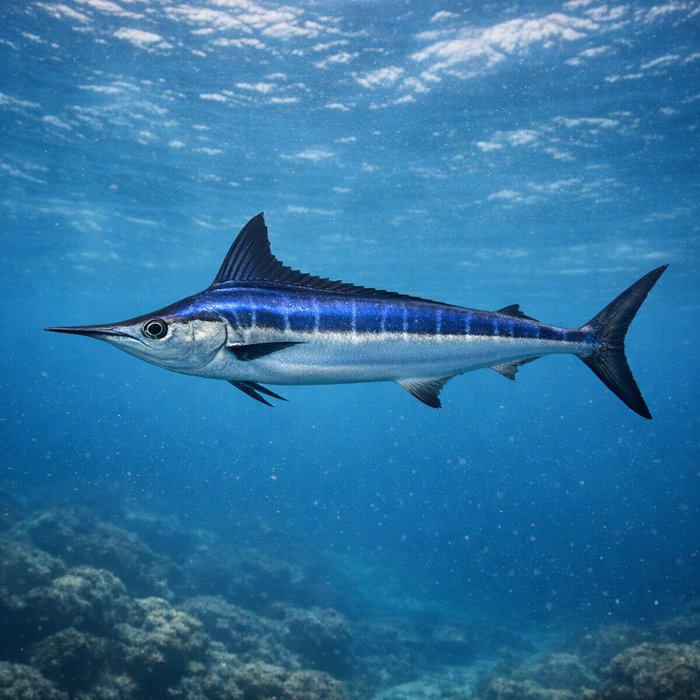
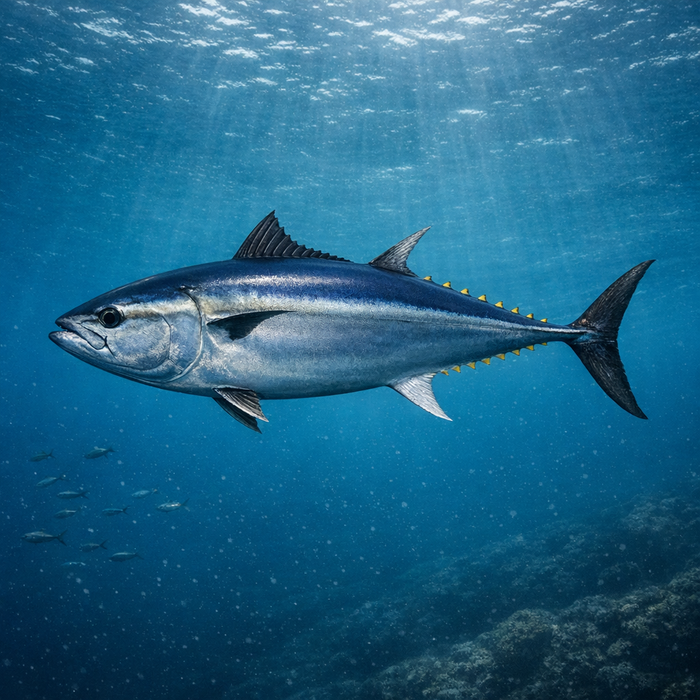
Black marlin (istiompax indica): The ocean’s heavyweight sprinter dressed in gunmetal and bad intentions.
Introduction
If offshore fishing were a fight card, the black marlin would headline every time. Few fish combine freakish size, zero-chill aggression, and sheer speed like this Indo-Pacific wrecking ball. Anglers dream of a grander black marlin and for good reason: it’s a once-in-a-lifetime encounter that can fold knees, melt drags, and rewrite a logbook in a single run. This is the species that turned Cairns into a pilgrimage and turned small tunas into snacks.
What Makes the Black marlin Unique?
Two traits stand out. First, those pectoral fins. Unlike blues and stripes, a black marlin’s pecs don’t fold flat. That stiff, outboard posture is a dead giveaway and likely helps with high-speed control during blistering chases. Second, their growth potential is absurd. While many marlin flirt with 1000 pounds, black marlin own one of the most feared resumes in big game fishing. Add a thick-based bill built for slashing rather than skewering, and you’ve got a tailor-made bait butcher. These aren’t generic billfish. They’re purpose-built apex predators.
Habitat & Global Range
Here’s the quick version of Black marlin habitat: warm, blue water hugging structure and current. They haunt offshore reefs, dropoffs, headlands, and seamounts across the Indo-Pacific, surfing bait-rich edges and pressure points. They’ll roam open ocean too, but the best bites often stack where tides or currents bulldoze schools of mackerel, scad, and small tunas. Think Great Barrier Reef, Bazaruto, Kenya’s Rips, and Eastern Pacific upwellings. Temperature matters. They’re happiest in tropical to warm-temperate bands, riding edges of current like a highway and showing on the surface when the buffet line forms.
Behavior & Temperament
Black marlin aren’t shy. They tail down-sea, push bait to the top, and detonate on skirted lures without apology. When hooked, they alternate between ripping runs and rude acrobatics, then bulldog deep just when you think you’ve broken them. They can travel serious miles in a day, but they’ll also hang on a small patch of reef if the groceries are stacked. Compared with blue marlin, blacks sometimes feel more glued to structure and bait aggregations. Compared with stripes, they’re less fussy about clean presentations. Still, circle hooks, consistent drag, and steady boat handling win more fights than heroics.
Ecological Importance
As apex predators, black marlin prune baitfish and small tuna populations, shaping pelagic food webs. They also concentrate recreational value in specific seasons and places, turning remote edges into economic engines for coastal communities. Healthy marlin stocks mean healthy mid-level prey communities and functioning currents that move nutrients from deep to topwater. If you want a quick pulse on pelagic health, watch the marlin bite. When bait is abundant and currents align, black marlin show up like a finishing move.
Conservation & Environmental Pressures
Black marlin are categorized as Data Deficient, which sounds harmless but really means we’re guessing more than we should. They interact with longline, net, and artisanal fleets, and release mortality from recreational fishing can rise if fish are mishandled or overplayed. Add warming oceans shifting currents and thermal fronts, and distribution can wobble. The best hedge is smart management, widespread tag and release, circle hooks for natural baits, and keeping fish in the water at boatside. Big females drive recruitment. Protect them, and you protect your future seasons.
The FishyAF Take
Black marlin are the punchline to every offshore daydream. They’re not subtle, not polite, and definitely not guaranteed. That’s the appeal. You chase them where cobalt water kisses structure, you bridle baits that look like lunch to nothing else, and you trust your knots like religion. If you want Black marlin facts that matter, here’s one: preparation beats luck. Fresh hooks, tuned lures, clean drags, and a practiced crew turn chaos into grip-and-grin. Get your Black marlin habitat dialed, read your birds, and be ready when the shadow behind your short corner erupts. When it happens, everything you’ve learned condenses into one run. Hold on.