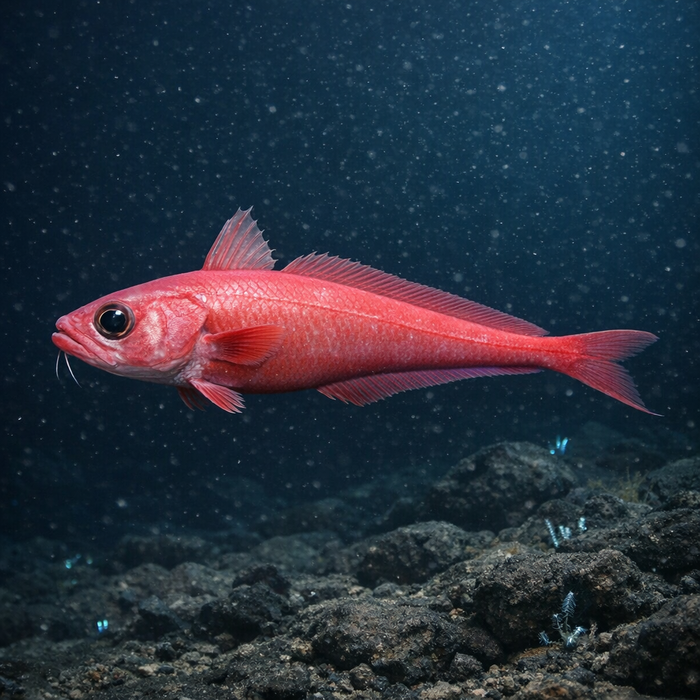
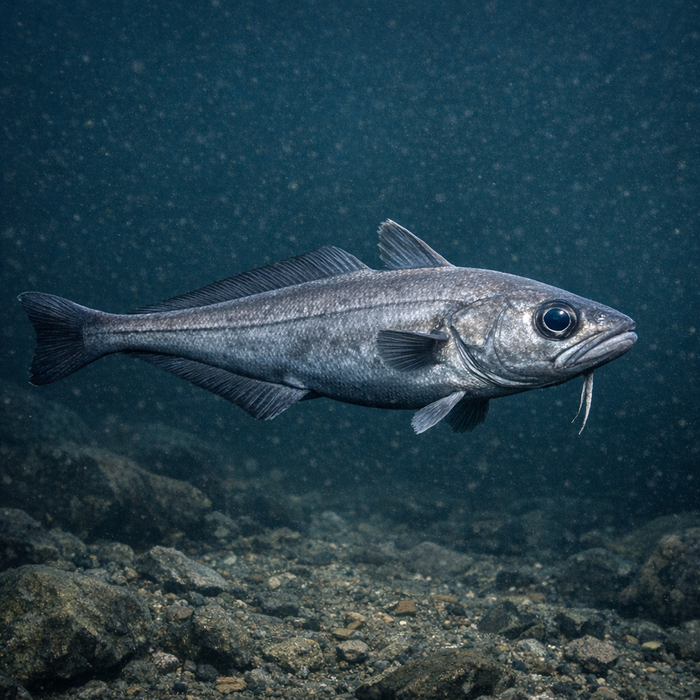
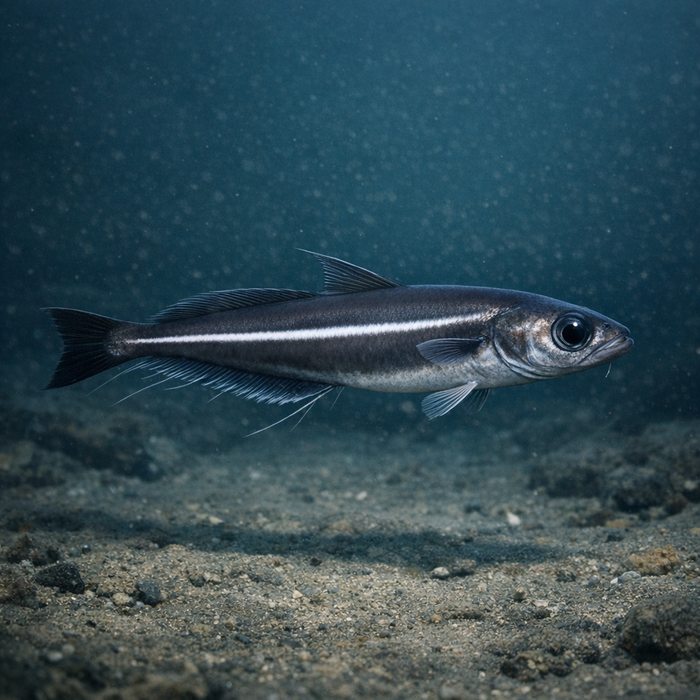
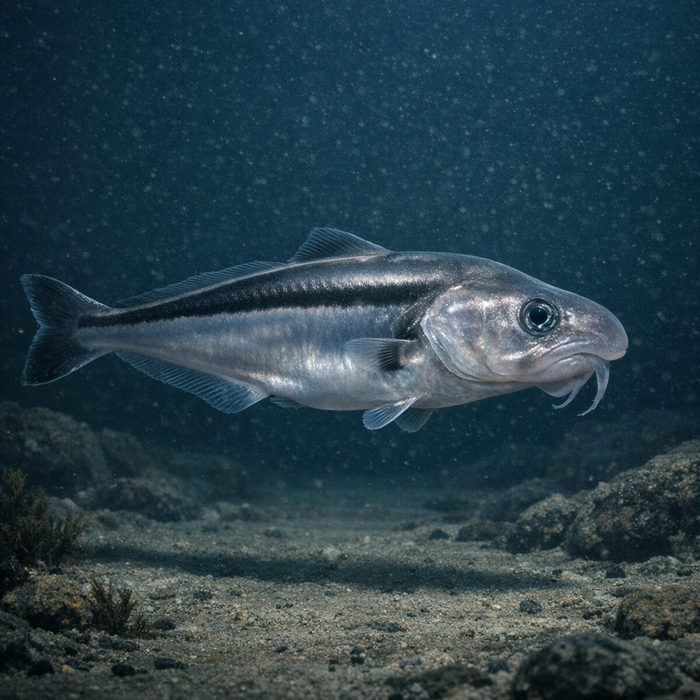
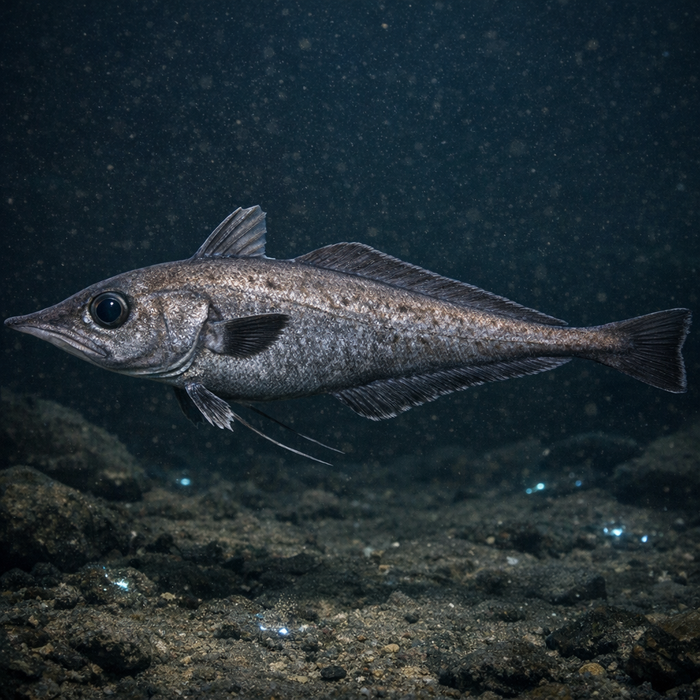
Attenuated Spider Fish (Bathypterois atricolor): A deep-sea weirdo that perches like a camera tripod and lets dinner drift in.IntroductionIf you mashed a stilt walker with a fish, you'd get the attenuated spider fish. It's not here for your jigging reel hero shot. This creature operates where light is a rumor, pressure is savage, and patience is a superpower. When most fish swim, it stands. When most chase, it waits. And somehow, that strategy crushes it in the abyss.What Makes the Attenuated spider fish Unique?Two words: living tripod. The attenuated spider fish extends absurdly long pelvic and tail fin rays to prop itself above the seafloor like a three-legged stand. Perched and motionless, it faces into the current with an upturned mouth, letting microcrustaceans and small morsels drift right in. Combine that with reduced eyes and supercharged tactile senses and you've got a fish built to win in darkness. It doesn't sprint, it outlasts. If you were Googling attenuated spider fish facts, start with those stilts.Habitat & Global RangeThink deep. The attenuated spider fish haunts the continental slope and abyssal plain, usually on soft sediments where currents deliver food. Depth is the defining trait of attenuated spider fish habitat. We're talking dark-water real estate well beyond recreational diving, commonly in the mid to lower slope zones. You won't glass them from a pier. You find them by going far, then dropping gear a very long way down.Behavior & TemperamentThis fish is the deep's original minimalist. Energy is precious down there, so it saves every calorie it can. Perched on its fin stilts, the attenuated spider fish orients nose-into-current and sips the conveyor belt. Movement happens in short, efficient hops as it resets position. It's not aggressive and it won't brawl like a tuna. Hooked fish rise like reluctant kites, more ballast than brawler. The vibe is eerie calm, not chaos.Ecological ImportanceIn a world with scarce food, every player counts. The attenuated spider fish is a patient predator of tiny drifting prey, recycling energy that would otherwise blow past unused. In turn, it feeds larger deep-sea predators and becomes part of the slow-motion nutrient economy that defines the slope. Its weird tripod posture isn't a party trick; it's an elegant solution to living where meals are rare and movement is expensive.Conservation & Environmental PressuresData on deep-sea oddities is always thinner than we want. While the attenuated spider fish isn't a commercial target, it can show up as bycatch in deep trawls or longlines. The bigger hazards are habitat-level: deep-sea mining prospects, bottom-contact gear, and warming-driven changes to oxygen, currents, and food flux. Deep systems are slow to recover. You can knock something out down there and not notice the ripple for decades.The FishyAF TakeThe attenuated spider fish is the anti-sportfish and that's exactly why it rules. It's a masterclass in doing more with less: no sprinting, no chasing, just ruthless efficiency in a brutal neighborhood. For anglers, it's a white whale of weirdness. If you deep-drop into the midnight and one of these tripod ghosts rides up on your rig, take the picture, admire the engineering, and log a story that almost nobody else can tell. That's peak niche cred-and yes, it absolutely counts among the strangest catches you'll ever make.