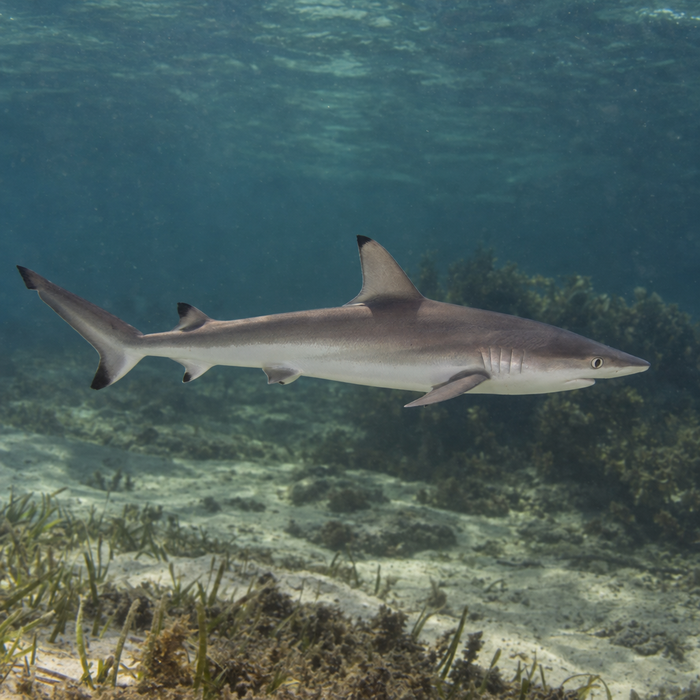
Australian Sharpnose Shark (Rhizoprionodon taylori): The Little Coastal Shark That Puts Pregnancy on Pause
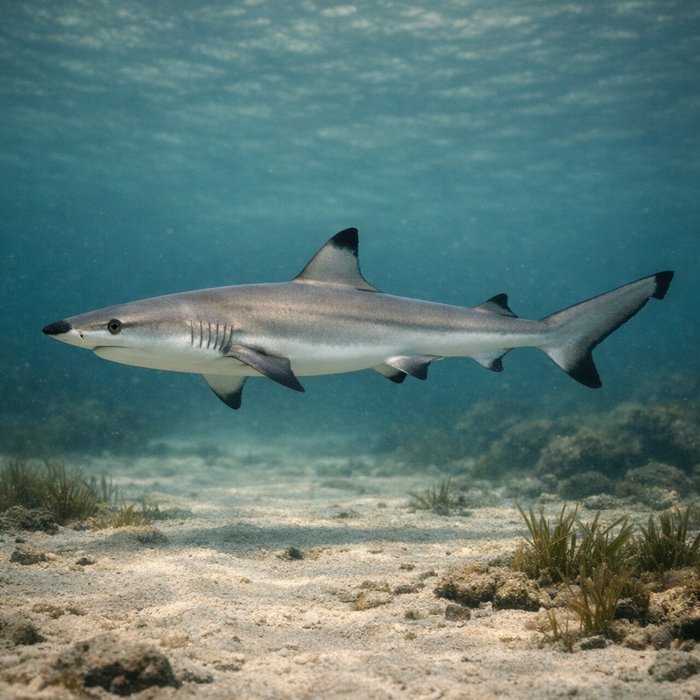
Forget the oversized bait and offshore hero routine. The Australian Sharpnose Shark brings the shark story into smaller, shallower territory: a slender coastal predator with a pointed snout and a reproductive trick considerably stranger than its appearance suggests. It belongs to the whaler shark family, Carcharhinidae, but this is no miniature trophy monster waiting to become enormous. Small is its normal operating scale.
For anglers, that makes it an identification challenge worth taking seriously rather than another anonymous little shark. The interesting part starts when you stop judging it by the size of its dorsal fin. Among Australian Sharpnose Shark facts, its ability to suspend early embryonic development deserves top billing. Yes, this fish effectively puts part of pregnancy on hold.
What Makes the Australian Sharpnose Shark Unique?
The standout feature is embryonic diapause. In studied Queensland females, development pauses for roughly seven months near the beginning of pregnancy. The full reproductive cycle includes a gestation of about 11.5 months, yet much of the visible embryo growth happens during a comparatively short final stretch. That is a very different timetable from simply growing pups continuously until delivery.
Its placenta adds another twist. Maternal and embryonic tissues remain separated by an extraordinarily thin egg capsule. Despite having no pores, that capsule allows small molecules involved in nourishment and oxygen supply to cross. A tiny coastal shark turns out to be a surprisingly sophisticated subject for pregnancy research.
Then there is speed of life. This species grows rapidly and can reach reproductive maturity around its first year. Instead of the decades-long route to adulthood associated with some larger sharks, it gets on with business early. That unusual productivity matters far more to its conservation outlook than its modest dimensions might suggest.
Habitat & Global Range
Australian Sharpnose Shark habitat centres on coastal marine waters around northern Australia and southern Papua New Guinea. Its Australian distribution extends from Carnarvon in Western Australia, across the tropical north, and down the Queensland coast to Moreton Bay. Sand and mud are characteristic substrates; dramatic reef walls are not the defining backdrop.
Shallow bays belong in the picture, but shallow does not mean exclusively ankle-deep. Records extend to at least 110 metres. Within coastal embayments, habitat use can be more varied than the simple sand-and-mud label implies, including seagrass areas. Think of a working coastal landscape, not one compulsory bottom type.
For trip planning, use that information to narrow the search rather than manufacture a guaranteed fishing spot. A distribution map establishes possibility. It does not promise a shark beneath every jetty, and a plausible-looking beach still needs safe access, legal access, and reliable identification.
Behavior & Temperament
The Australian Sharpnose Shark eats bony fishes, crustaceans, and cephalopods. That supports a sensible interest in fish and squid baits, but it does not establish a scientifically ranked favourite bait or a dependable recreational feeding schedule. Those are different questions, and mixing them produces confident nonsense surprisingly quickly.
Tracking in Cleveland Bay showed individual variation in space use, including changes associated with increased river discharge. Some sharks shifted areas within the bay rather than behaving like permanent residents of one tiny patch. For anglers, the useful interpretation is flexibility: yesterday’s location need not remain tomorrow’s location. It is not evidence for a neat, range-wide seasonal migration.
Do not confuse manageable size with permission to handle carelessly. Keep fingers away from the mouth, prepare tools before landing, and make release efficient. The fish does not need a prolonged deck inspection to prove that you caught a shark.
Ecological Importance
As a predator of several coastal prey groups, this shark participates in the food web without needing apex-predator status. Its ecological interest lies partly in being small, productive, and closely associated with nearshore environments. The everyday predators count too; ecosystems are not built entirely around the largest animal in the promotional photograph.
Conservation & Environmental Pressures
The Australian Sharpnose Shark is classified as Least Concern in the Australian shark report card. Rapid growth, early reproduction, and annual litters help explain its comparatively resilient assessment. However, it is caught incidentally in coastal net and trawl fisheries, and resilience does not mean every discarded individual survives.
The sensible response is neither panic nor indifference. Support careful bycatch handling and coastal habitat protection, and avoid turning an encouraging conservation category into an excuse for waste. A species can be doing relatively well and still deserve competent treatment.
The FishyAF Take
This is an explorer’s shark, not a chest-thumping exercise. FishyAF’s provisional light-tackle approach suits that spirit, provided anglers remember that the suggested rig is a starting point rather than a proven species-specific formula.
Identify it properly. Keep the encounter efficient. Appreciate the biology. A shark that can interrupt embryo development has already supplied a better conversation than another inflated fish story. The Australian Sharpnose Shark does not need extra size, invented aggression, or borrowed trophy credentials to be interesting. It needs anglers willing to notice what is actually in front of them.