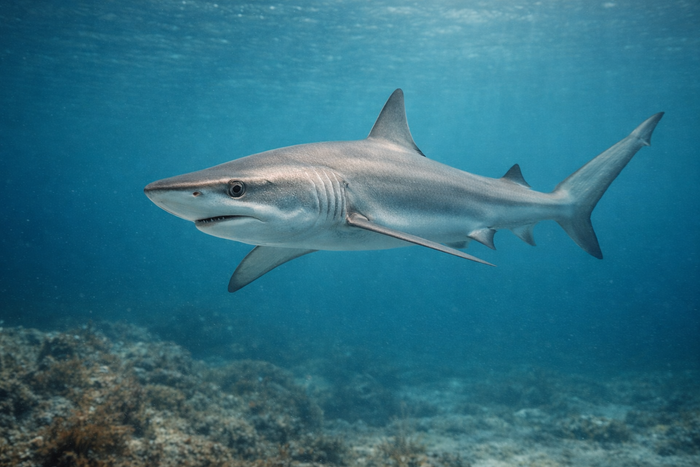
Caribbean Sharpnose Shark (Rhizoprionodon porosus): Small Shark, Big Identification Problem
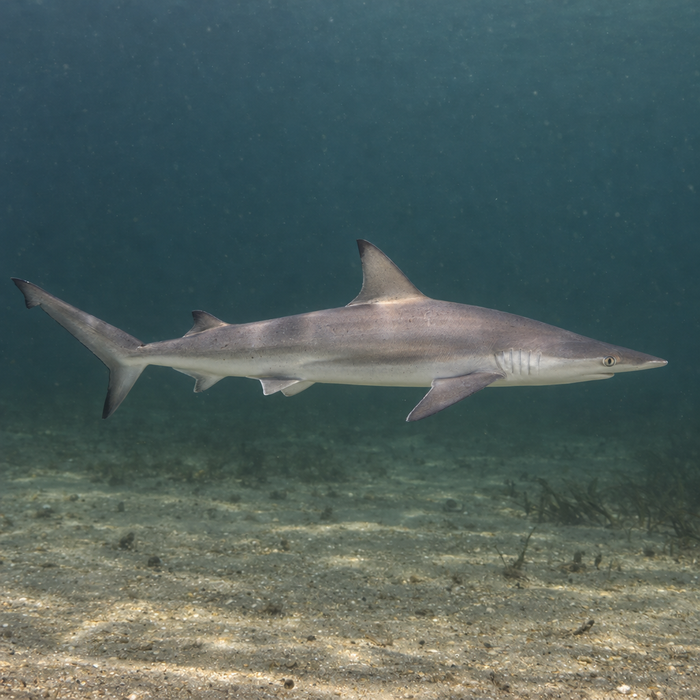
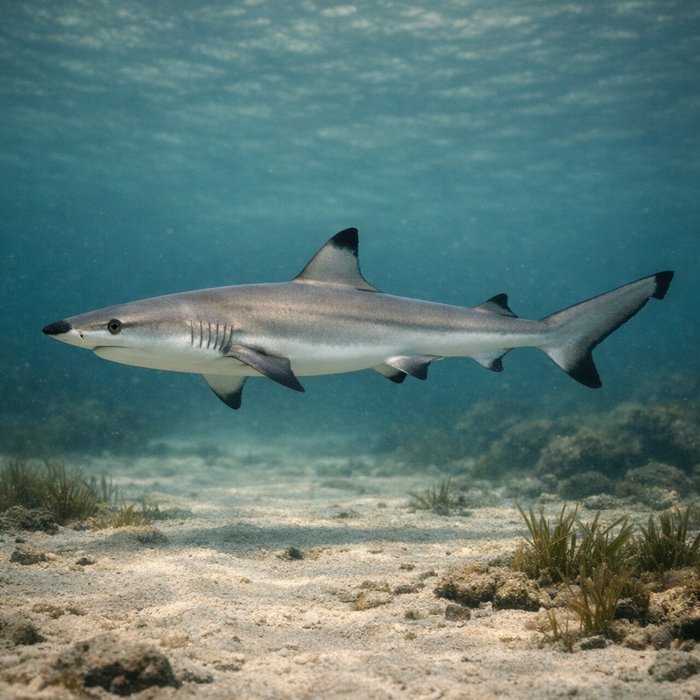
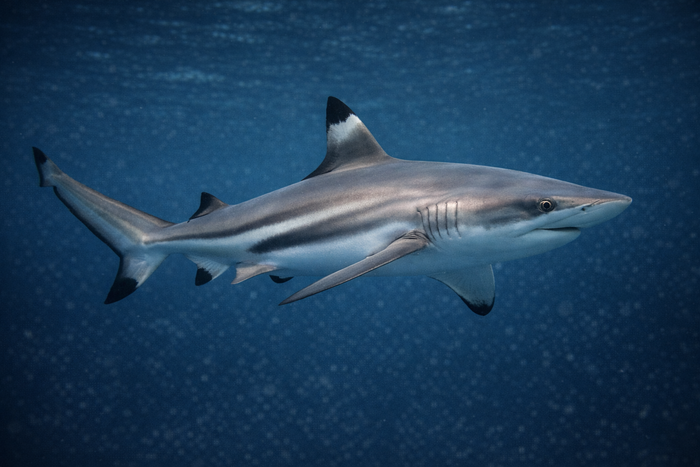
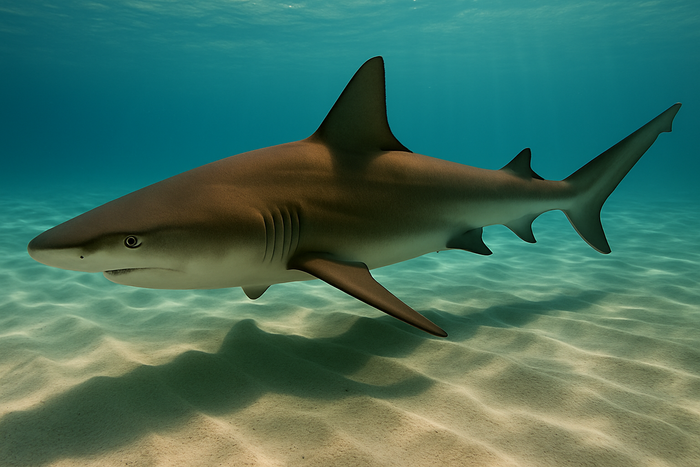
The Caribbean Sharpnose Shark does not need heavyweight proportions to deserve your attention. This compact coastal predator belongs to the requiem shark family, Carcharhinidae, and carries the familiar shark silhouette in a considerably smaller package. A slender body, flattened snout, and understated brown-gray coloring make it easy to overlook—and easy to misidentify. That second problem matters more than bragging rights, especially where retention is prohibited.
FishyAF lists a typical size of 27.6–37.4 inches and 2–8 pounds. Think manageable coastal shark, not offshore heavyweight. But manageable does not mean disposable, and small does not mean juvenile. The interesting part starts when you stop treating every modest shark as the same fish.
What Makes the Caribbean Sharpnose Shark Unique?
First, identification can get surprisingly technical. The Caribbean Sharpnose Shark closely resembles other sharpnose species, and scientific identification uses features including mouth-corner grooves, fin placement, and vertebral counts. Its upper labial furrows are conspicuous, while the second dorsal fin sits far back, around the middle or rear portion of the anal-fin base. This is a fish whose identity deserves more than a quick glance at its nose.
Second, reproduction is more involved than scattering eggs and disappearing. Females nourish developing young through a yolk-sac placenta, carrying small litters before giving birth to live pups. Published accounts describe two to six young after roughly ten to eleven months of gestation. These Caribbean Sharpnose Shark facts explain why even a relatively small shark cannot replace fishing losses like a fast-spawning baitfish.
Third, its coastal reputation hides an impressive depth range. Records extend to approximately 500 meters, although that outer limit should not be mistaken for its everyday address. A bay shark with a much deeper résumé is still a bay shark worth understanding.
Habitat & Global Range
Caribbean Sharpnose Shark habitat centers on tropical coastal waters, including bays and estuaries. Its western Atlantic distribution stretches from the Bahamas and Caribbean through Central American waters and along South America to Uruguay. Both mainland and island shelves fall within its range. The name is accurate, but it undersells the South American portion of the story.
Sand, mud, and estuarine environments are more useful starting points than dramatic reef scenery. Records include marine and brackish conditions, so an estuary tag does not make this a freshwater shark. For anglers, the practical distinction is simple: investigate coastal habitat and local occurrence rather than assuming every tropical beach holds the species. A distribution map tells you where a fish belongs, not where it will bite tomorrow.
Behavior & Temperament
The Caribbean Sharpnose Shark feeds primarily on small bony fishes, with squid, shrimp, and marine snails also documented. That menu supports the practical logic behind fish strips and squid as bait choices. It does not establish a magic bait, a guaranteed feeding window, or a species-specific lure craze. Sometimes the honest answer is less glamorous than the tackle advertisement.
Its size also changes how anglers should frame an encounter. There is no need to manufacture a monster-fish reputation. Species-specific recreational accounts are limited, so claims about spectacular jumps, predictable runs, or a universal nighttime bite deserve skepticism. Plan around controlled handling rather than a promised performance. Use tackle capable of ending an encounter promptly, with release tools already within reach.
Ecological Importance
As a predator of smaller fishes and invertebrates, this shark participates in coastal food webs rather than sitting outside them as some toothy exception. Its diet connects it directly with the same nearshore communities that support many other fisheries. Calling it merely a nuisance on a bait rig misses the larger picture. The fish was working that neighborhood before your sinker arrived.
Coastal waters off Caiçara do Norte, Brazil, have been identified as nursery habitat. That makes protecting these places a matter of safeguarding young sharks, not simply preserving attractive shoreline.
Conservation & Environmental Pressures
The Caribbean Sharpnose Shark is assessed globally as Vulnerable, with a decreasing population trend. Targeted fishing and incidental capture in gillnets, longlines, and trawls are central pressures. Its modest dimensions have not insulated it from exploitation; coastal accessibility can put small sharks directly in the path of intensive fisheries.
Protection is jurisdiction-specific. Under U.S. Atlantic highly migratory species rules, this species is prohibited from retention. An incidental catch must be released immediately, without removing it from the water, using methods that maximize survival. Elsewhere, verify local rules before treating either targeting or keeping one as permissible.
The FishyAF Take
This is an identification test disguised as a small-shark encounter. We would rather see an angler recognize uncertainty and make a clean release than invent certainty for a photograph. Size is not the measure of whether a catch deserves competence.
The Caribbean Sharpnose Shark earns respect through its own biology, not borrowed great-white theater. Learn the lookalikes, check the rules, and have a release plan before the bait hits bottom. The impressive part should be how little unnecessary trouble you cause.