Pacific Sharpnose Shark (Rhizoprionodon longurio): A Sharp Suit for the Mud-Bottom Beat
Not every shark needs offshore blue water and a fighting chair to deserve your attention. The Pacific Sharpnose Shark works the coastal neighborhood: sand, mud, bays, and the productive water beyond them. For anglers, its appeal is straightforward: a manageable shark-shaped challenge without pretending every encounter belongs in a monster movie. FishyAF rates the catch difficulty intermediate. The smarter challenge is recognizing what you caught, choosing appropriate tackle, and having the release sorted before the bait hits bottom.
This is also a species worth understanding beyond the hook. A small coastal predator can face serious pressure precisely because its habitat is accessible to so many fisheries.
What Makes the Pacific Sharpnose Shark Unique?
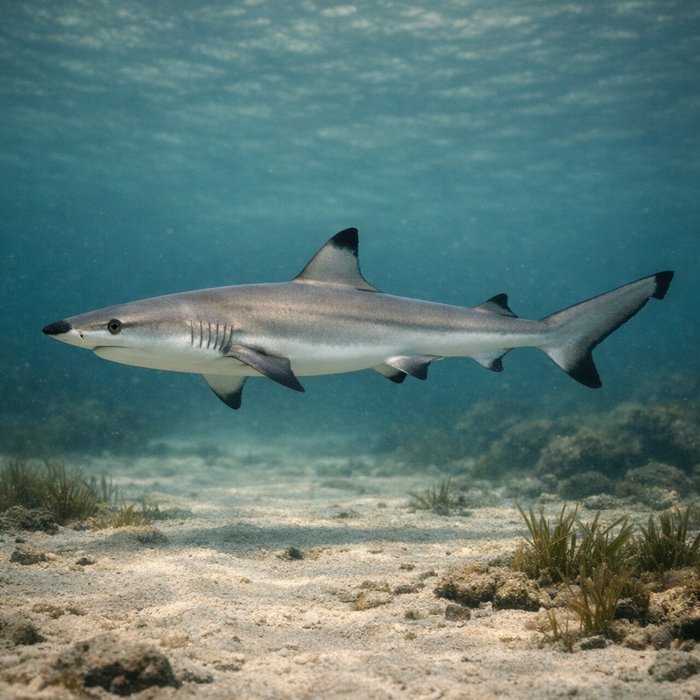
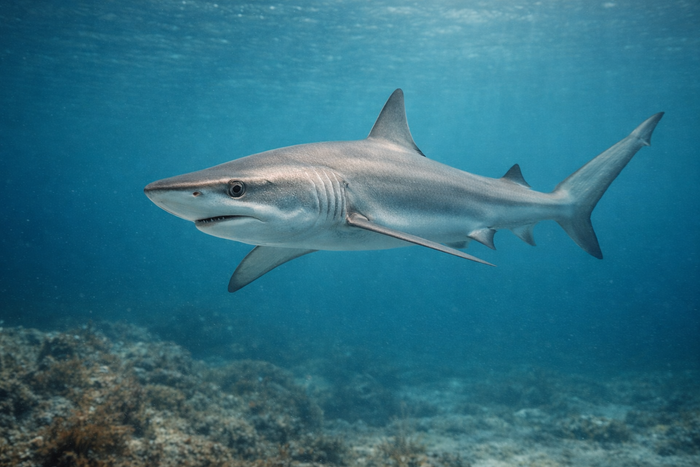
Start with the face. A slender body, conspicuously pointed snout, large round eyes, and a prominent groove behind the upper lip give this shark its distinctive profile. Its small second dorsal fin sits well back, with its origin above the rear portion of the anal-fin base. Those details matter more for identification than a vague impression of a small gray shark.
Then consider its reproductive sizing. Gulf of California research estimated that males reached maturity at a greater length than females, an unusual arrangement for a live-bearing shark. That is a population finding, not permission to guess maturity from one fish beside the boat.
The Pacific Sharpnose Shark also produces surprisingly substantial litters for its modest build. A southern Sinaloa study recorded one to twelve embryos per female. Small shark does not necessarily mean tiny family.
Habitat & Global Range
Pacific Sharpnose Shark habitat stretches along the eastern Pacific from southern California to Peru, including the Gulf of California and the Pacific coasts of Central America. This is a coastal continental-shelf species, recorded from shallow water to roughly 100 meters. Estuarine waters are part of the picture, but its saltwater identity should not be confused with a freshwater lifestyle.
Sand and mud are the useful starting points. For anglers reading a chart, that means looking beyond dramatic reefs and obvious rock piles. Broad, comparatively featureless bottom can be legitimate shark country. A range map, however, is not a promise that every suitable bay holds a dependable recreational fishery. Ask for recent, correctly identified local observations before building a trip around this species.
Behavior & Temperament
The Pacific Sharpnose Shark is a predator, but the research does not justify giving it a theatrical personality. Specific claims about aggression, schooling, daily travel routes, or a guaranteed nighttime bite would outrun the available evidence. Seasonal movements have been proposed, particularly around the Gulf of California, but their routes and drivers remain incompletely resolved.
Its feeding record is more revealing. One southern Gulf study documented twenty prey species spanning fishes, crustaceans, and cephalopods. That variety supports an adaptable hunter rather than a specialist locked onto one menu. Fish and squid are sensible bait candidates; neither should be sold as a scientifically proven recreational favorite.
Ecological Importance
Among the more useful Pacific Sharpnose Shark facts is that its ecological role is larger than its silhouette suggests. Feeding research placed it above trophic level four, identifying it as a tertiary consumer within the coastal food web. Calling it merely another small bottom fish misses that position entirely.
Its menu can also change sharply between studies. Research around Mazatlán found paper nautiluses dominating stomach contents during the sampling period, a striking contrast with fish-heavy findings elsewhere. The lesson is not that every shark wants the same bait. It is that coastal predators respond to the food actually available around them.
Conservation & Environmental Pressures
The Pacific Sharpnose Shark is classified as Vulnerable, with a decreasing population trend. It is targeted by artisanal fisheries and also caught incidentally in other gears. Coastal development and mangrove degradation add habitat pressure. Its relatively productive reproductive biology does not cancel out persistent fishing mortality; the conservation assessment explicitly identifies inadequate management and enforcement as concerns.
For recreational anglers, restraint belongs in the plan. Use tackle capable of ending the encounter efficiently, keep release tools ready, and avoid making an already landed shark wait through a photography committee meeting. Keeping sharks in the water and minimizing handling are established release principles, not optional refinements for especially sentimental anglers.
The FishyAF Take
This shark deserves better than being treated as either disposable bycatch or a miniature movie villain. The interesting part is the actual animal: the sharp profile, the coastal setting, and the chance to identify something properly instead of attaching the nearest familiar shark name.
Our take? Fish deliberately, not theatrically. Start with legal access, fresh bait, and the provisional small-shark setup in this guide, then adjust to local conditions. Do not mistake a suggested rig for a species-specific formula. A clean encounter and a prompt release beat an inflated weight estimate and five minutes of dockside wrestling. There is nothing intermediate about doing the basics exceptionally well.