Blacktip Reef Shark (Carcharhinus melanopterus): The Reef Patrol That Barely Needs Water Over Its Back
A dark fin cuts across a sunlit flat, close enough to shore to make you reconsider what counts as shark water. The Blacktip Reef Shark specializes in that moment. This compact coastal predator cruises coral reefs, lagoons, and remarkably skinny water, sometimes with its dorsal fin exposed. It looks purpose-built for a tropical postcard, right up until you notice the teeth. Unlike the larger blacktip shark familiar to many American anglers, this is a separate Indo-Pacific species with its own habits and conservation concerns. Getting that distinction right is the first useful lesson; sharing a fin color does not make two sharks interchangeable.
What Makes the Blacktip Reef Shark Unique?
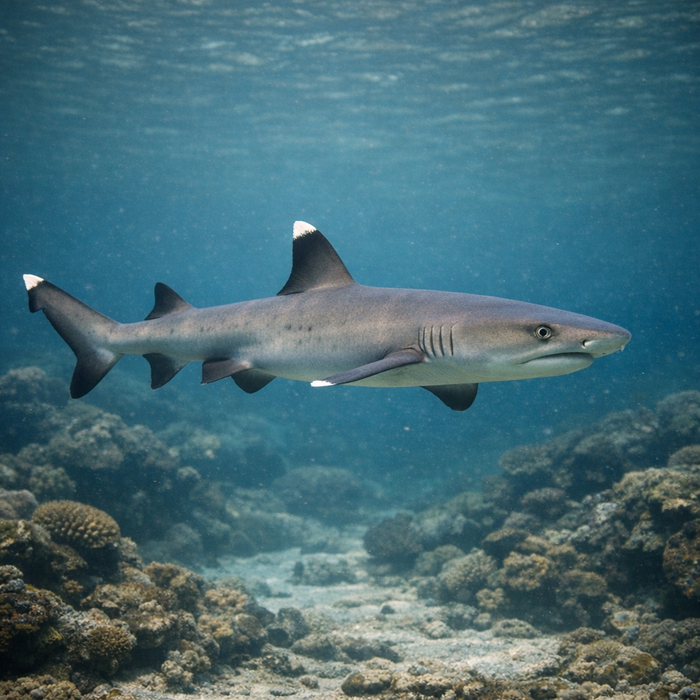
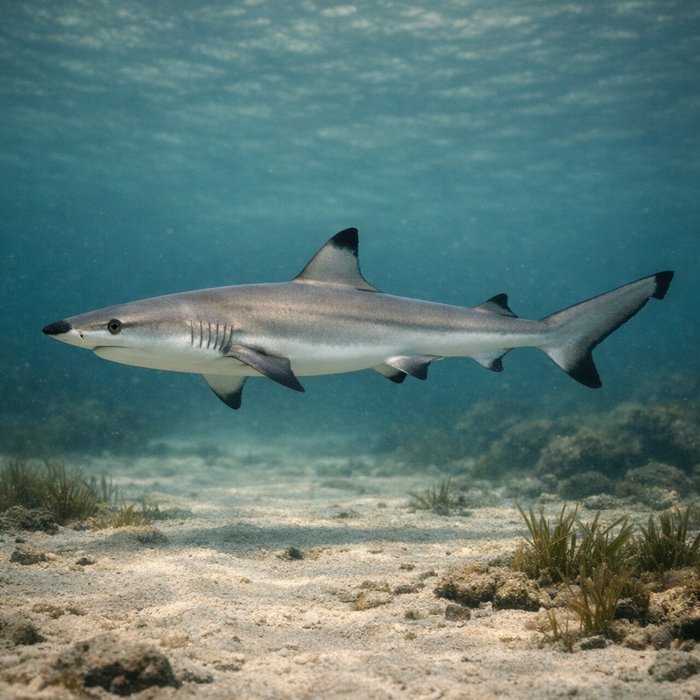
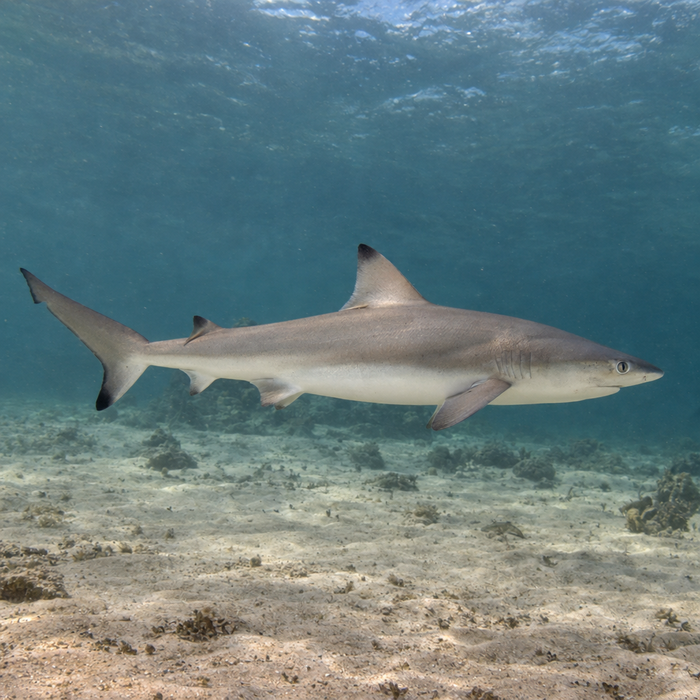
The Blacktip Reef Shark wears unusually crisp identification marks: conspicuous black fin tips, with pale borders making the first dorsal marking especially striking. Add a short, rounded snout and brownish-gray back, and the overall appearance is distinctive. Still, identify the whole animal rather than trusting one dark fin glimpsed through glare.
Its relationship with shallow water is more remarkable than its paint job. These sharks move across flooded reef flats where deeper-bodied predators have less room to operate. Newborns use shallow, structurally complex nursery habitats, and experimental work shows that temperature can influence their escape performance. Another standout trait is social selectivity: studied populations form preferred associations, rather than simply collecting wherever food happens to appear. Among useful Blacktip Reef Shark facts, that combination deserves attention: shallow-water specialist, recognizable individual, and considerably more socially organized than a swimming appetite.
Habitat & Global Range
Blacktip Reef Shark habitat centers on tropical Indo-Pacific coasts and islands. Its distribution includes the Red Sea and East African waters, southern and Southeast Asia, northern Australia, and numerous western and central Pacific islands. Coral lagoons, reef flats, sandy margins, and reef edges provide the familiar setting; some individuals also use coastal mangrove environments.
This is not an offshore roaming specialist squeezed into a lagoon for the afternoon. Tracking studies commonly reveal strong attachment to particular areas, although movements differ between locations and sexes. Think connected coastal neighborhoods rather than one universal migration route. A shark may use different parts of that neighborhood as tides change access, while reproductive movements can connect nursery areas with surrounding adult habitat.
Behavior & Temperament
The Blacktip Reef Shark is active, observant, and capable of feeding opportunities that quickly change its behavior. Small fishes dominate much of its menu, alongside crustaceans and cephalopods. It may investigate activity cautiously, but wounded fish and competing sharks can produce a much more committed response. Small does not mean suitable for hand-feeding, cornering, or casual handling.
Its daily schedule is not a simple daylight-versus-darkness switch. Research at a tropical atoll documented increased activity during evening and nighttime periods, alongside daytime use of warmer shallows. Those patterns reflected local conditions, not a worldwide appointment book. There is also evidence of learning: experimental fishing research found declining catchability with experience, suggesting individuals learned to avoid capture. A visible shark that ignores your offering is not necessarily hungry, stupid, or waiting for a bigger bait.
Ecological Importance
As a reef-associated predator, this shark occupies a middle position in a larger food web, rather than automatically ruling every reef it crosses. It consumes smaller animals while potentially becoming prey for larger sharks. Nursery habitat therefore matters for more than convenience: shelter, water depth, and temperature can influence a young shark's chances of escaping danger.
That ecological role deserves respect without the usual claim that one shark single-handedly keeps an entire coral reef healthy. Reef food webs are complicated. Protecting predators and the habitats supporting their early lives is worthwhile without turning them into mythical underwater maintenance crews.
Conservation & Environmental Pressures
The Blacktip Reef Shark is globally classified as Vulnerable. Fishing pressure and habitat degradation are important concerns, and strong local residency can make populations susceptible to depletion even when the species remains conspicuous elsewhere. Seeing several sharks beside one island does not establish that the wider population is secure.
Reproductive output is limited: females bear small litters, and reproductive timing varies geographically. Replacing removed animals is not an instant process. Protected habitats and effective fisheries management can provide meaningful refuge, but protection must fit the actual places sharks use. For anglers, the relevant response is straightforward: verify legality, avoid nursery concentrations, and treat accidental captures as release situations requiring preparation rather than improvisation.
The FishyAF Take
The appeal is not monster size. It is seeing a complete shark doing shark business in water that looks barely deep enough for your boots. Where fishing is legal, the challenge should include reading habitat, using suitable tackle, and executing a clean release—not finding the smallest shark you can drag onto dry sand.
Our position: the Blacktip Reef Shark deserves better than being treated as either a beachside villain or disposable light-tackle entertainment. Its best feature is that it belongs in the scene. Keep the reef patrol swimming, leave the nursery alone, and measure a successful encounter by how little damage you leave behind.