Grey Reef Shark (Carcharhinus amblyrhynchos): The Reef Regular With a Very Clear Back-Off Signal
The Grey Reef Shark does not need enormous size to command a reef channel. A muscular body, purposeful swimming and a dark-edged tail do the job nicely. This saltwater member of the requiem shark family belongs to the working machinery of Indo-Pacific coral reefs, not the imaginary cast of underwater villains. It is curious, socially complicated and capable of making its discomfort unmistakable. For anglers, that combination demands identification skills, sensible tackle and enough judgment to know when leaving a shark alone is the better achievement.
What Makes the Grey Reef Shark Unique?
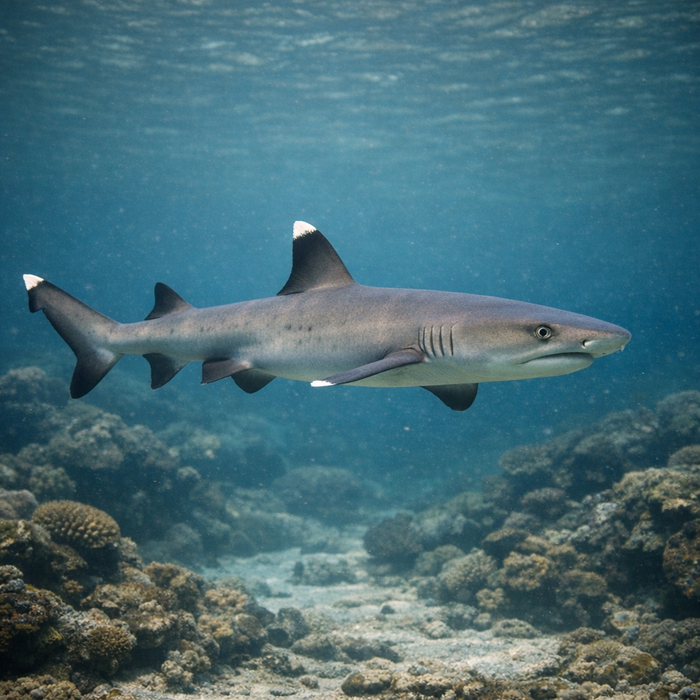
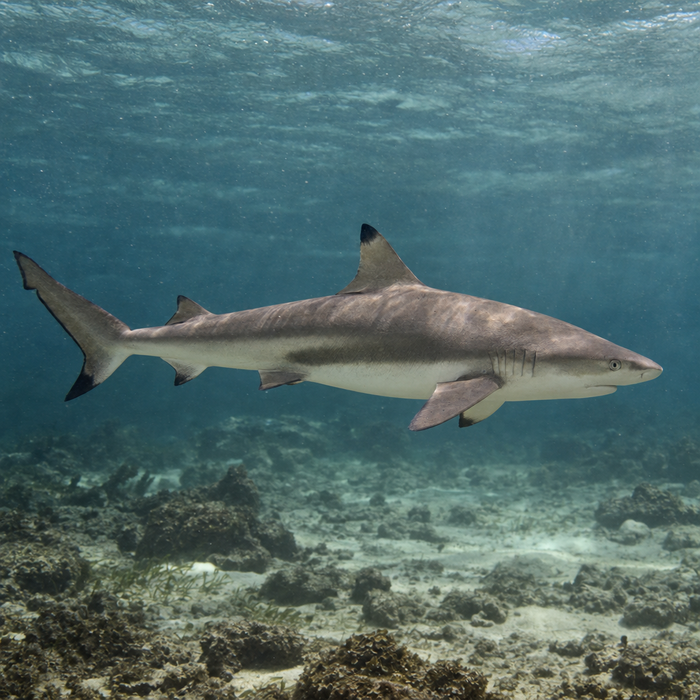
Start with the tail. A broad black margin follows its trailing edge, providing a stronger identification clue than the first dorsal fin alone. That dorsal can have a pale edge in some populations, so identifying every reef shark by a single fin tip is asking for trouble. The species also lacks the ridge between dorsal fins found in several similar-looking requiem sharks.
Then comes the warning display: raised snout, arched back, lowered pectoral fins and exaggerated swimming. This is not underwater swagger. It is a response to a perceived threat, especially when an escape route is restricted. Finally, these sharks have a surprisingly durable social side. Tracking has documented associations between particular individuals lasting up to four years. Those are three Grey Reef Shark facts worth remembering: distinctive tail, explicit warning signal and long-running company.
Habitat & Global Range
Grey Reef Shark habitat centers on tropical reefs across the Indian and Pacific oceans. Outer slopes, drop-offs and channels are characteristic settings, particularly where moving water meets reef structure. Its distribution includes the Red Sea, East Africa, northern Australia and numerous Pacific island groups. This is a marine reef shark, not a freshwater visitor or an Atlantic species hiding under a similar common name.
Although frequently encountered in comparatively shallow reef water, the species has been recorded down to roughly 280 meters. That depth range should not be mistaken for a recommendation to fish deep. Local geography matters more than a magic number. Individuals can show strong attachment to particular reef areas while still making excursions away from their usual daytime gathering places. Resident does not mean stationary.
Behavior & Temperament
The Grey Reef Shark often gathers with others during daylight, then disperses into smaller groups or individual movements at night. Studies reveal structured social communities rather than a random collection of animals sharing convenient water. Some sharks leave their core areas for several days before returning, yet their longer-term associations persist. That is considerably more interesting than the old lone-killer stereotype.
Curiosity should never be confused with permission to crowd it. A shark investigating activity is not automatically attacking, but a threatened animal can escalate quickly. Give it room, avoid blocking its route and treat a threat display as an instruction rather than entertainment. Hooking one adds another layer of risk; this is not an appropriate species for improvised handling or a triumphant lap around the deck.
Ecological Importance
This predator connects different parts of the marine food web. Its feeding includes fishes and cephalopods, and research at Palmyra Atoll indicates that movements between offshore feeding areas and reef-associated locations can transfer nutrients back toward the reef. The important point is not that one shark single-handedly keeps coral healthy. It is that mobile predators participate in ecological connections that are easy to overlook from a boat.
Nor is every reef shark the undisputed top predator. Larger sharks can prey on this species. Its ecological role is therefore more nuanced than the familiar apex-predator slogan: hunter, potential prey and a moving link between habitats. Understanding that complexity makes a reef more interesting, not less impressive.
Conservation & Environmental Pressures
The Grey Reef Shark is classified as Endangered globally. Fishing pressure is especially concerning for an animal associated with identifiable reef areas and relatively limited reproductive output. Females give birth to small litters after approximately a year of gestation; depleted populations cannot simply replace themselves at the pace of heavily harvested baitfish. Habitat degradation adds pressure to the reef systems these sharks use.
Protection is not uniform across its range. Marine reserves, local fishing restrictions and international trade controls operate at different scales. A global conservation category is not itself a local fishing regulation, and a legal fishing area is not proof that targeting an endangered shark is a good idea. Check both the rules and the consequences.
The FishyAF Take
Respect beats bravado here. The Grey Reef Shark is compelling because it has recognizable habits, social relationships and boundaries, not because someone can hang it beside a ruler. Where fishing is lawful, prioritize strong tackle, a short fight and an in-water release; where protection or safe handling is uncertain, choose another target. A photograph is optional. A functioning reef predator getting back to its business should be the point.