Pigeye Shark (Carcharhinus amboinensis): The Bull Shark Lookalike That Deserves Its Own Warning Label
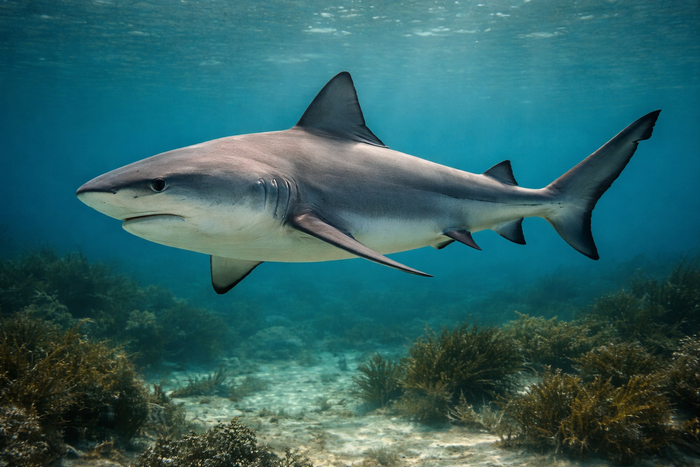
The Pigeye Shark looks like somebody built a coastal predator with extra shoulders and forgot to give it a friendly name. Thick through the body, blunt across the nose, and equipped with small eyes, it is easily mistaken for a bull shark. That resemblance has muddied everything from catch reports to scientific records. But this is a distinct species, not a regional nickname for its better-known lookalike. Learning the difference is part of taking the fish seriously.
For anglers, the appeal is straightforward: substantial shark, shallow water, advanced responsibility. FishyAF places it firmly in heavy-tackle territory, with bait fishing and bottom fishing as the practical starting points. The challenge is not simply getting a bite. It is knowing what you hooked and having a release plan that works before the leader reaches your hands.
What Makes the Pigeye Shark Unique?
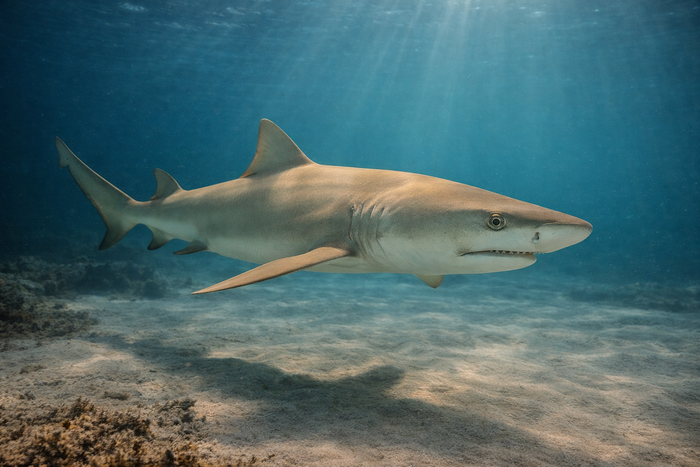
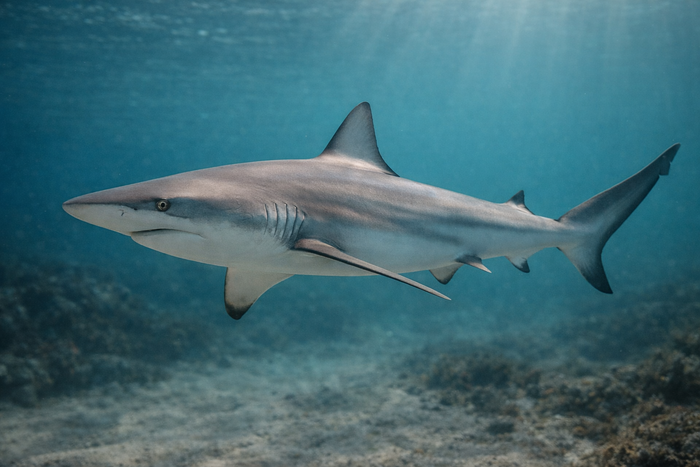
Start with the proportions. The Pigeye Shark carries a tall first dorsal fin and a much smaller second dorsal, with the first standing more than three times as high. Combined with its stocky build and short, broadly rounded snout, that disproportion is a useful identification clue. It is not a substitute for checking a proper identification guide, particularly where similar sharks overlap.
Then there is the identification problem beneath the surface. Specialists distinguish it from bull sharks using features that include vertebral counts and fin proportions, not merely whether the head looks sufficiently chunky. Its broad, serrated upper teeth add another unmistakably serious feature. These are working cutting tools, not decorative menace. The most useful Pigeye Shark facts begin with anatomy, because getting the name right changes the value of every observation that follows.
Habitat & Global Range
Pigeye Shark habitat centers on warm coastal water, including bays, estuaries, beaches, and waters near the surf zone. Its distribution is patchy across the Indo-West Pacific, with records also in the eastern Atlantic. Northern Australia is an important part of that range, extending from Western Australia around the tropical north to southeastern Queensland. This is primarily coastal shark country, not an offshore bluewater specialty.
Murky, shallow environments matter especially for juveniles. Research in tropical Queensland shows that rainfall and freshwater inflow can shift their distribution within coastal habitat. A river mouth is therefore not a permanent address with fins attached: conditions change, and the sharks respond. Estuarine occurrence also should not be confused with the bull shark's famous ability to travel far into freshwater rivers.
Behavior & Temperament
The Pigeye Shark generally works close to the bottom, although it is not confined there. Its diet includes bony fishes, other sharks and rays, cephalopods, and crustaceans. That menu makes bottom-presented natural bait a sensible approach, without proving that any particular bait is irresistible. Biology gives anglers a starting point, not a guaranteed booking.
Juvenile movements can track the tide, with sharks entering shallower intertidal areas on rising water and retreating as it falls. Their activity does not support a simple universal rule that darkness is always best. As for temperament, skip the movie script. A large shark with substantial jaws requires distance and controlled handling, whatever reputation somebody assigns it at the ramp.
Ecological Importance
This predator connects several parts of the coastal food web by eating animals living both near the seabed and higher in the water column. Calling it merely a fish eater misses that breadth. Its feeding links coastal fishes, smaller elasmobranchs, and invertebrates, while recorded consumption of mammalian carrion shows that scavenging can also enter the picture. That is ecological versatility, not evidence of indiscriminate aggression.
Sheltered bays also support early life stages. In Cleveland Bay, young sharks remain around nursery habitat before expanding into deeper areas as they grow. Protecting those places therefore means protecting a stage of the species' life cycle, not simply preserving a convenient patch of fishing water.
Conservation & Environmental Pressures
The Pigeye Shark is globally classified as Vulnerable. Fishing pressure is a central concern, and confusion with similar species complicates the catch information needed for management. Its coastal distribution places it within reach of inshore fisheries, including gillnets and longlines. Regional management outcomes can differ, so a favorable assessment in one country does not cancel broader conservation concerns.
It also produces live young rather than broadcasting vast numbers of eggs. Developing embryos receive nourishment through a yolk-sac placenta, and reported litters number only a few to around a dozen pups. That reproductive strategy deserves more respect than a casual assumption that the ocean will simply replace every removed adult.
The FishyAF Take
This shark does not need a manufactured monster reputation. It needs correct identification and anglers whose preparation extends beyond buying thicker line. Treat the Pigeye Shark as an advanced encounter, not a shoreline stunt. Fish where it is lawful and away from swimmers, keep the animal in the water, and have suitable cutters ready.
The impressive part is not wrestling a shark into a photograph. It is keeping your judgment when the interesting end of the tackle starts moving.