Sharptooth Lemon Shark (Negaprion acutidens): Two Big Dorsal Fins, Zero Interest in Your Ego
The Sharptooth Lemon Shark does not need speedboat theatrics to own a lagoon. A broad head, heavy body, yellow-brown coloring, and two unusually large dorsal fins give this coastal predator a silhouette worth remembering. Also called the sicklefin lemon shark, it belongs to the requiem shark family, Carcharhinidae. It resembles the lemon shark of the Americas, but this is a separate Indo-Pacific species, not the same fish wearing a different regional nickname. Getting that distinction right matters before anyone starts swapping fishing advice or claiming records.
What Makes the Sharptooth Lemon Shark Unique?
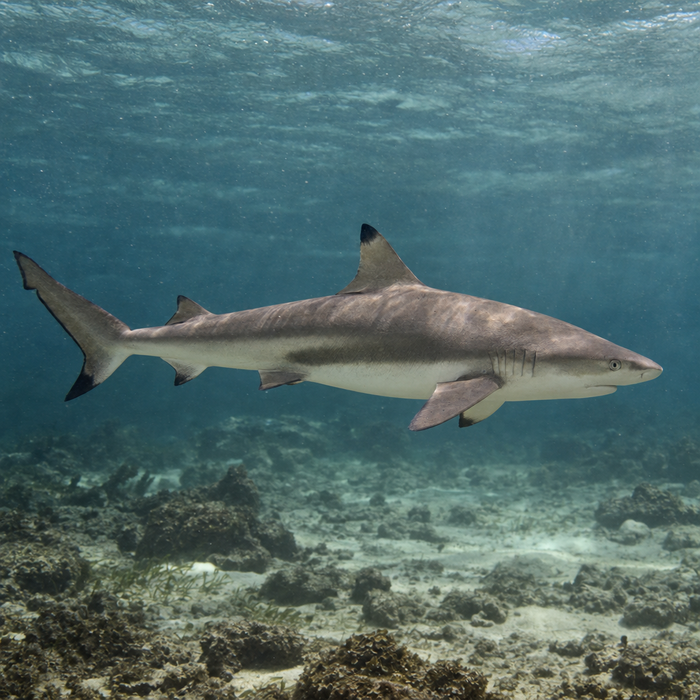
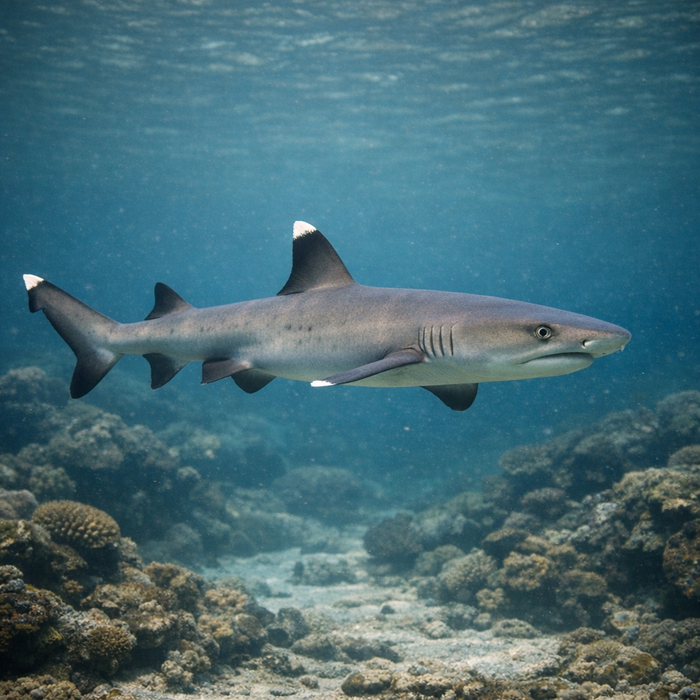
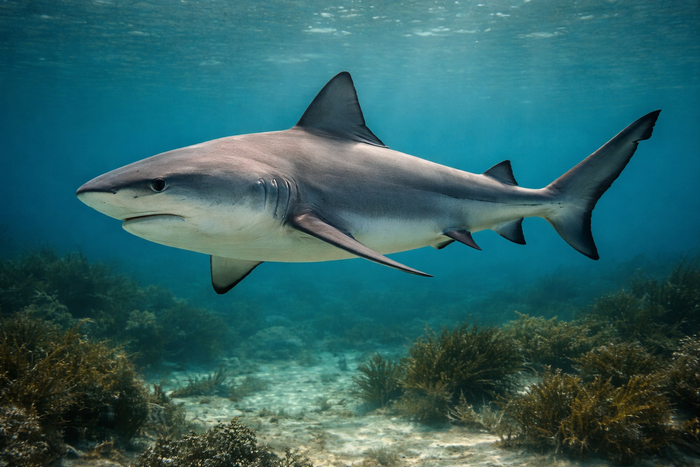
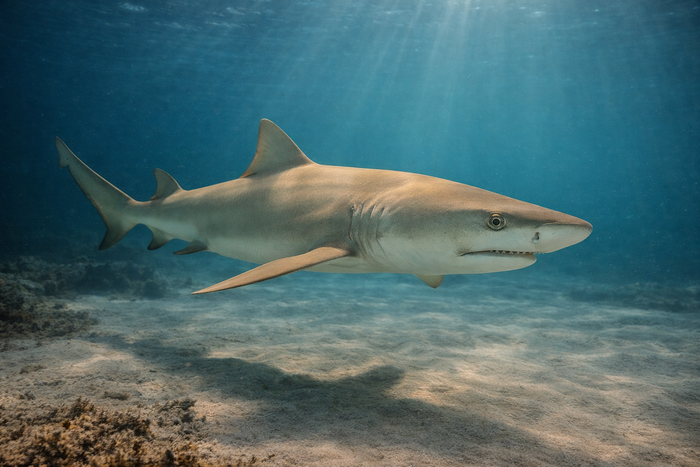
Start with those dorsal fins. The second is nearly as large as the first, an excellent identification clue in a group where many species carry a much smaller rear dorsal. Add the strongly curved, sickle-shaped fins and broad, blunt snout, and the identification picture becomes clearer. Its teeth have narrow, pointed cusps rather than the broad cutting triangles people often imagine when they hear shark. Large individuals can develop fine serrations on parts of the upper teeth.
The reproductive story is equally interesting. Genetic research in French Polynesia found that most sampled litters had multiple fathers, while several females repeatedly used particular nursery areas. Among Sharptooth Lemon Shark facts, that combination deserves attention: complicated parentage, familiar delivery grounds, and a coastal life cycle that depends on more than one patch of reef.
Habitat & Global Range
Sharptooth Lemon Shark habitat centers on coastal reefs, sandy lagoons, mangrove flats, and sheltered embayments. Its distribution stretches through the Indian Ocean and into the western and central Pacific, including northern Australia and numerous island systems. This is principally a saltwater coastal shark, not an offshore specialist that occasionally wanders toward land. Shallow nursery habitat is especially important to juveniles. Records extend to approximately 90 meters, although that maximum should not distract from its strong association with accessible coastal water.
Think connected habitats rather than isolated fishing spots. A lagoon, its surrounding flats, and nearby deeper water can all matter during different stages of the animal's life. Protecting only the photogenic coral leaves a lot of the actual neighborhood exposed.
Behavior & Temperament
A Sharptooth Lemon Shark often swims slowly near the bottom or rests on it. That unhurried presentation is not an invitation to crowd, touch, or corner the animal. Adults can be wary of divers, yet react forcefully when provoked. Quiet does not mean manageable, and a large shark does not become safe because somebody has given it a fruit-based name.
Movement research adds another layer. At Ningaloo Reef, tagged adults showed strong attachment to lagoon areas, with some also making substantial seasonal journeys. Shallow-water use increased at high tide and at night. Those findings describe a particular studied population, not a universal fishing timetable for every island and coastline. The useful lesson is that apparent residency and meaningful movement can coexist.
Ecological Importance
The Sharptooth Lemon Shark occupies a high position in coastal food webs, consuming bottom-associated fishes and rays, with smaller sharks also recorded as prey. Its role is predatory, not ornamental: the impressive animal cruising the lagoon is participating in the same food web that supports the surrounding fish community.
That does not justify claiming this species single-handedly keeps every reef healthy. Ecological relationships are more complicated than a motivational poster. What is clear is that removing a large coastal predator changes the membership of that system, while damaging nursery habitat undermines the places needed to produce its next generation.
Conservation & Environmental Pressures
The Sharptooth Lemon Shark is globally Endangered. Fishing pressure and degradation of mangroves, estuaries, and coral-reef environments are central concerns. Its shallow distribution brings it into contact with coastal fisheries, while restricted local movements can leave particular groups vulnerable to depletion. Australian assessments describe a more favorable regional situation than the global picture, but regional resilience is not a worldwide clean bill of health.
There is no useful conservation shortcut here. Habitat protection, effective fisheries management, and attention to local populations all matter. A shark being present at a popular dive site does not prove that neighboring coastlines are doing well, much less the entire species.
The FishyAF Take
The Sharptooth Lemon Shark is impressive enough without turning it into a fictional tackle-wrecking monster. Its real appeal is the combination of unmistakable shape, coastal power, and a life tied closely to vulnerable habitat. That is a better story than another unsupported claim about an unstoppable fight.
Our position is straightforward: observation first, legal clarity always, and no casual trophy agenda. Where targeting is lawful, advanced preparation and a credible in-water release plan belong ahead of bait selection. Where it is protected, put the rod away. The memorable encounter is the one that does not require the shark to pay for your photograph.