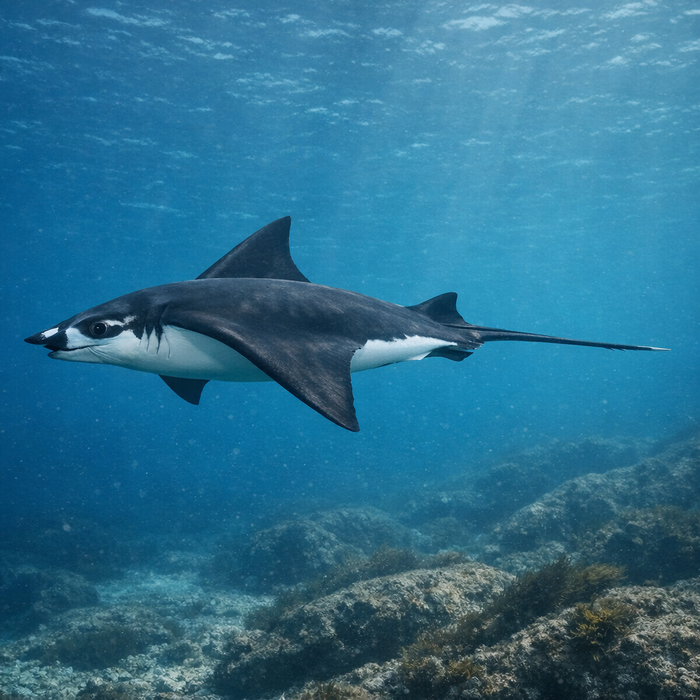
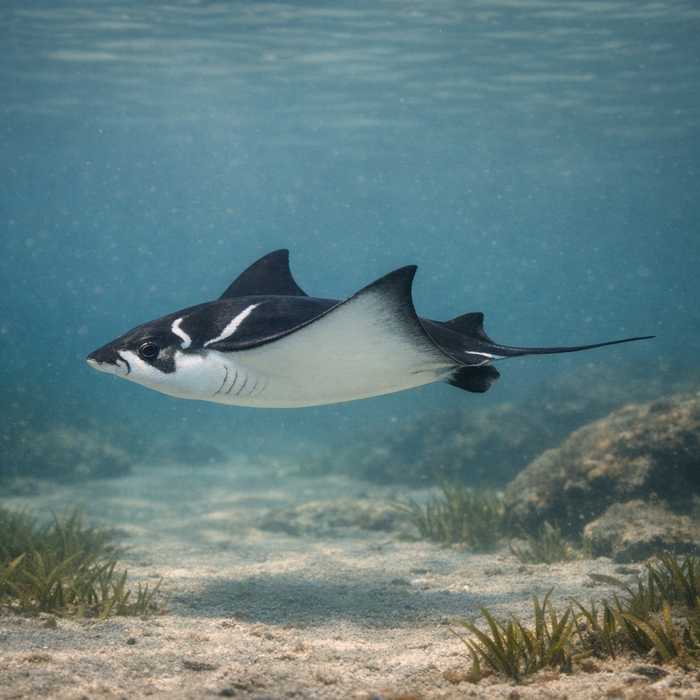
Bentfin Devil Ray (Mobula thurstoni): The sleek bluewater hovercraft you spot before your brain believes it.IntroductionThe bentfin devil ray is the ocean's stealth bomber: a smooth, winged silhouette ghosting under slicks and current lines, then exploding into the air like it forgot it was a fish. Anglers chasing tuna or billfish bump into them out in the blue and remember it for life. You won't "work baits" for a bentfin devil ray, but you might share the surface with a school that turns the ocean into a rolling, silver-black carousel. If you're here for bentfin devil ray facts or to understand bentfin devil ray habitat, you're in the right place.What Makes the Bentfin devil ray Unique?Two things: that signature bend in the wings and a feeding strategy built around finesse, not fangs. Mobula thurstoni wears a subtle kink along the leading edge of each pectoral fin, giving the species its name and a distinct look compared to other mobulas. Add unfurling cephalic lobes that roll into perfect funnels when it's chow time and you've got a purpose-built plankton hoover. They don't strike lures like pelagics; they corkscrew through krill patches with tight barrel rolls, filter plates catching dinner like a sieve that never clogs.Habitat & Global RangeThe bentfin devil ray rides warm currents across tropical and subtropical oceans worldwide. Think offshore edges, island drop-offs, seamounts, and any place currents pile up plankton. On calm days they'll ghost near the surface under sargassum lines and color changes. At night, they may follow the daily vertical migration of zooplankton, sliding higher in the water column when the buffet rises. Inshore sightings happen when blooms stack bait and plankton along coastal contours, but this species lives its best life in open water.Behavior & TemperamentThe bentfin devil ray is more curious than cagey. They'll approach boats, pace the bow, and sometimes leap clear with cannon-shot splashes. When feeding, they tighten into mini-whirlpools, schooling in graceful spirals that make you forget about everything else. Hook one accidentally and you'll learn fast: they're deceptively strong for their size, built like carbon-fiber kites with a turbo. They lack a stinger, but their skin is tough and abrasion-prone to line. Smart move is hands-off respect and a quick, clean release if you end up connected at all.Ecological ImportanceThis ray is a midwater maestro in a food web that starts with microscopic critters. By filtering swarms of zooplankton, bentfin devil rays transfer energy upward and redistribute nutrients across big distances. They're prey for almost nobody as adults, yet not apex smashers either. Their presence can telegraph healthy upwelling and productive currents. Where you see bentfin devil rays, you often see life-bait schools, birds, and sometimes predators riding the same buffet line.Conservation & Environmental PressuresThe bentfin devil ray is listed as endangered, hammered by bycatch and targeted take for gill rakers in some markets. Add in plastic pollution, ghost nets, and warming seas shuffling plankton patterns, and the pressure stacks up. Many regions now protect mobulids outright, restricting landing and sometimes even purposeful interaction. That's a good thing. This is a slow-growing, low-fecundity animal that produces a single pup after a long pregnancy. Lose adults and the population doesn't bounce back fast.The FishyAF TakeLet's be blunt: the bentfin devil ray isn't your next check-the-box target, and that's fine. It's the wild encounter that hijacks your offshore day in the best way. If you fish bluewater long enough, you'll get the show: shadow-wings under the bow, a lazy roll, maybe a full-body breach that detonates your coffee. Treat them like you'd treat a classic car in a tight parking lot: look, admire, don't bump. The bentfin devil ray makes the ocean feel big and alive. That's worth more than any grip-and-grin.