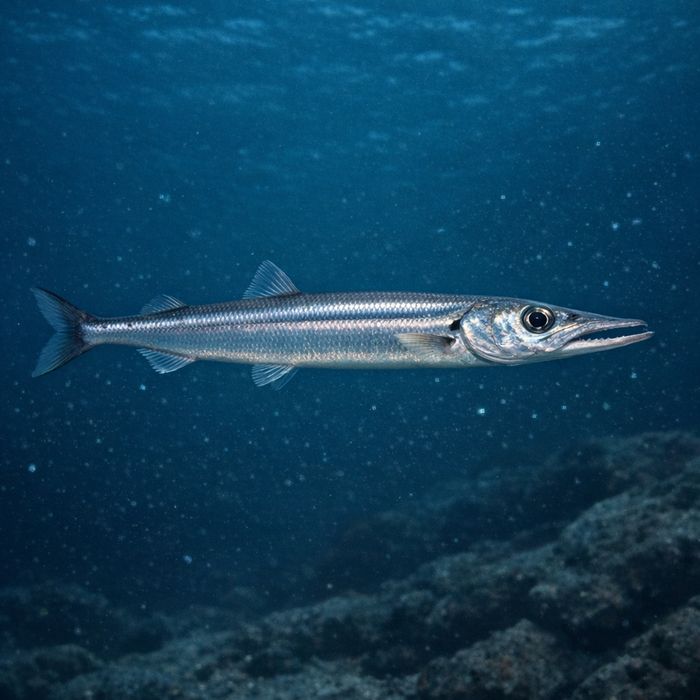
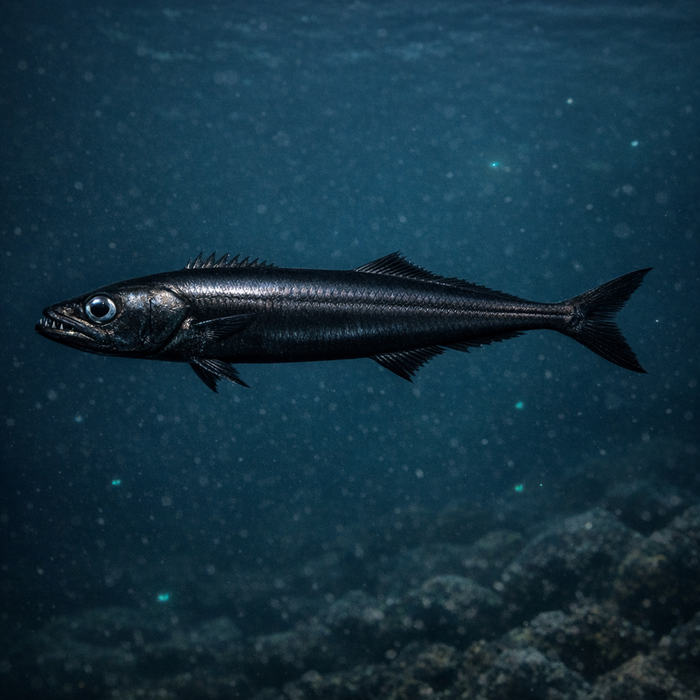
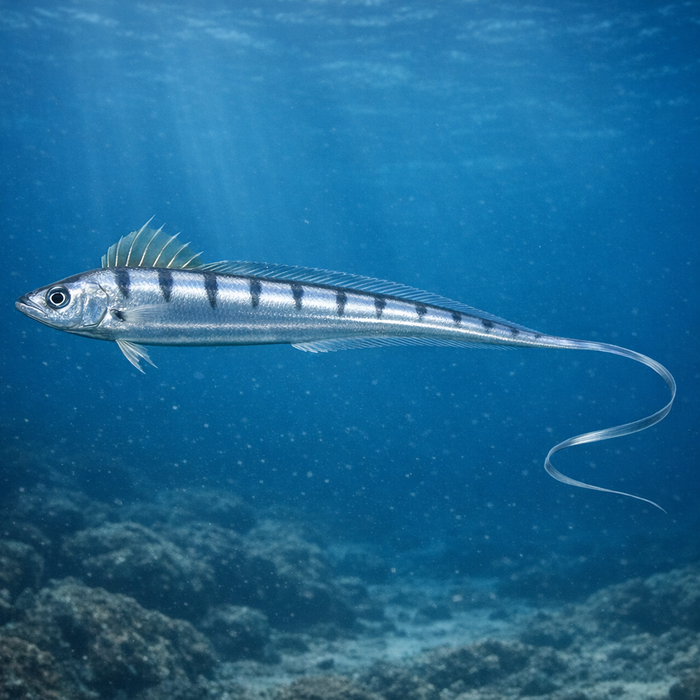
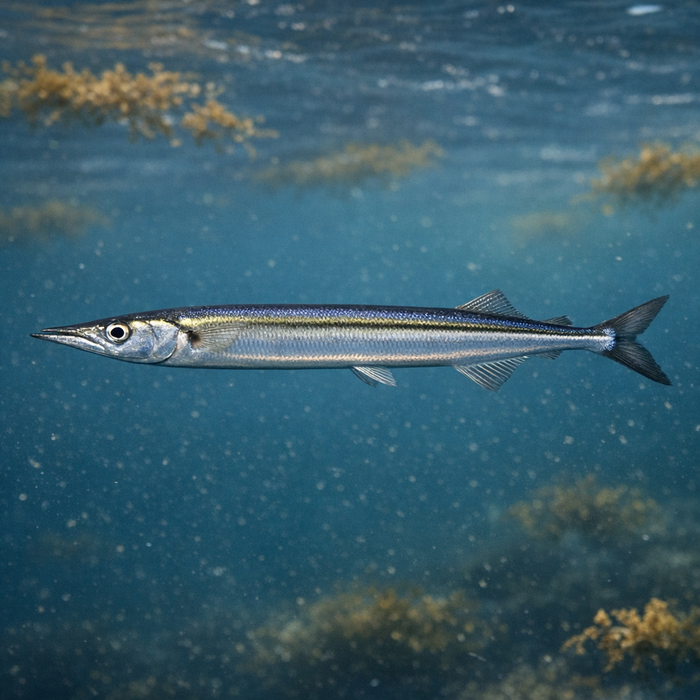
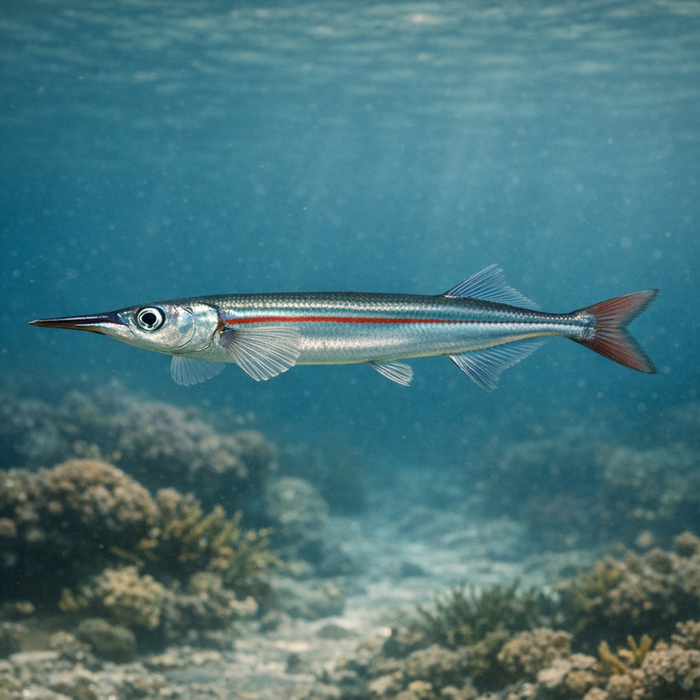
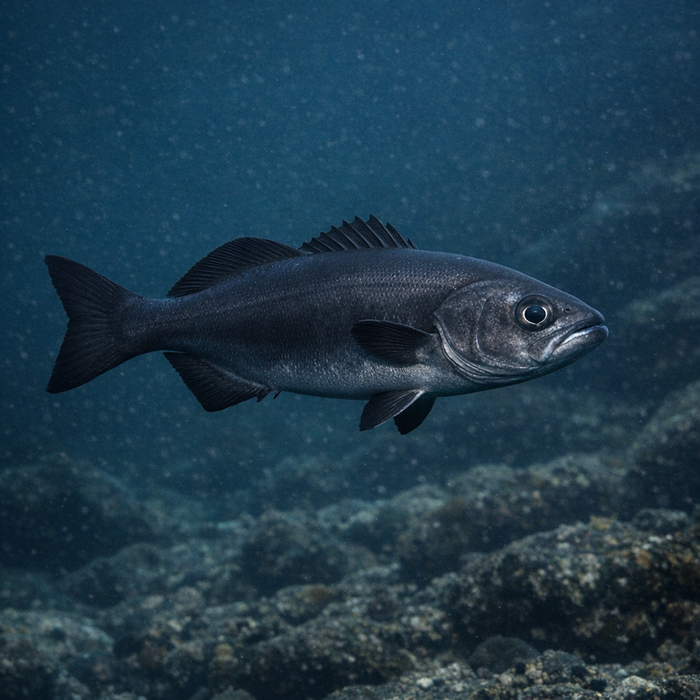
Black barracudina (Macroparalepis johnfitchi): A needle-toothed shadow rocket from the twilight zoneIntroductionThe black barracudina is that mysterious streak your sonar paints between the thermocline and the abyss, then erases before you blink. Slender, slick, and armed with surgical fangs, this deep-pelagic predator is more ghost than target. You won't see it smashing bait balls at the surface or tail-walking after a hookset. But in the dim blue of the mesopelagic, the black barracudina plays a sharp game of speed and ambush. If you want Black barracudina facts that actually matter to anglers, start here.What Makes the Black barracudina Unique?First, the build: think elongated missile, minimal drag, all business. The jaws sport needle teeth that interlock like a zipper, letting Macroparalepis johnfitchi pin down slippery midwater prey. Second, stealth. The body carries a dusky, light-eating sheen and an internal trick few fish flaunt: a jet-black stomach lining that hides glowing prey from bigger predators below. Third, it's a commuter. Black barracudina shift vertical gears daily, cruising hundreds of meters up at night and dropping deep by day. It's a living torpedo customized for open-water ambush, not reef skirmishes.Habitat & Global RangeIf you're searching for Black barracudina habitat, think blue water with depth under the keel. This fish rides the mesopelagic freeway along continental slopes, canyons, and offshore banks where currents concentrate life. Most encounters trace the Pacific margin, especially the North Pacific and the American West Coast, but it's a research-heavy story with patchy public data. Anglers cross paths on deep-drops near slope breaks or during nighttime drifts when midwater life rises. You won't chum them onto a reef or stumble across schools in bays. They're creatures of the big blue middle.Behavior & TemperamentBlack barracudina are decisive eaters but not brawlers. They strike with quick, slashing precision and rely on speed more than brute strength. Picture a lineup of open-water sprinters with paper-light bones and big eyes tuned to blue wavelengths. They're loosely schooling at times, more like scattered packs moving through "lanes" of prey rather than tight bait balls. At night, they hunt higher in the column, often just above the thermocline, then fade deeper as the sun pushes light down. Hook one and you get fast headshakes and a short, slippery scrap, not an endurance match.Ecological ImportanceThe black barracudina is a premium mid-chain link. It converts small midwater fish and invertebrates into calories for apex predators: larger tunas, billfishes, dolphins, and deep-diving mammals. That black stomach lining isn't just cool trivia, it's part of the hide-and-seek that keeps energy moving upward without the barracudina becoming lunch too quickly. Remove this player and you thin the buffet line for a lot of heavy hitters.Conservation & Environmental PressuresFormal conservation status is mostly a shrug because deep pelagic species get less angler attention, fewer surveys, and even fewer targeted assessments. The big-picture threats are broad: climate-driven shifts in temperature layers, oxygen minima moving and expanding, and food-web tweaks from changing upwellings. Industrial midwater nets and incidental bycatch can touch this group, though black barracudina aren't a commercial focus. The strongest management tool for a fish like this remains what protects everything else out there: sane bycatch rules, respect for slope and canyon habitats, and data collection that actually follows the midwater migration story.The FishyAF TakeThe black barracudina is not a grip-and-grin hero. It's a deep pelagic specialist that wins quietly, with stealth features and a timing game most anglers never see. Want a highlight reel? Drop small glowing jigs or squid strips into the midwater at night along a shelf edge and hope the elevator doors open. Black barracudina won't headline your trip, but they're a fascinating curveball, proof that the ocean's best tricks often happen between the spotlight and the bottom. Learn the rhythm of that in-between and you'll understand the black barracudina better than most, even if you only meet it once.