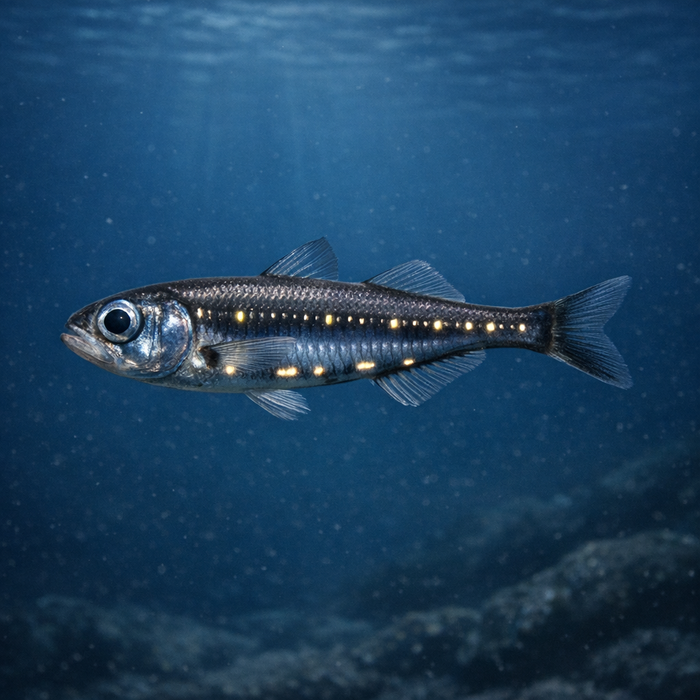
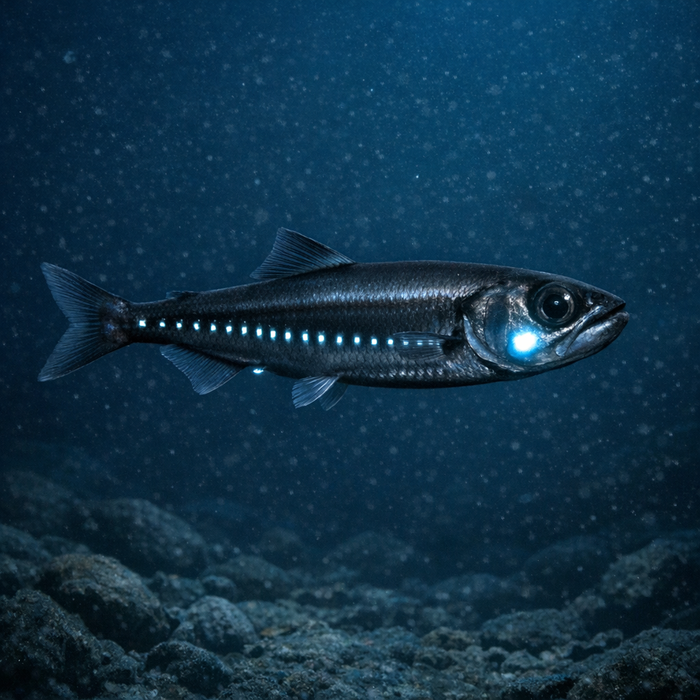
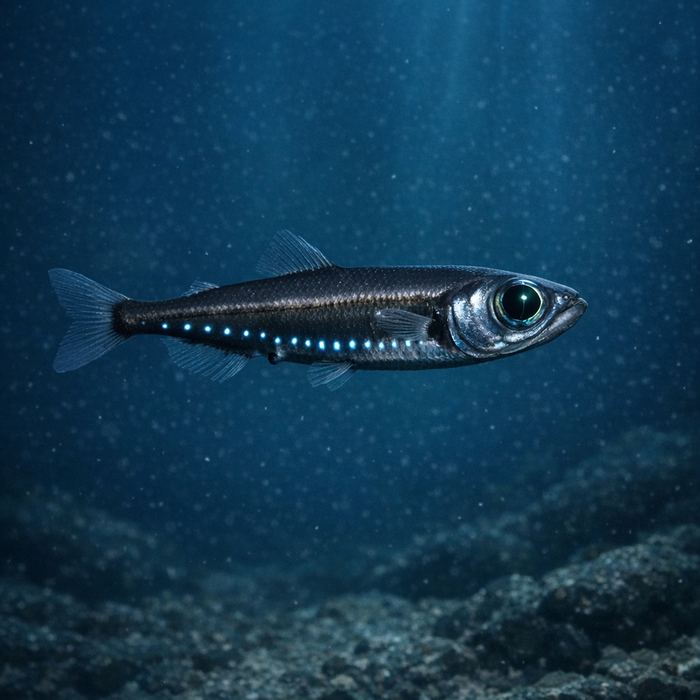
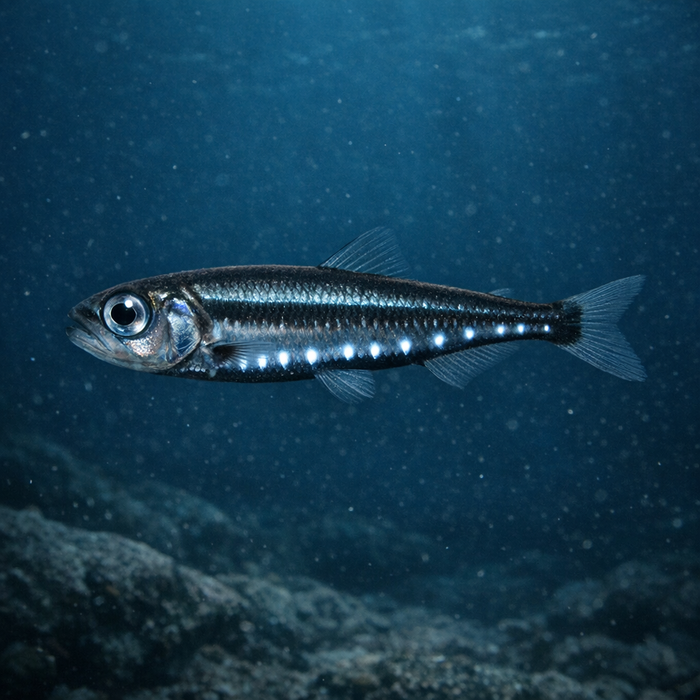
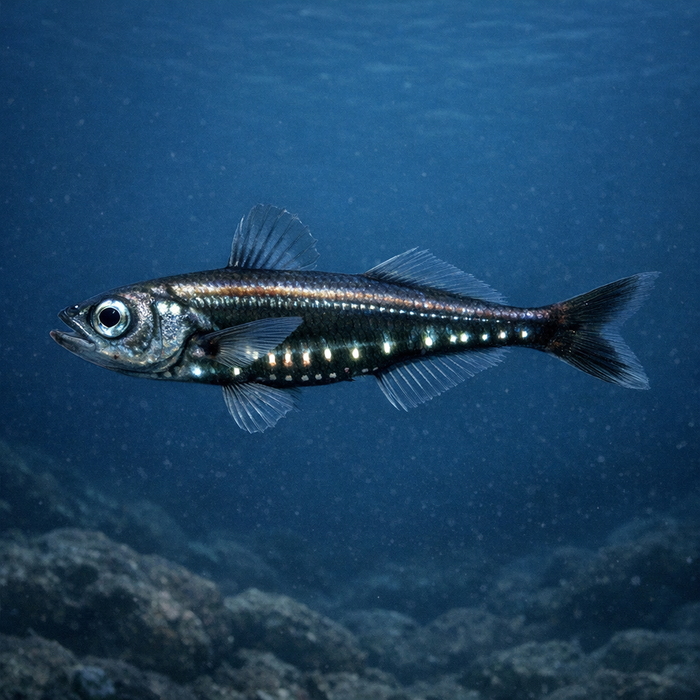
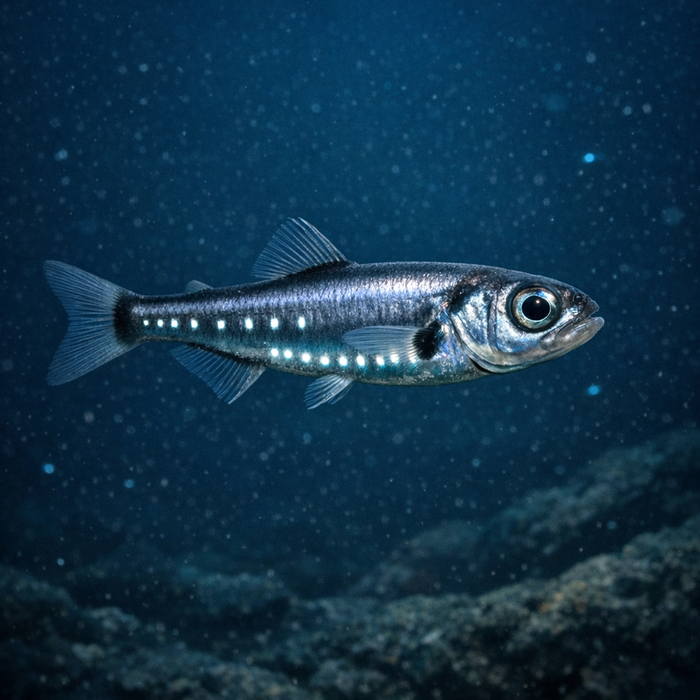
Bottlelights (Danaphos oculatus): Tiny Glowsticks With A Big CommuteIntroductionBottlelights are the after-hours crowd of the open ocean. Blink and you'll miss them. Look again with a bright deck light and a micro-jig, and you might see a pocket-sized fish blinking back. Danaphos oculatus is a deep-scattering-layer regular, a living spark in the dark that makes the nighttime ocean hum. You won't book a charter just to chase bottlelights, but if you care about weird ocean things and micro-species, this one is prime. Consider this your quick fix of Bottlelights facts before you head offshore.What Makes the Bottlelights Unique?First, the lighting package. Bottlelights carry rows of photophores along the belly and flanks that glow blue-green. They don't "shine" like a lantern; they match the moonlight overhead to erase their shadow, a stealth trick called counter-illumination. Second, the commute. Each night they rise hundreds of meters from deep, cold water to feed near the surface, then sink back by dawn. That vertical migration fuels entire food webs and is one of the planet's largest daily wildlife movements. Third, the build. Big eyes, silvery sides, and a streamlined, torpedo profile make a fish that's optimized to survive midwater where there's no structure and no mercy.Habitat & Global RangeWhen anglers ask about Bottlelights habitat, the answer is simple and brutal: midwater darkness. Bottlelights live in the mesopelagic, typically hundreds to a thousand meters down by day, sliding shallower at night. They are pelagic to the core, running open ocean and continental slope waters worldwide in temperate and tropical belts. Structures like canyons, shelf breaks, and current edges help concentrate life, and that's where your deck lights sometimes pull them within reach. They aren't a pier species in the usual sense, but strong current, clean blue water, and a big light can bend the rules.Behavior & TemperamentBottlelights are schoolers that operate like a nervous cloud. They're not aggressive, but they feed decisively on tiny crustaceans and larvae when the buffet is right. The photophores dim and brighten with intention. Off when predators show. On when counter-illumination matters. Their movement is elastic, pulsing with currents, moon phase, and the rise and fall of the deep scattering layer. Hook one and the fight is brief, but you'll feel quick taps on ultralight tackle.Ecological ImportanceHere's the twist: this little sparkle of a fish is heavyweight biomass. Bottlelights help shuttle carbon from the surface to depth each night, a biological conveyor belt that matters for the whole planet. They're also a crucial snack for bigger predators, from squids and billfish to tunas and dolphins. Their schooling behavior builds the famous sonar "false bottom" that trawlers and research vessels read as a living layer.Conservation & Environmental PressuresDanaphos oculatus is not a typical target of commercial fishing, and current assessments lean toward stable. But mesopelagic communities don't exist in a vacuum. Large-scale plans to harvest midwater micronekton, changing ocean temperatures, oxygen minimum zones, and light pollution from expanding maritime traffic all have potential to mess with their nightly commute. Any major shift to that deep scattering layer would ripple through predators, carbon cycling, and, yes, the oddball fisheries that tap into nocturnal life with lights.The FishyAF TakeBottlelights are proof that not every cool fish flexes a drag. This species is a science-class stunner that sneaks into angling when offshore lights and curiosity line up. If you're a species hunter, add bottlelights to your list and keep micro gear in the kit. If you're a big-game purist, at least give them a nod. A lot of your trophies are carb-loading on these shimmering commuters. That's the real-world magic under the glow: a small fish, a giant role, and a surprisingly fun notch on an angler's belt.