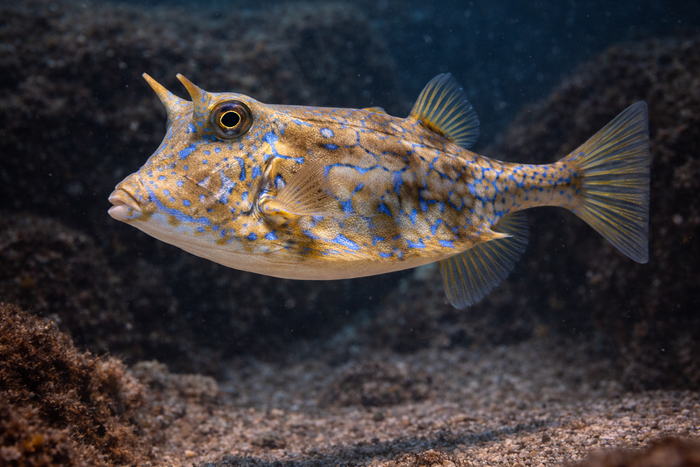
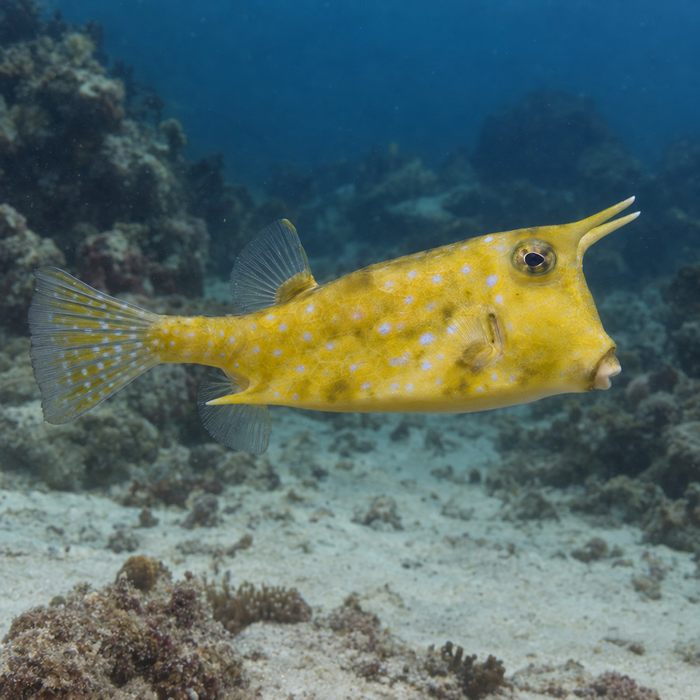
Buffalo trunkfish (Lactophrys trigonus): The armored cube that slow-rolls reefs like a tiny bulldozerIntroductionThe buffalo trunkfish is proof that evolution sometimes designs for weird, not speed. Box-shaped, armored, and almost comically calm, this reef browser drifts along like a hovercraft with fins. Anglers bump into it while soaking shrimp for snapper or idling the flats, and divers meet it face to face over coral heads. If you're here for Buffalo trunkfish facts or curious about Buffalo trunkfish habitat, you're in the right spot. It might not peel drag, but it's one of the most unforgettable fish you'll ever see.What Makes the Buffalo trunkfish Unique?Start with the hardware. The buffalo trunkfish wears a rigid carapace made of fused hexagonal plates, turning the whole body into a literal trunk. That shell funnels power to a tiny tail and pectoral fins, creating buttery-smooth hovering and pinpoint turns, but zero sprint capability. Then there's the mouth: a small, beaklike tool built to crunch snails and crabs that other fish ignore. Finally, like other boxfishes, it carries a chemical wildcard. When extremely stressed, the species can exude ostracitoxin, a nasty mucus defense that ruins a predator's day and is infamous among aquarists. This cocktail of armor, finesse, and chemistry makes the Buffalo trunkfish a truly odd unit in the reef lineup.Habitat & Global RangeYou'll meet the Buffalo trunkfish across the tropical Western Atlantic, from the Florida Keys and Gulf of Mexico through the Caribbean and down toward northern South America. It's a homebody, rarely straying far from structure. Think coral reefs, patch reefs, and adjacent sand or rubble where it can hover, poke, and puff jets of water into the bottom to flush prey. On quiet days you can sight one creeping on sandy flats next to grass beds in 6 to 40 feet, and deeper along reef edges when the sun is high or the current's moving. The Buffalo trunkfish prefers clear, warm water with some current and a buffet of small invertebrates packed into the substrate.Behavior & TemperamentThis fish is mellow but methodical. It feeds by inspecting the bottom, then blasting a targeted jet from its mouth to uproot tiny crabs, snails, and worms. Instead of long chases, it patrols with surgeon-precise fin beats, turning in place or nose-down like a curious drone. Buffalo trunkfish are mostly solitary, occasionally pairing or loosely sharing productive patches. Hooked fish don't run far. They pinwheel, dig, and bulldoze for bottom-more stubborn than strong. Their small mouth and bony lips make hookups a finesse game with tiny baits and patience.Ecological ImportanceBuffalo trunkfish serve as slow-motion gardeners of the reef. By rooting around, they aerate soft sediments, recycle nutrients, and chip away at small invertebrate populations that otherwise overgrow crevices. That feeding style creates little puffs and divots where algae and microcritters can re-colonize, adding texture to the reef's living surface. They're prey for only the confident or the desperate. The carapace, foul-tasting slime, and occasional toxin release make them a risky snack for predators. In short, they're niche players that keep the reef's underfoot economy moving.Conservation & Environmental PressuresThe Buffalo trunkfish is listed as Least Concern overall, but that's not a free pass. Coral degradation, seagrass loss, and chronic water-quality swings chip away at the shallow habitats it relies on. Add heat waves and storm damage, and the shallow reef-flats corridor can go from perfect to patchy in a season. They're not high-value targets for commercial fleets, and sport harvest is usually incidental, which helps. Still, local closures, marine parks, and common-sense handling matter. If you plan to release one, keep it wet and quick; stress is when that toxin defense can kick into gear.The FishyAF TakeThe Buffalo trunkfish won't headline your brag board, but it will hijack your attention. It's a living tank that plays the reef like a chessboard, checking every square for something crunchy. For anglers, the challenge is surgical: tiny hooks, tiny baits, and a gentle lift when it pecks. For divers, it's all charm and weird geometry. And as a reef citizen, it's the slow, steady neighbor that keeps the block tidy. If you're collecting experiences, not just weights, the Buffalo trunkfish is a must-see fish with a personality bigger than its punch.