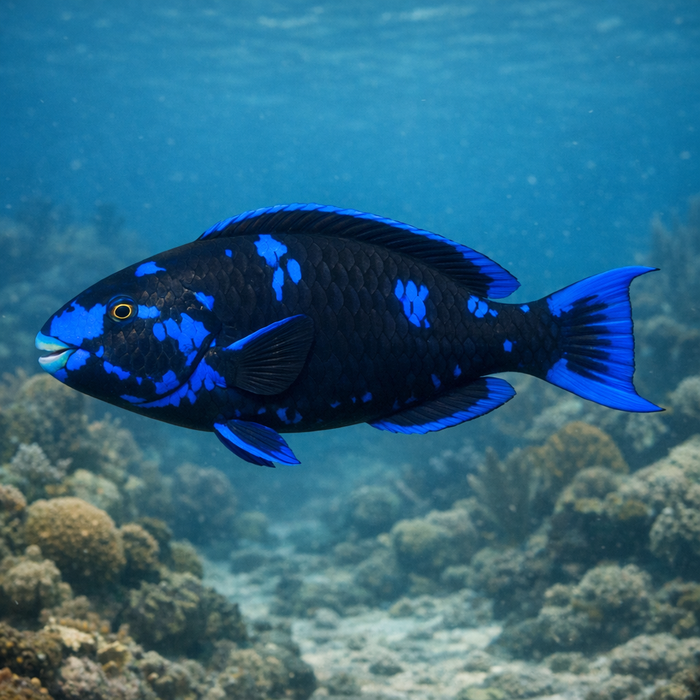
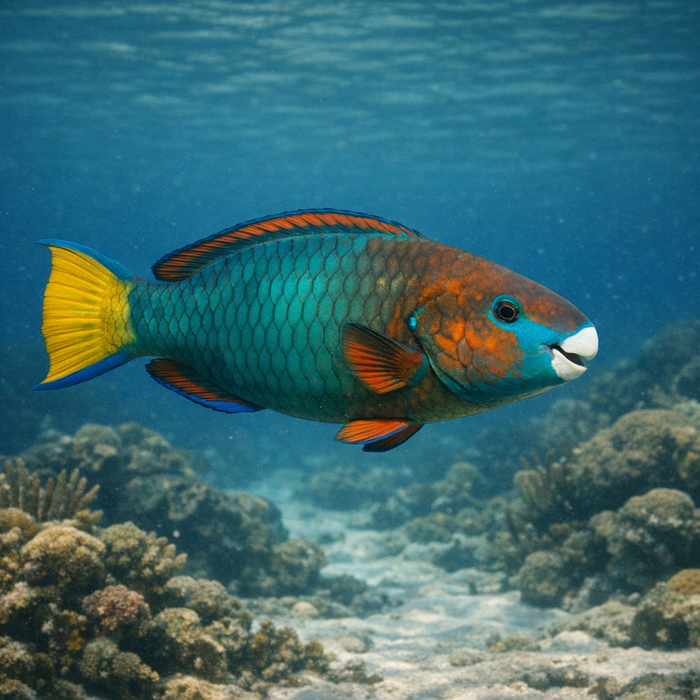
Blue Parrotfish (Scarus coeruleus): Reef Bulldozer With A Neon Paint JobIntroductionThe blue parrotfish is the reef's loudest eater and quietest celebrity. It doesn't chase baitfish, doesn't blitz the surface, and doesn't care about your shiny plug. Yet it literally shapes beaches with every bite. If you want Blue parrotfish facts that actually matter to anglers, start here: this fish is mostly a grazer, lives in sight-fishing range, and will test your finesse even harder than picky bonefish.What Makes the Blue parrotfish Unique?Two big things. First, that uniform, electric-blue body. Lots of parrotfish wear kaleidoscope colors; this one commits to a head-to-tail cobalt suit that's impossible to miss. Second, the business end. Blue parrotfish wield a fused beak of microscopic teeth and a hidden throat mill that crush rock into sand. Every scrape filters out filamentous algae and leaves a dusting of fresh beach behind. Toss in the oddball bedtime ritual-a sticky mucus sleeping bag to hide from predators-and you've got one of the reef's strangest operators.Habitat & Global RangeWhen anglers talk Blue parrotfish habitat, think warm, clear Western Atlantic water. You'll see them from Bermuda and Florida through the Bahamas and the Caribbean, occasionally south to Brazil. They prefer shallow coral reefs, patch reefs, and the edges where seagrass or sand meets hardbottom. Juveniles work seagrass nurseries; adults cruise sandy runways between coral heads, dipping in to graze. They aren't long-distance migrators. Daily routes are more their style: predictable loops across the same productive patches.Behavior & TemperamentDespite their big frames, blue parrotfish behave like deliberate lawnmowers. They nibble, crunch, dust the reef, then move a few fin kicks and repeat. They're wary of pressure and quick to tuck into structure. Hook one, and the fight is a short, stubborn tug-of-war with a beeline for coral. No aerials, just honest torque. Sight-fishing is the play: read the current, cut off the grazer's path, and drop a small offering naturally. Midday can be surprisingly decent because they graze most of the daylight hours, with a bump during early and late light when fewer spooks are around.Ecological ImportanceBlue parrotfish keep reefs from getting choked by algae. Their scraping opens space for corals to settle, and the sand they make drifts into beaches and lagoons. Remove enough parrotfish and you'll watch turf algae overtake corals, water clarity decline, and the sand budget dry up. It's not romantic-just cause and effect. This fish is a reef maintenance crew in bright blue coveralls.Conservation & Environmental PressuresThe species is listed as Least Concern, but that label hides localized trouble. Coastal development, coral bleaching, and heavy harvest of parrotfish in parts of the Caribbean can gut the algae-control team. Many islands now protect parrotfish outright or limit harvest to rebuild reefs. For anglers, that means more catch-photo-release, more park boundaries to respect, and better snorkeling views overall. If you're after blue parrotfish, always check the local rulebook-some jurisdictions don't allow take or even certain gear types on reef flats.The FishyAF TakeBlue parrotfish aren't standard-issue gamefish, and that's fine. They reward craft, not brute force. Think tiny hooks, stealthy angles, and patience while a neon-blue bulldozer mows the reef. You're not fooling a hunter-you're persuading a grazer. Some trips you'll only score a humbling lesson and a great underwater show. But if you like weird challenges, clean water, and tangible reef stewardship, the blue parrotfish belongs on your short list. Call it sightseeing with a side of skill-Blue parrotfish facts made practical.