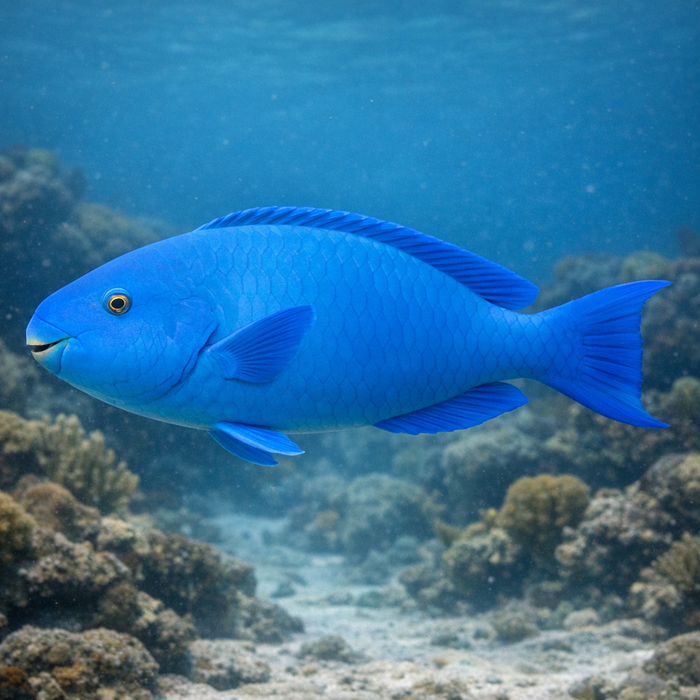
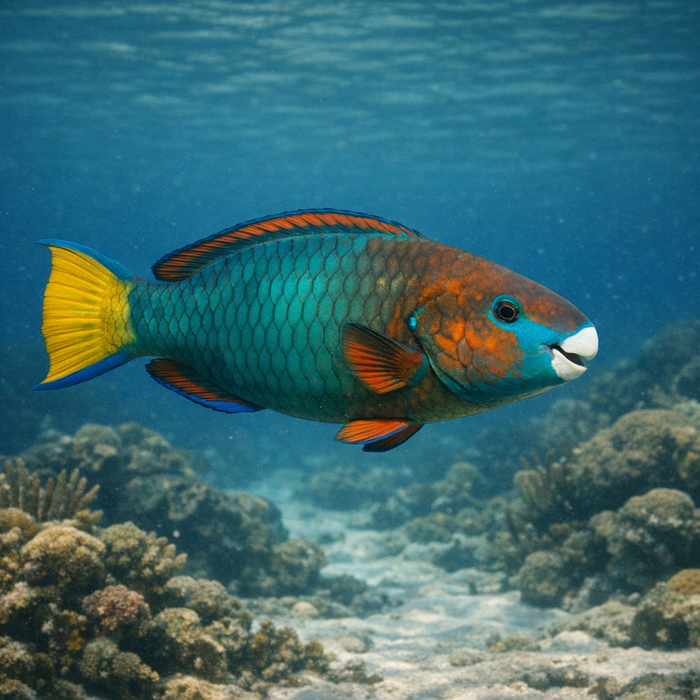
Midnight Parrotfish (Scarus coelestinus): Velvet blue muscle with a lawnmower's bite and undeniable reef swagger.IntroductionMeet the midnight-cobalt heavyweight of the Caribbean reef crew. The Midnight Parrotfish is the loudest "quiet" fish you'll see: a deep indigo slab flashing electric blue trims while calmly chewing a reef into beach sand. It's not a headline sportfish, but it is absolutely part of the show. If you're nosing around coral country and want real Midnight parrotfish facts without the lecture, you're in the right water.What Makes the Midnight Parrotfish Unique?Two things pop. First, that beak. Rows of fused, superhard teeth form a chisel that scrapes algae off rock and dead coral like a battery-powered rasp. Second, the color game. Terminal-phase males look dipped in midnight paint, lit up with neon blue accents on fins and margins. Females and juveniles are darker and plainer, then some flip the script entirely; like many parrotfishes, this species is capable of female-to-male sex change. Add the famous bedtime habit of spinning a clear mucous cocoon to jam predator noses, and the Midnight Parrotfish becomes impossible to mistake.Habitat & Global RangeThis species is built for reef life. Think fore-reef slopes, spur-and-groove zones, coral heads, and rubble patches with steady current. Depths range from snorkel territory to techy blue, but most Midnight Parrotfish work that 10 to 120-foot band where light, surge, and algae meet. The range covers the Western Atlantic: Florida Keys and Bahamas through the greater Caribbean and into the tropical western Atlantic off northern South America. If someone says "classic Midnight parrotfish habitat," they mean clear, hard-bottom coral systems with healthy turf algae, not murky sand flats.Behavior & TemperamentThe Midnight Parrotfish is a day-shift grazer. It cruises in small groups or loose schools, mowing algae turf and audibly crunching dead coral veneer. Bite rhythm is methodical: scrape, grind, blow out sand, repeat. They're not especially aggressive toward baits; more like curious nibblers with uncanny pickpocket skills. Spawning typically involves pairs or small groups, often influenced by lunar cycles and calmer conditions. At night, they tuck into crevices and zip themselves into that slippery sleep bag. When hooked, expect a strong, short dash followed by stubborn grinding power as they try to dig back into structure.Ecological ImportanceMidnight Parrotfish are reef janitors with horsepower. By stripping algae off surfaces and turning coral rubble into sand, they keep hard corals from getting smothered and maintain the mosaic reefs need to breathe. That sand you squish between your toes after a dive vacation? A meaningful slice of it was processed through a parrotfish's throat mill. Lose grazers like the Midnight Parrotfish and the algae wins, fast. Healthy populations are a reliable sign that the food web, current, and coral cover are in decent shape.Conservation & Environmental PressuresThe species is listed as Near Threatened in part because coral ecosystems are getting squeezed from all sides: warming events, disease, sediment, pollution, and fishing pressure on reef herbivores. Many islands now regulate or fully protect parrotfishes to preserve their lawn-care services. Midnight Parrotfish aren't rare on healthy reefs, but they are vulnerable to habitat loss. The big picture is simple: protect reefs and you protect the parrotfish, and vice versa. If you're angling, know the local rules; if you're just admiring them through a mask, congratulations, you're doing conservation already.The FishyAF TakeThe Midnight Parrotfish is the reef's blue-collar legend: tough, good-looking, and doing unglamorous work that keeps the whole neighborhood alive. It's not a typical rod-and-reel hero, but when you talk Midnight parrotfish habitat or the strangest reef behaviors, this fish keeps stealing the scene. Anglers who do tangle with one learn fast: tiny hook, delicate bite, sudden bulldozer sprint for the rocks. Divers already know the soundtrack by heart. If your version of success includes seeing wild color, hearing reef crunch, and leaving a place better than you found it, the Midnight Parrotfish belongs in your personal hall of fame.