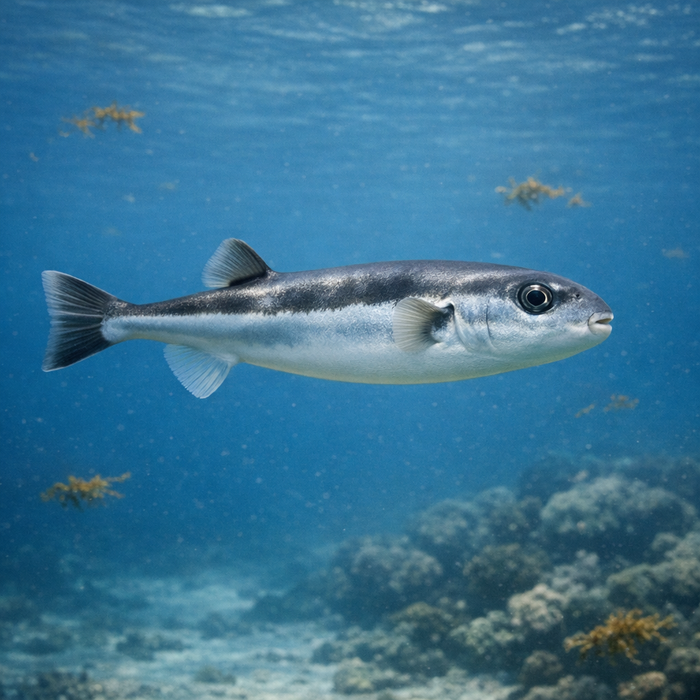
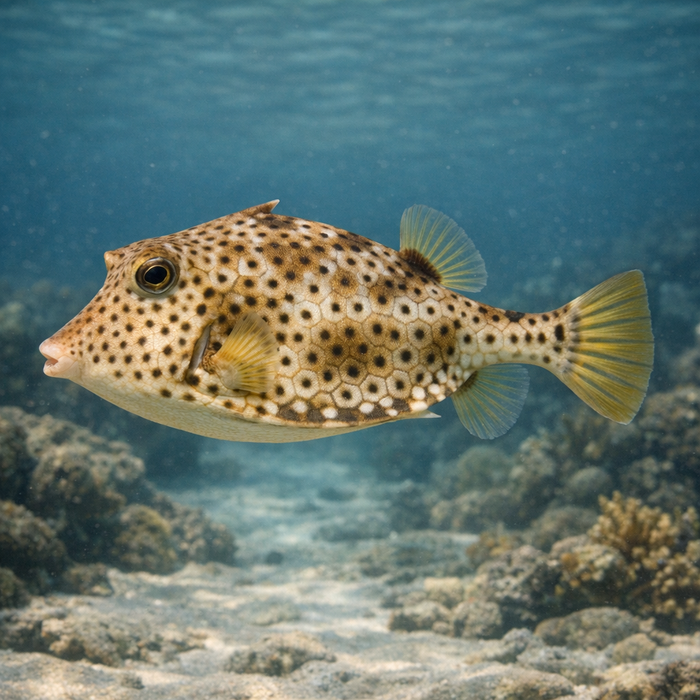
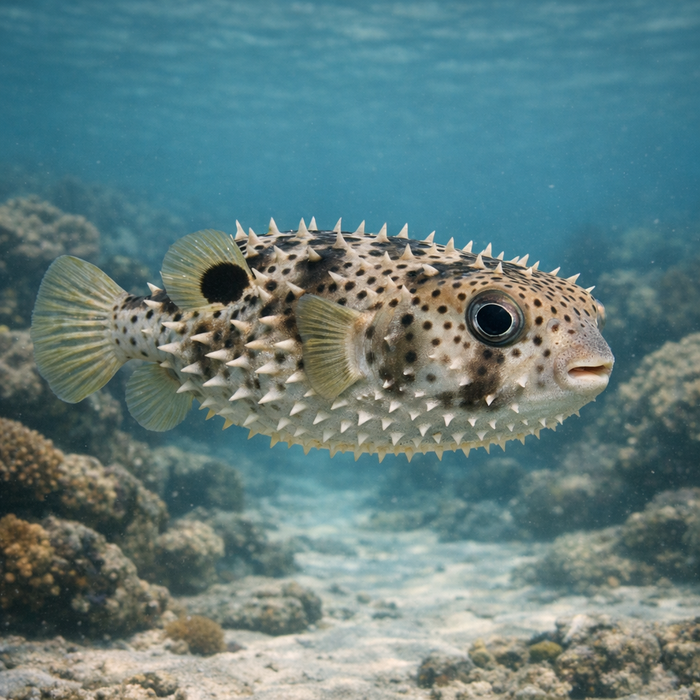
White-spotted Puffer (Arothron hispidus): The reef's polka-dotted bouncer with a grin that cuts leaders.IntroductionIf you fish tropical reefs long enough, the white-spotted puffer shows up like that nosy neighbor who always finds your snacks. It is curious, unbothered, and armed with a beak designed to turn hard shells into powder. Anglers meet it while bottom fishing for snapper or poking around flats, and whether you love or hate them, you definitely remember them. This is a fish with personality, presence, and an attitude that says try me.What Makes the White-spotted puffer Unique?Two things. First, defense: Arothron hispidus carries tetrodotoxin, a chemical so potent a tiny amount can be lethal. That is why this species gets handled with long pliers and a healthy respect. Second, construction: those four fused teeth form a parrot-like beak that grows continuously and crushes crabs, snails, and urchins with audible clicks. Add in pattern-switching white spots and stripes and independently moving eyes, and the white-spotted puffer becomes a walking, hovering oddball in a sea of streamlined predators.Habitat & Global RangeThe white-spotted puffer haunts reef flats, patch reefs, lagoon edges, and sandy rubbly bottoms, often around 5 to 60 feet. Think coral heads, turtle grass transition zones, and current-swept lanes where crustaceans get rolled like marbles. It is a broad Indo-Pacific character, from East Africa across the Indian Ocean through Southeast Asia to the Pacific Islands and Hawaii, with a taste for protected coastlines and reef walls. If you are scouting white-spotted puffer habitat, look for mixed coral and sand where forage hides and the water moves just enough to deliver snacks.Behavior & TemperamentThis puffer is a methodical cruiser, working edges and nooks with surgical precision. It is not built for speed; it is built for control. Pectorals steer, dorsal and anal fins fine-tune, and the fish hovers like a hummingbird with gills. When threatened, it inflates with water to become a spiky hand grenade that is tough to swallow. It is bold around divers and anglers, often inspecting baits or lures, then casually biting off tails or leaders. Hooked, it is more stubborn than strong, but its beak can clip knots, so anglers often remember the tax.Ecological ImportanceWhite-spotted puffers are reef maintenance crews with teeth. By crunching hard-shelled invertebrates and even pruning sponges, they help shape microhabitats and keep certain prey from overrunning the neighborhood. Their toxin deters many would-be predators, so adults can fill a mid-level predator role with little harassment. That leaves them time to forage thoroughly, recycle calcium from shells, and add to the living mosaic that makes reefs so outrageously productive. Call them odd, but they are part of the system's balance.Conservation & Environmental PressuresOfficially, the white-spotted puffer is listed as Least Concern, largely due to broad distribution. But reef fish do not live on paper, they live on reefs, and reefs are under stress. Coral bleaching, sedimentation, coastal development, and poor water quality compress habitat. Overharvest of invertebrates can also change the buffet these fish rely on. Aquarium trade takes some, but compared with other species, fishing pressure is usually incidental. The best conservation for puffers is better conservation for reefs: water quality, habitat protection, and sane coastal growth.The FishyAF TakeIf you want brute force, the white-spotted puffer is not your fish. If you want stories, it is a gold mine. It cruises like a grinning tank, snips gear like wire cutters, and then stares at you with those periscope eyes. It is the reef clown you cannot ignore and a great example of why weird wins in saltwater. For anglers chasing white-spotted puffer facts or scouting white-spotted puffer habitat, the takeaway is simple: respect the toxin, respect the teeth, and appreciate the design. The ocean builds specialists. This one just happens to wear polka dots.