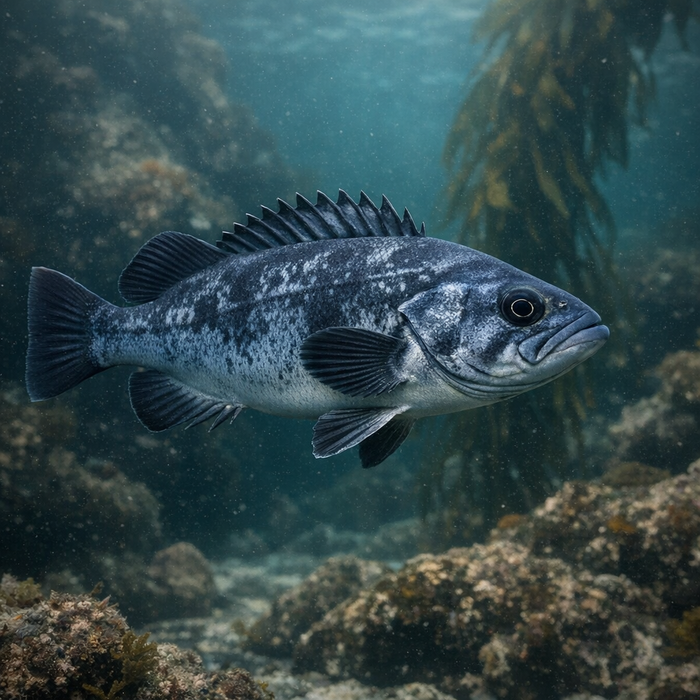
Blacksmith (Chromis punctipinnis): The Kelp-Loving Spark Plug You Can't IgnoreIntroductionThe Blacksmith is the reef's little traffic cop: intense, organized, and always in motion. It may not headline tournaments, but drop a bait by kelp and this fish shows up right on cue. For anglers poking around California's structure, learning a few Blacksmith facts turns background noise into a pattern you can work.What Makes the Blacksmith Unique?Two things jump out. First, the look: juveniles wear glowing orange-brown with electric-blue spots, then morph into a smoky slate as adults, spangled with tiny blue pin-dots. Second, the behavior: Blacksmith don't just exist around structure, they animate it. They hover in tight schools, pivot as one, and defend nest patches with a pint-sized fury that would make a triggerfish nod in respect. When males are guarding eggs, they're fearless. You'll see them rush fish ten times their size.Habitat & Global RangeCall it the kelp commute. The Blacksmith thrives around rocky reefs and kelp forests along the West Coast, most commonly from Southern California into Baja. Think midwater lanes, edges, and saddles where current carries a steady buffet. If you're mapping Blacksmith habitat, hunt the places where structure meets moving water and the water carries life. Piers and breakwalls that intercept current can be buzzing with them, especially when the water warms and the plankton machine switches on.Behavior & TemperamentBlacksmith are synchronized swimmers with sharp elbows. They school densely over structure, flowing in and out of the kelp like a living cloud. At dusk they tuck into crevices; at first light they pour out to work the lanes. During spawning, males glue eggs to rock and fan them obsessively, chasing off intruders and shifting color tones to broadcast intent. They're curious but not reckless. Light line, small hooks, and a bait that survives pecking get you the better bites. They won't smoke your drag, but they know every kelp strand and will use all of it.Ecological ImportanceThis species is a gear tooth in the coastal machine. Blacksmith shuttles energy through the midwater zone, feeding the neighborhood and getting fed on in turn. Their schooling stabilizes the mid-trophic web, spreading pressure across the reef instead of hammering a single link. Nest-guarding stirs microhabitats, and their perpetual motion keeps life circulating above the bottom. If you watch a kelp forest wake up, Blacksmith are often the first spark.Conservation & Environmental PressuresThe Blacksmith is generally abundant and assessed as Least Concern, but it still rides the same rollercoaster as the kelp it loves. Warm-water events, urchin booms, and storm damage can thin canopy and rearrange neighborhoods. Local pressure around piers and reefs isn't a population-level crisis, yet habitat quality absolutely is. Clean water and healthy kelp equal more "traffic," which means more Blacksmith and more action for anglers.The FishyAF TakeYou won't book a charter to target Blacksmith, but if you fish structure they're part of the show. They're honest, visible, and teach you to read current, line angle, and bait durability. Want an easy win with a light rod? Perfect. Want to keep kids hooked on fishing? Even better. And if you're dialed on the reef, the Blacksmith will tell you when the bite clock is running. Learn their rhythm, and the whole neighborhood starts making sense. That's the real payoff behind this unassuming spark plug of a fish.