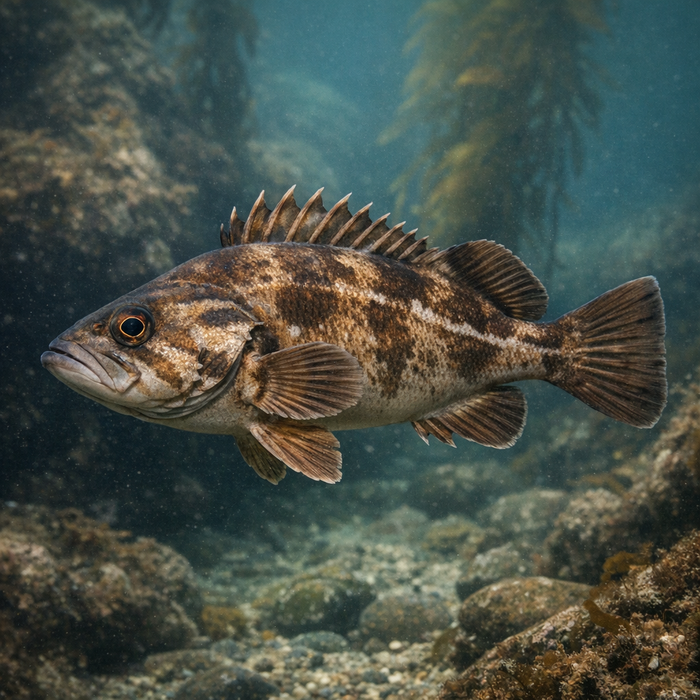
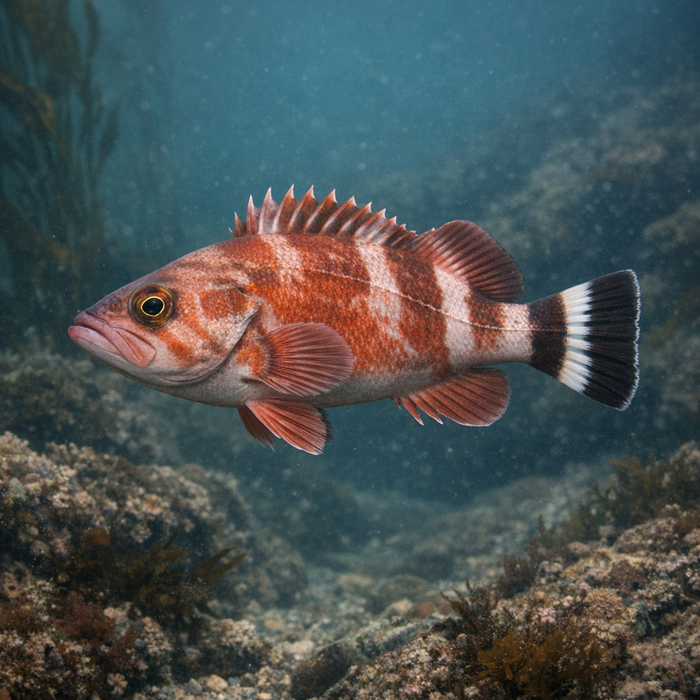
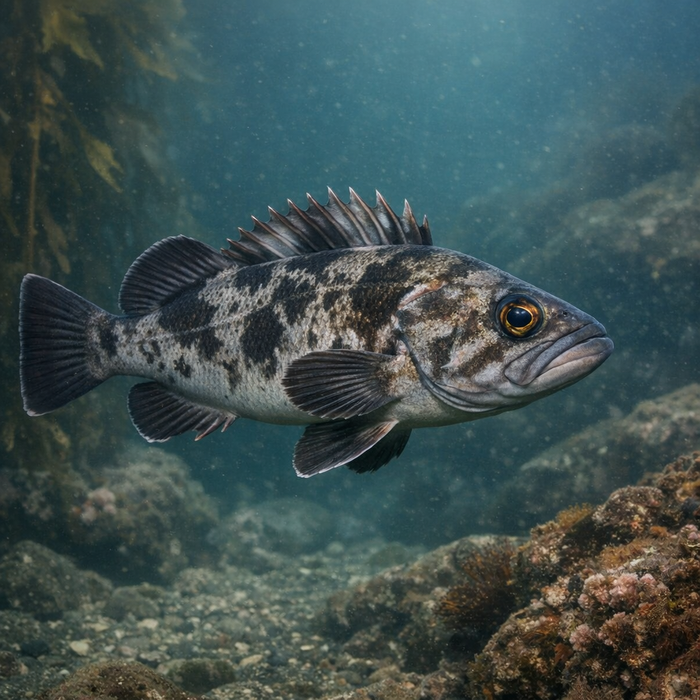
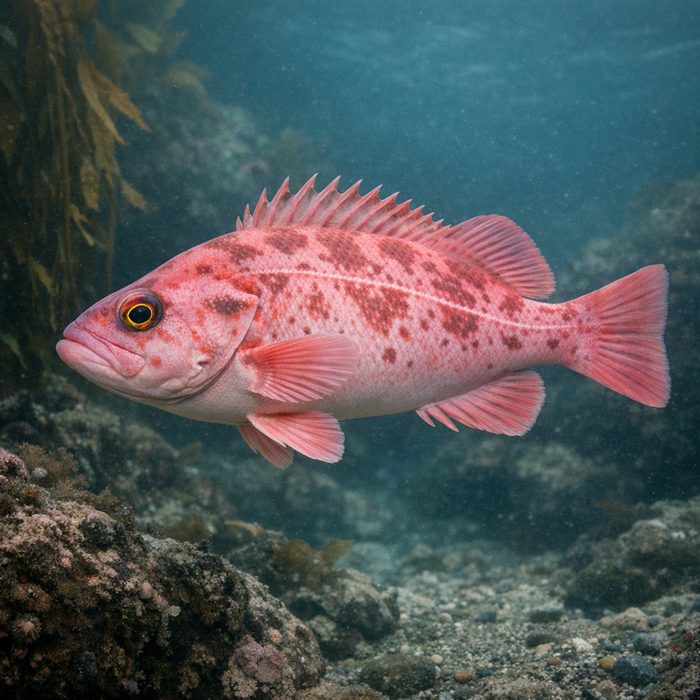
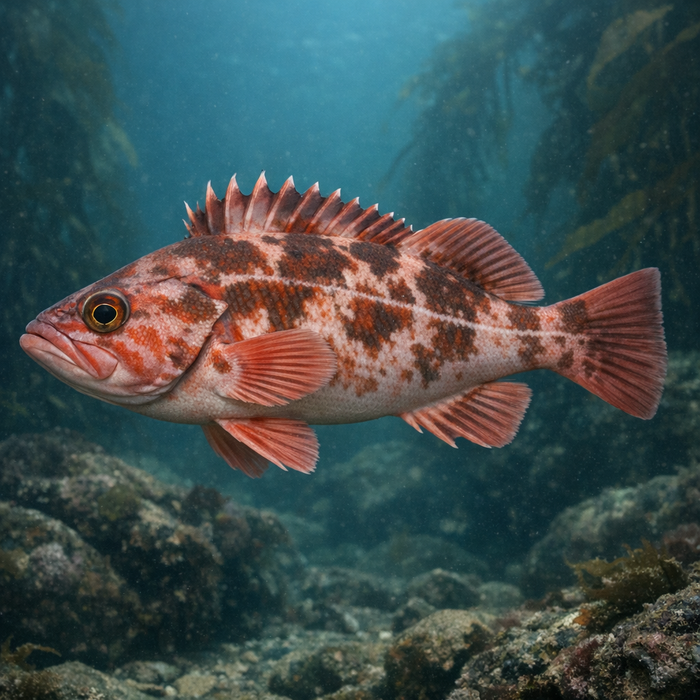
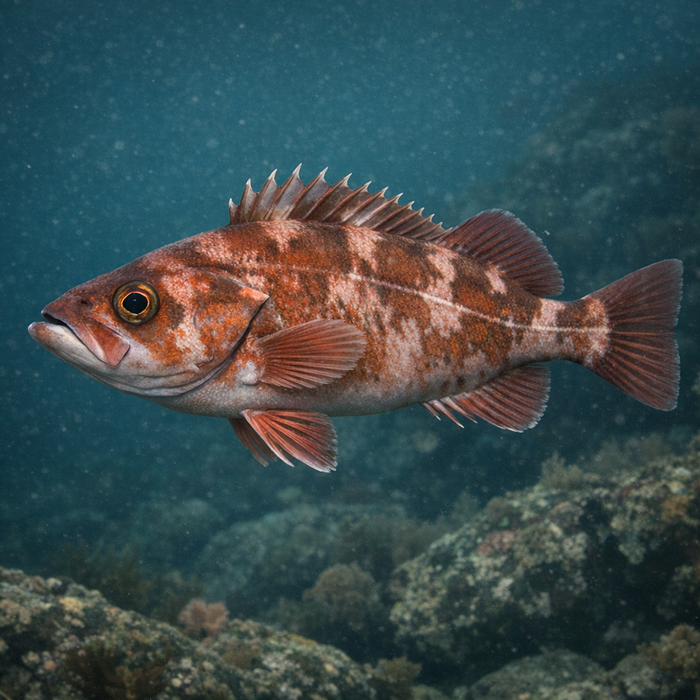
Blue Rockfish (Sebastes mystinus): A Bold, Memorable Hook LineIntroductionBlue rockfish are the West Coast's blue-collar reef bruisers: common, willing, and a whole lot tougher than they look. They mob bait balls, smack jigs, and don't mind smacking knuckles with their spines if you get sloppy. If you want a gateway drug into saltwater reef fishing, this is it. Blue rockfish facts are simple: they're fun, feisty, and all about structure.What Makes the Blue rockfish Unique?Start with their profile. The blue rockfish is compact and deep-bodied, built like a midweight brawler. Their color shifts from slate-gray to stormy blue with black mottling, and those pale lips are a quick tell when you're sorting through lookalikes. They're also viviparous, meaning females give birth to live larvae rather than laying eggs, a power move that's classic rockfish. And here's the twist: for years, anglers lumped deacon rockfish in with blues. Genetics finally played referee, so know your IDs if you're bragging.Habitat & Global RangeIf you like kelp forests, rocky points, and reefs swept by current, you've basically written the blue rockfish habitat playbook. They work the nearshore from central Baja California up through the Pacific Northwest and into parts of Southeast Alaska, with the most consistent action along California and Oregon coasts. Depth is flexible, but think from the kelp canopy down to the reef edge, often in 15 to 150 feet. They're notorious for stacking in midwater over rock, loitering above boulder fields, pinnacles, and kelp beds where bait and current collide.Behavior & TemperamentBlue rockfish are schoolers with a short fuse. When they're on, a pod will light up the water column like a slot machine. They're less solitary than many rockfish cousins, riding current lanes and ambushing prey in tight flurries. The fight is all headshakes and stubborn circles, not blistering runs, but they make up for it with numbers and attitude. Hook one, and you usually just located the whole party.Ecological ImportanceThese fish are neighborhood enforcers on the reef. They link plankton and baitfish to higher predators, ferrying energy up the chain. Juveniles shelter in kelp and shallow structure before graduating to the midwater crowd. Because they can live decades, the blue rockfish also functions as a reef time capsule, responding to long-term changes in ocean conditions. Translation for anglers: productive blue rockfish spots are usually healthy, diverse chunks of coastline.Conservation & Environmental PressuresRockfish live long and mature slowly, so mismanagement can echo for years. The good news is that blue rockfish populations along much of the West Coast have benefited from modern management, slot-style regulations, and area closures. Release mortality is a real deal at depth, so descending devices aren't just smart-they're often required. Ocean conditions like upwelling and heatwaves can shift local abundance, but overall the species is holding its ground where habitat is intact.The FishyAF TakeThe blue rockfish is the saltwater starter pack that never gets old. It's accessible from jetties and small boats, crushes jigs, and lives where the ocean gets photogenic. Want quick action with zero pretension? Tie on a jig and hunt the kelp line. Looking for "Blue rockfish facts" to impress your buddy? Say this: pale lips, live-bearer, midwater schools over rock. Then catch two more while he's Googling. Respect the reef, use a descender for releases, and you'll have dependable fun all season long.