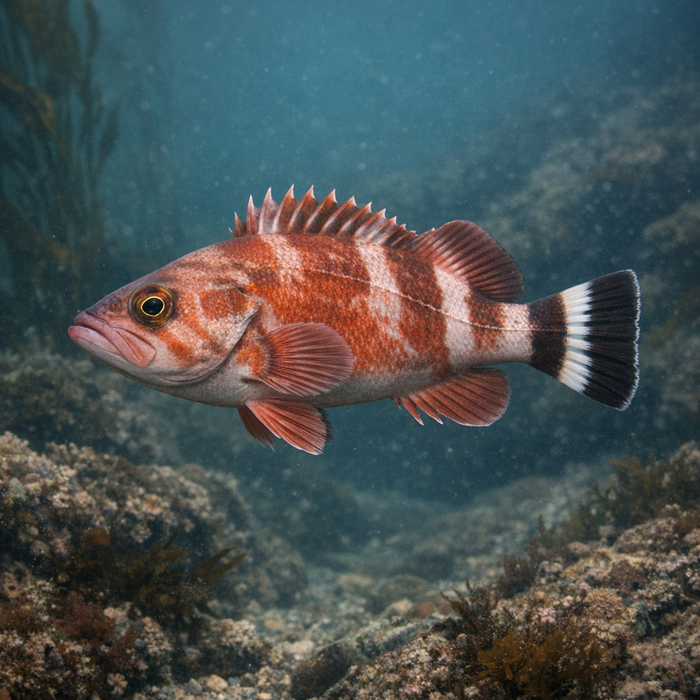
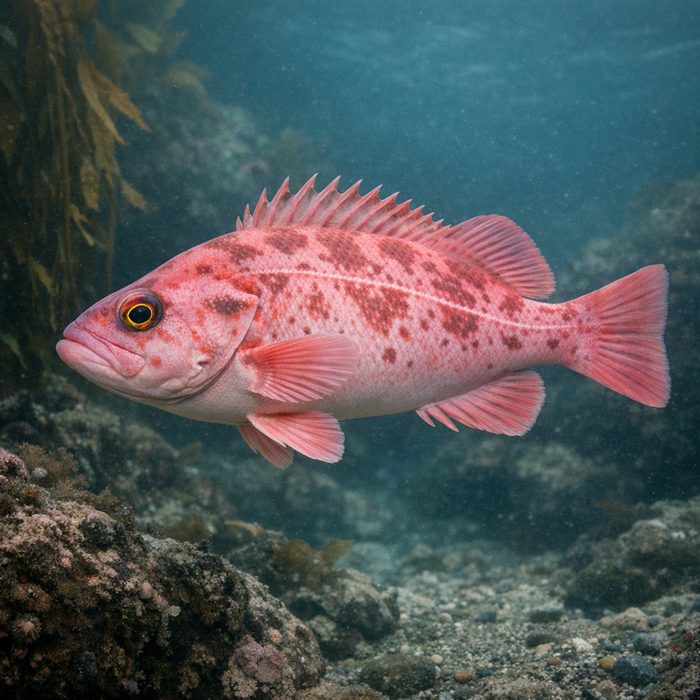
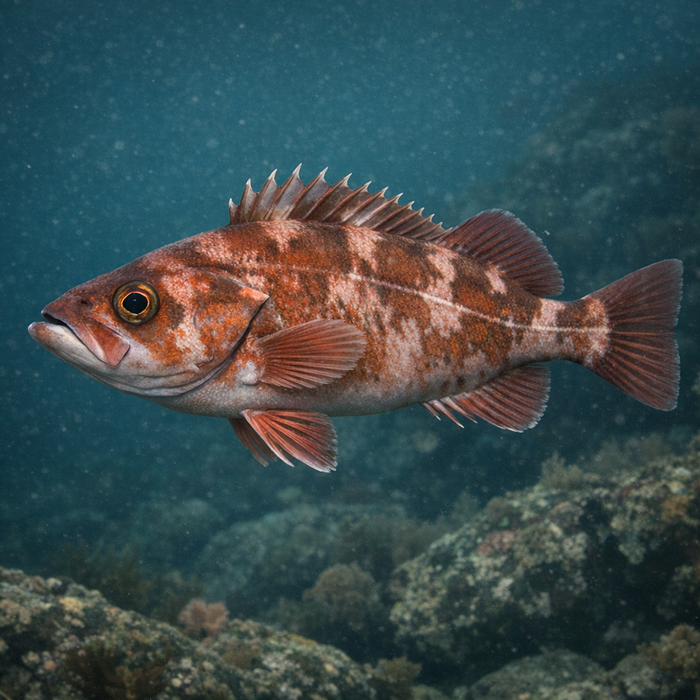
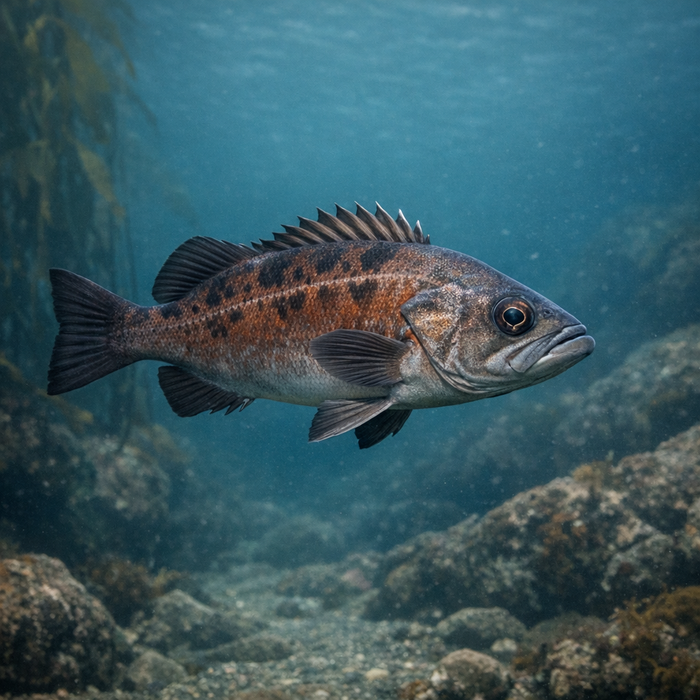
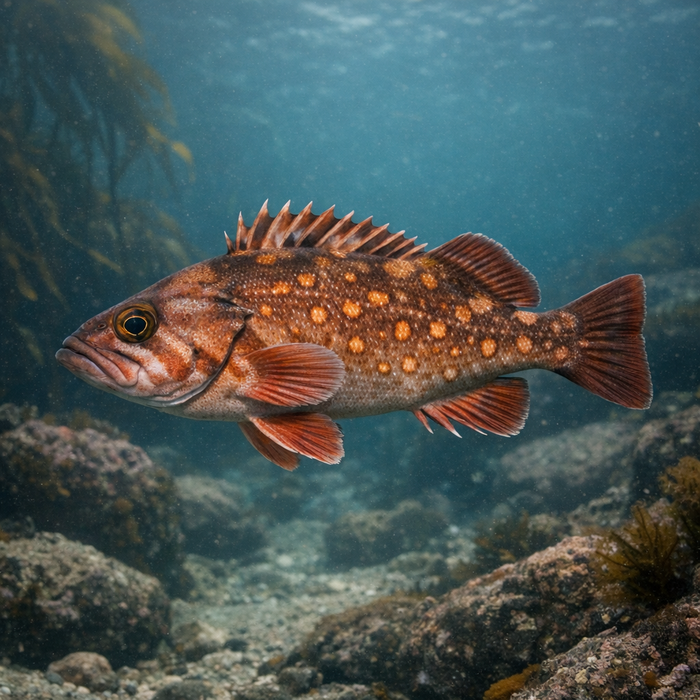
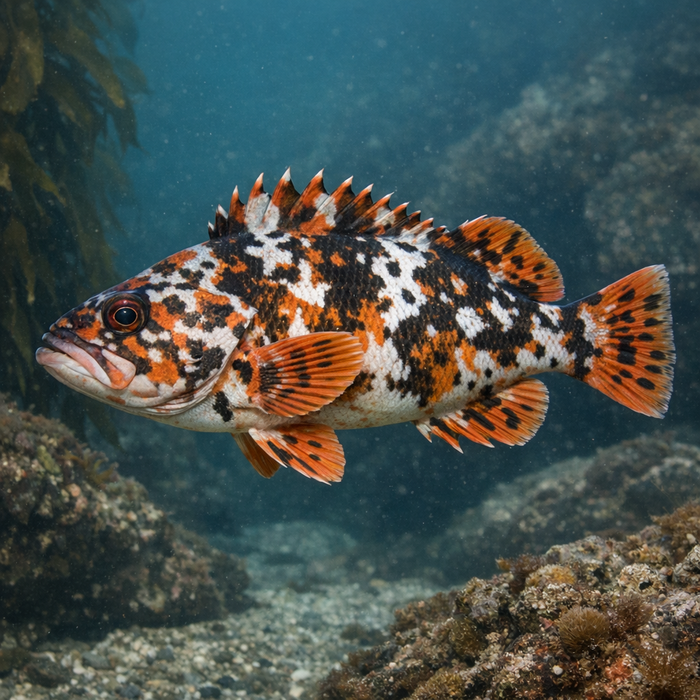
Rosethorn Rockfish (Sebastes helvomaculatus): A Bold, Memorable Hook LineIntroductionThe Rosethorn rockfish is the pinkish, thorn-cheeked surprise that shows up when you bounce a jig along rugged Pacific structure. It's not the biggest rockfish on the menu, but it's got attitude, style, and a knack for turning an average bottom drift into a fish-nerd moment. If you like small-but-spicy reef dwellers, file these Rosethorn rockfish facts under addictive.What Makes the Rosethorn rockfish Unique?Start with the look: a rosy-to-copper body peppered with pale, dash-like blotches and cheek spines that live up to the name. Those spines are mildly venomous, so handle with respect. Then factor in the life strategy. Like many Sebastes, Rosethorn rockfish are live-bearers, releasing fully formed larvae instead of laying eggs. They also age slowly. Some individuals likely break the 80-year mark despite rarely growing past a foot long. It's a long-lived scrapper in a compact package.Habitat & Global RangeThe Rosethorn rockfish runs the North Pacific's eastern rim, from Alaska down the West Coast, with strong representation on rocky reefs, ledges, boulder fields, and sponge-coral gardens. Think crags, nooks, and current breaks in 60 to 600 feet. They tuck in hard to structure and often hold just off the bottom where bait and microcrustaceans funnel by. For anglers, that means classic Rosethorn rockfish habitat overlaps with broader mixed rockfish drifts: jagged reefs, wreck fragments, and steep edges that chew up sinkers and reward persistence.Behavior & TemperamentThey're not sprinting predators; they're ambush artists with good manners until your jig ticks the rocks. Rosethorn rockfish will nip, bump, and then fully commit once a lure or bait hangs in their face. They're dogged more than dazzling in the fight, using head shakes, short surges, and the leverage of structure to win. Nights and low light often see them lift a few feet off bottom to intercept passing snacks, and modest current can help trigger bites by moving scent and fluttering small metals or bait strips.Ecological ImportanceSlow-growing, structure-loving rockfish anchor a whole neighborhood of reef life. The Rosethorn rockfish slots into that system as a mid-level predator, moving energy from crustaceans and small fishes up the ladder. Their long lifespan and late maturity make them vulnerable to prolonged pressure, but it also means individuals can occupy the same reef complex for decades, stabilizing the community. Pull one thread too hard and the tapestry thins, which is why careful handling and sane regulations matter.Conservation & Environmental PressuresRosethorn rockfish aren't the headline species for closures, but they live in the same zip code. Depth-related barotrauma is the big angling issue; fish brought up quickly can balloon and struggle to return. Fortunately, descending devices fix much of that when used consistently. Broader pressures include lost gear on rocky bottoms, habitat scarring, and shifting ocean conditions that tweak currents and prey windows. Management on the West Coast and in Alaska keeps rockfish complexes under close watch, and this species generally sits at Least Concern. Still, smart ID, selective harvest, and releasing the small ones go a long way.The FishyAF TakeIf the Pacific's rocky edges were a dive bar, the Rosethorn rockfish would be the tough regular on the corner stool: small frame, heavy stare, occasional jab. You don't plan a whole trip around them, but when they crash the spread it means you're working the right real estate. Fish a compact jig or bait strip on light tackle and they'll make you grin, especially when the color pops through the green water. Handle with care, descend if needed, and appreciate the humility of a fish that can outlive you by decades while barely filling a taco. That's the kind of underdog we'll toast any day, and the kind that keeps Rosethorn rockfish habitat worth protecting for the long haul.