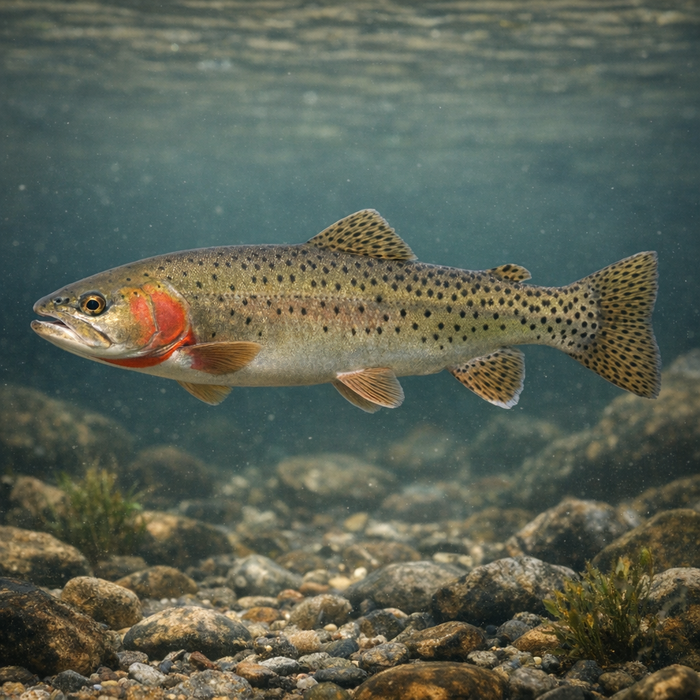
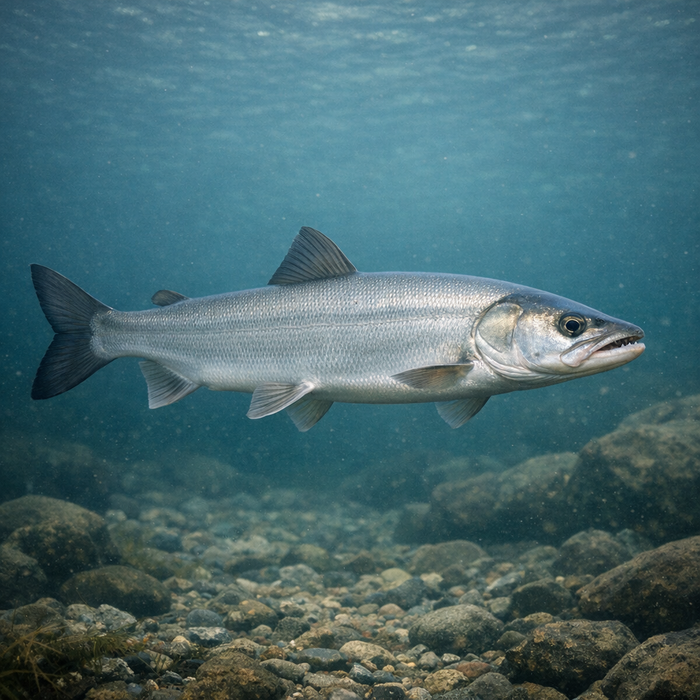
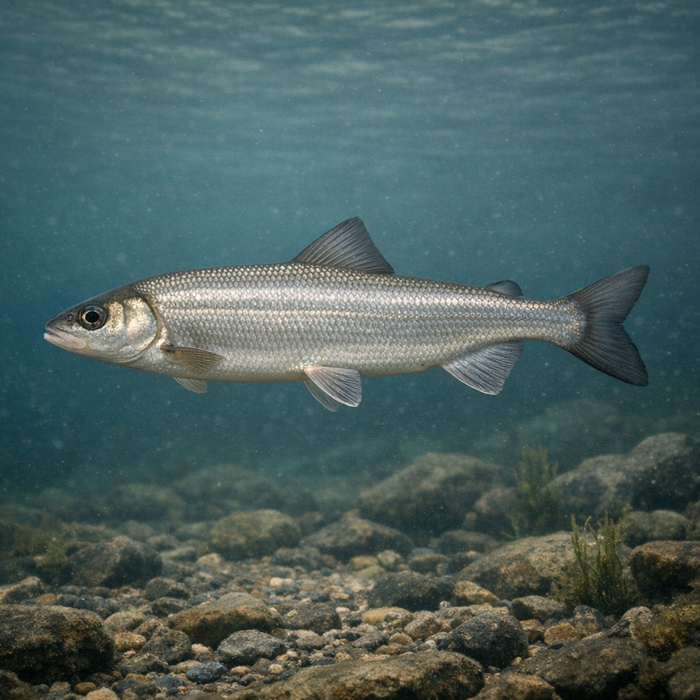
Bull Trout (Salvelinus confluentus): A Bold, Memorable Hook LineIntroductionIf "cold, clean, and connected" had a mascot, it would be the bull trout. This big-eyed char haunts icy rivers and deep lakes, wallops baitfish with bad intentions, and vanishes the second water temperatures or habitat quality slip. Want a fish that screams wild country and uncompromising standards? Bull trout deliver.What Makes the Bull trout Unique?Start with the temperature snob factor. Bull trout demand some of the coldest water of any salmonid, often thriving below 48 degrees. That hard requirement sets them apart from more adaptable trout. Second, they're shape-shifters: some spend life in small streams, while others grow to tank status in lakes, then sprint upstream to spawn. Finally, they were long confused with Dolly Varden, officially split as their own species only in 1978. Translation: they were undercounted and misunderstood for decades, which didn't help conservation.Habitat & Global RangeBull trout habitat reads like a love letter to intact watersheds: glacier-fed rivers, cobble-bottomed creeks with spring seepage, and big, cold lakes loaded with whitefish and kokanee. In the United States, they anchor the Pacific Northwest and northern Rockies, from Oregon and Washington into Idaho and Montana, with historic outliers in Nevada. North of the border, British Columbia and Alberta still support solid fisheries where the water stays frigid and migration routes remain open. Whether resident in creeks or adfluvial wanderers commuting from lakes to tributaries, bull trout need clean gravel, shade, and complex structure like wood jams and undercut banks. If you're hunting "bull trout habitat," think high-elevation snowmelt systems and deep, cobalt lakes.Behavior & TemperamentThese fish aren't dainty. Adult bull trout are unapologetically piscivorous, prowling drop-offs and tailouts, or hugging timber and cutbanks for ambush angles. In lakes, they cruise edges and thermoclines, keying on soft light and bait concentrations. In rivers, they post up behind boulders and wood, then detonate on something that looks like lunch. They won't sip midges like a fussy rainbow, but they'll track a six-inch streamer with murderous calm before committing. Expect bulldogging fights and big-arc runs in current rather than acrobatics.Ecological ImportanceBull trout are apex-level predators in many inland systems, moderating forage fish and shaping salmonid communities. They trail spawning salmon for calories, mopping up eggs and stray fry, and in doing so, transfer ocean-driven nutrients upstream via their own growth. Because they're picky about temperature and habitat connectivity, bull trout also function like an early-warning siren for watershed health. When they vanish, the river's life support systems are failing.Conservation & Environmental PressuresHere's the blunt reality behind "Bull trout facts": fragmentation, warming water, and invasive species stack the deck. Dams and culverts cut migration routes. Silted spawning gravels smother eggs. Warmer summers push temperatures past tolerance margins. Non-native fish compete or hybridize in some basins, complicating recovery. As a result, lower-48 populations are federally listed as threatened, and many waters are catch-and-release with strict gear rules. Despite the bad news, targeted restoration and barrier removals are working. Where cold water, clean gravel, and connectivity return, bull trout respond.The FishyAF TakeBull trout are the mountain athlete of the salmonid world: demanding conditions, big frames, minimal drama. Find the right water and they'll make you feel like a genius. Miss the mark by five degrees or a single culvert, and it's tumbleweeds. If you want a fish that rewards homework and punishes laziness, this is your quarry. Protect the cold. Keep the rivers connected. Then tie something meaty and swing it with confidence. When a bull trout commits, it's not a nibble. It's a decision.