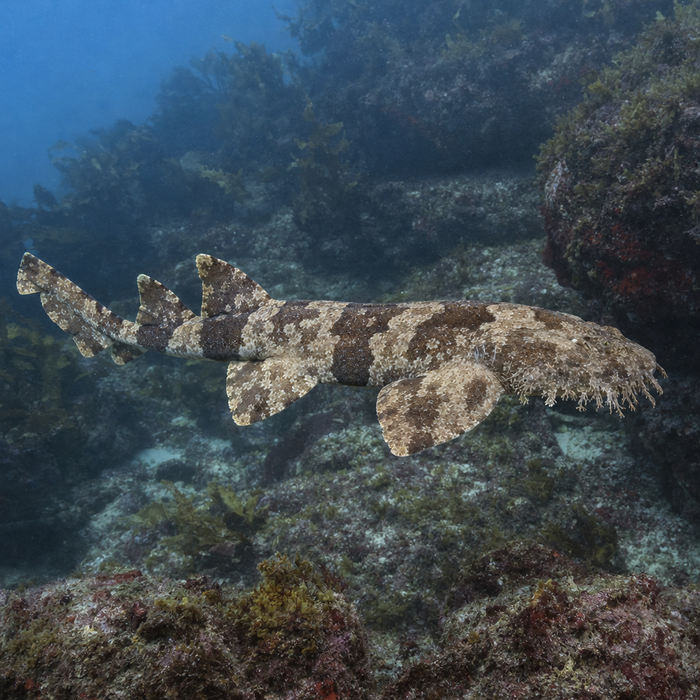
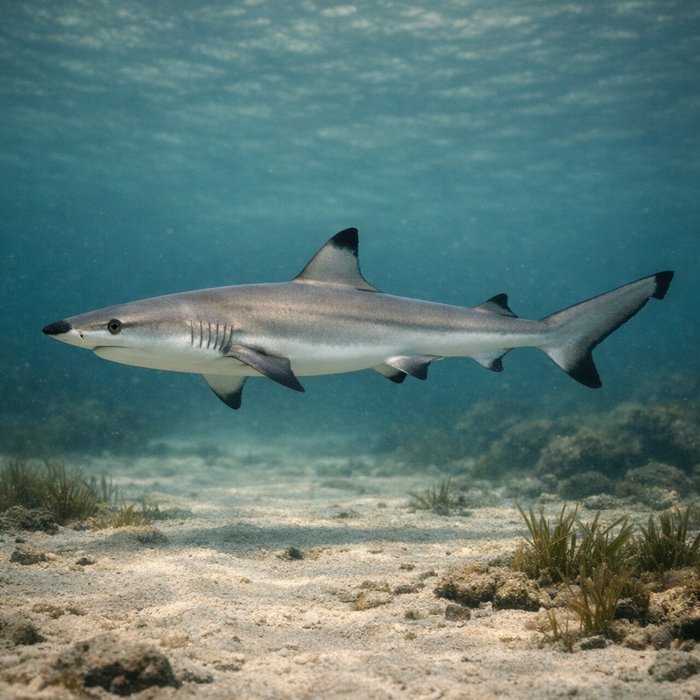
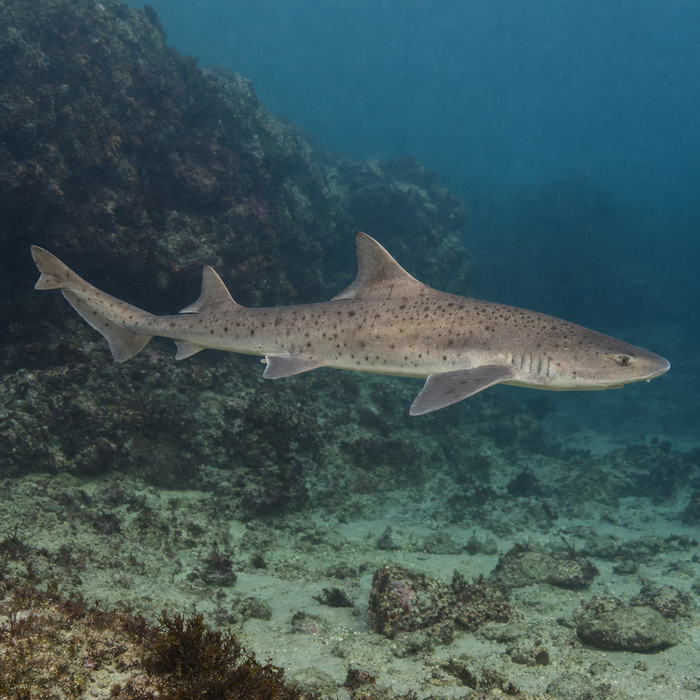
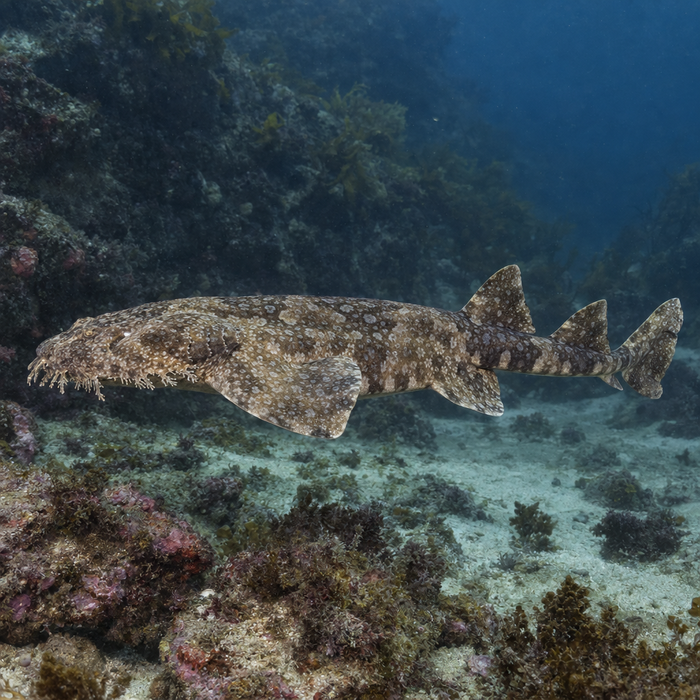
California Horn Shark (Heterodontus francisci): A Reef-Bottom Bruiser With a Built-In Shell Crusher
Forget the shark silhouette cutting across open water. The California Horn Shark works a smaller, stranger beat: rocky hideouts, kelp edges, and the bottom after dark. Stocky, spotted, and blunt-headed, it looks less like a torpedo than a piece of reef that has developed an appetite. This saltwater member of the bullhead shark family is a coastal predator built for close quarters, not long-distance pursuit. That makes it an interesting encounter for anglers willing to trade offshore spectacle for something genuinely unusual.
Most fish in the FishyAF size bracket measure 24–36 inches and weigh 3–10 pounds. Those are useful expectations, not a promise about the next bite. The appeal is the complete package: peculiar anatomy, specialized feeding equipment, and enough sharp hardware to make careless handling a bad decision.
What Makes the California Horn Shark Unique?
Start with the mouth. The California Horn Shark carries pointed teeth toward the front for gripping prey and broad, molar-like teeth farther back for crushing armored meals. This is not a miniature version of a slicing, fish-chasing shark. Its feeding machinery is engineered around breaking things. Laboratory and field measurements confirm substantial bite forces for such a compact animal, so that small mouth deserves considerably more respect than its size suggests.
Then there are the horns: stout spines preceding both dorsal fins. They are defensive equipment, not decorative accessories. The third standout is reproductive rather than combative. Females produce corkscrew-shaped egg cases and wedge them into rocky crevices. Those spiral flanges help secure a developing shark where a smooth package could shift or wash away. Among California Horn Shark facts, that underwater egg-storage solution is difficult to beat.
Habitat & Global Range
California Horn Shark habitat centers on coastal seafloor structure: rocky reefs, kelp beds, crevices, and sandy lanes between harder cover. Shallow water is important, with many observations in roughly 7–36 feet. The species also occupies substantially deeper water, so the depth beneath a pier represents only one slice of its available habitat. Different life stages can use different bottom types and depths.
For West Coast anglers, Southern California and Baja California are the practical geographic focus. The range includes the Gulf of California, with northern California occurrences less typical. Current assessments also recognize populations from Colombia to Peru. That broader eastern Pacific distribution does not make every stretch of coastline equally productive, accessible, or legal to fish. Structure and local occurrence matter more than a broad range map.
Behavior & Temperament
The California Horn Shark is mainly nocturnal. Daylight commonly finds it tucked into shelter; darkness brings bottom-oriented feeding. Its flexible, muscular paired fins help it clamber over the seabed, giving its movements an almost walking quality. It is generally solitary and can repeatedly use familiar resting places rather than roaming widely. This is a shark with a neighborhood, not an ocean-crossing itinerary.
That behavior explains the basic fishing approach: present a manageable natural bait near the bottom beside cover, especially after dark. It also explains why blindly casting farther is not automatically better. A suitable sandy opening beside rock may be more useful than another fifty yards of featureless water. Plan the landing before the bite, and keep hands away from the mouth and dorsal spines.
Ecological Importance
This predator connects reef-bottom invertebrates with the larger food web. Hard-shelled prey, including mollusks, crustaceans, and sea urchins, feature prominently in adult feeding. Its crushing teeth let it exploit meals that demand more than simply grabbing and swallowing. Young sharks use softer prey more extensively, so their feeding role changes as they grow.
The shark is also prey for larger predators. Its place in the ecosystem is therefore more interesting than the lazy label of apex killer. Think specialized participant in a crowded reef community. Eating urchins does not, by itself, prove that this species controls entire kelp forests; ecological importance does not require an inflated superhero résumé.
Conservation & Environmental Pressures
The California Horn Shark is currently assessed as Least Concern, with a population trend considered stable. That is encouraging, not permission to stop paying attention. Fisheries interactions include incidental capture and retention in parts of Mexico, while its preference for rocky habitat and nighttime activity offers some refuge from fishing pressure. Localized declines can still occur within an otherwise broadly secure species.
Warming water is another concern worth watching. Research indicates temperature can affect metabolic demand, although translating those responses into future population outcomes requires more work. For anglers, the useful response is straightforward: respect protected areas, minimize handling, and release unwanted fish promptly rather than treating a hardy species as indestructible.
The FishyAF Take
The California Horn Shark is not a consolation prize for failing to catch something bigger. It is the reason to slow down and notice what lives under the kelp. Bring sensible bottom tackle, fresh bait, and a landing plan. Leave the monster-shark theatrics at home. This fish already has crushing teeth, defensive spines, and corkscrew nursery equipment. It does not need your exaggeration.