Port Jackson Shark (Heterodontus portusjacksoni): Built to Crush Shells, Not Chase Headlines
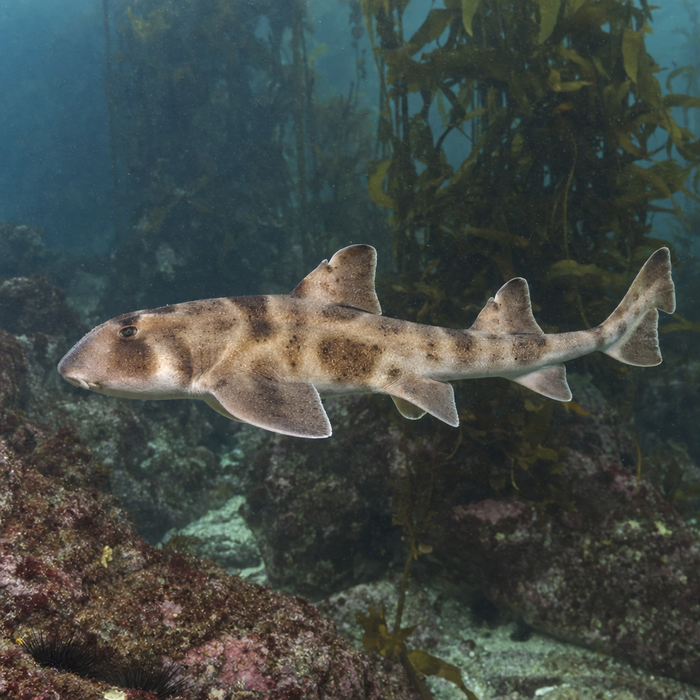
The Port Jackson Shark looks like someone fitted a shark with a harness, a blunt nose, and the wrong set of teeth. Those dark bands are real, and so is the shell-crushing equipment behind that small mouth. This bottom-dwelling member of Heterodontidae makes its living very differently from the fast, toothy predators that dominate shark publicity. Rocky shelter and hard-shelled prey matter more here than open-water speed. For anglers, it is an unusual incidental catch with plenty worth noticing before a careful release. Forget the monster soundtrack. This shark deserves a closer look, not a bigger boat.
What Makes the Port Jackson Shark Unique?
Start with the mouth. Small, pointed front teeth grip food, while broad, flattened rear teeth crush and grind it. That arrangement turns the jaws into a compact processing plant for armored prey. The Port Jackson Shark does not need rows of steak knives when much of dinner arrives wearing a shell.
Then there is its breathing equipment. It can pump water through its gills while resting and can continue breathing while processing food. Constant swimming is not compulsory. Reproduction is equally distinctive: females lay spiral egg cases and use their mouths to wedge them into rock crevices. The cases harden after laying, leaving the developing young secured inside a remarkably unconventional nursery. These are not decorative beach curiosities when occupied; they are living shark accommodation.
Habitat & Global Range
Port Jackson Shark habitat centers on temperate coastal bottoms around southern Australia, extending from southern Queensland through New South Wales, Victoria, Tasmania, and South Australia to Western Australia. Rocky reefs, caves, ledges, and gutters provide shelter, while neighboring sand and seagrass also form part of its environment. It is a saltwater shark, not a freshwater visitor.
Its recorded depth range reaches about 275 meters, although many familiar encounters occur much shallower. Adults and juveniles do not necessarily use identical places: sheltered bays and nursery areas can be particularly important to younger fish. A lone historical New Zealand record does not make that country a dependable destination for finding one. Think southern Australian reef country, not a worldwide coastal species hiding everywhere.
Behavior & Temperament
By day, this shark often rests beneath ledges or inside caves. After dark, it becomes a more active bottom forager. That makes the Port Jackson Shark a good reminder that an apparently motionless animal may simply be off shift. Its generally placid reputation should never be confused with permission to handle it casually: the jaws can deliver a painful bite, and each dorsal fin has a spine.
Breeding brings another side of its behavior into view. Adults gather seasonally, and research has documented repeated associations with particular companions. Individuals can show consistent differences in boldness and activity, too. This is not evidence that every shark behaves identically or that a resting group is randomly assembled. There is more going on than a pile of sleepy fish.
Ecological Importance
As a predator of bottom-dwelling invertebrates and some fishes, the Port Jackson Shark participates in coastal food webs at close quarters. Sea urchins, molluscs, and crustaceans feature in its diet. Its crushing teeth give it access to prey that requires considerably more processing than simply swallowing a soft-bodied meal.
That does not justify claiming it single-handedly controls urchin outbreaks or keeps every reef healthy. Ecological roles are rarely that tidy. What matters is the particular feeding niche it occupies. A reef community includes predators working inside crevices and along the bottom, not just the conspicuous hunters moving above it.
Conservation & Environmental Pressures
The Port Jackson Shark is assessed as Least Concern, but that label is not a free pass for careless fishing. It is caught incidentally in commercial fisheries, and its limited reproductive output makes local pressures worth taking seriously. Slow maturation and a relatively small annual egg production are very different from the reproductive strategy of fishes producing enormous numbers of eggs.
Research in southwestern Australia has identified potential localized effects associated with catches of juveniles and females below typical maturity size. Protecting nursery habitat and handling incidental captures responsibly remain sensible priorities. For recreational anglers, the useful response is straightforward: minimize handling, release promptly, and avoid digging out deeply swallowed hooks. A common shark still deserves competent treatment.
The FishyAF Take
This is a shark for anglers who notice details. The harness markings, crushing teeth, and corkscrew egg cases are more interesting than trying to turn every encounter into a danger story. The Port Jackson Shark does not need an inflated reputation to earn its place in a species guide.
Our take: appreciate the oddball, skip the macho handling, and send it back properly. An incidental catch can still be a memorable one without becoming a prolonged photo session. If your only measure of a worthwhile fish is how hard it empties a reel, you are overlooking some excellent engineering.