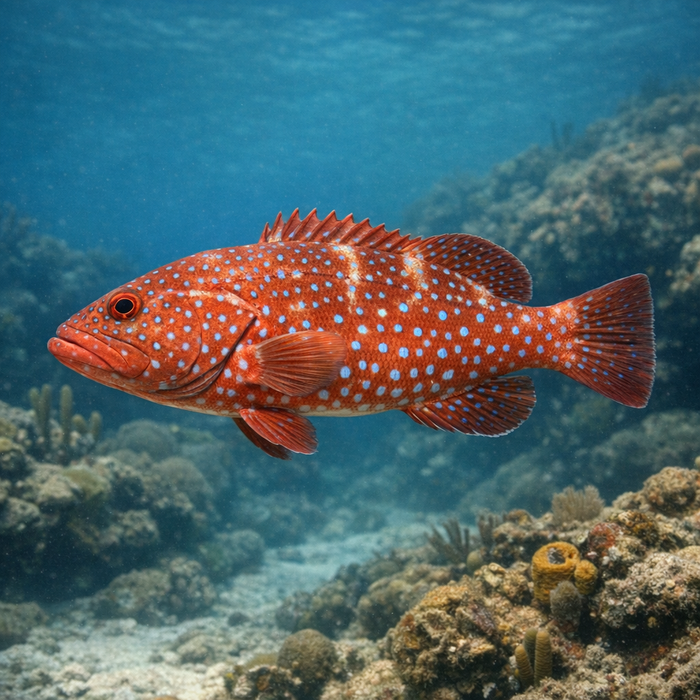
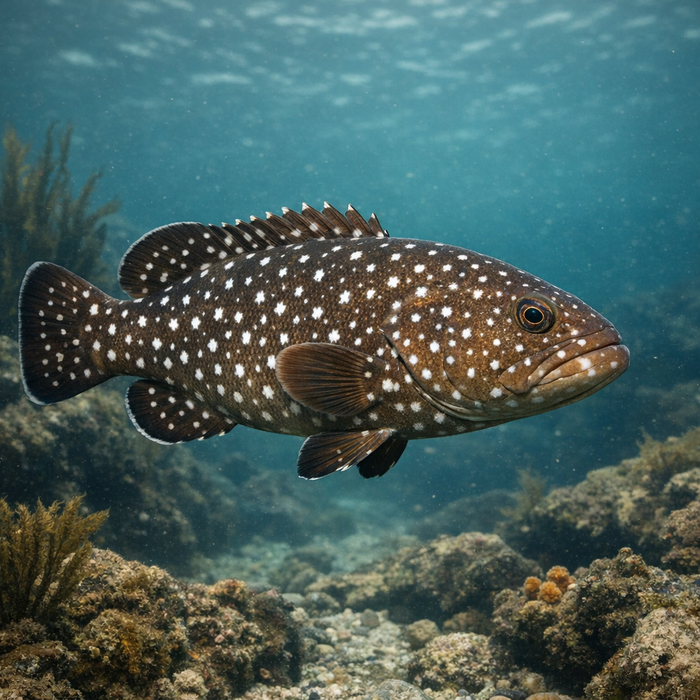
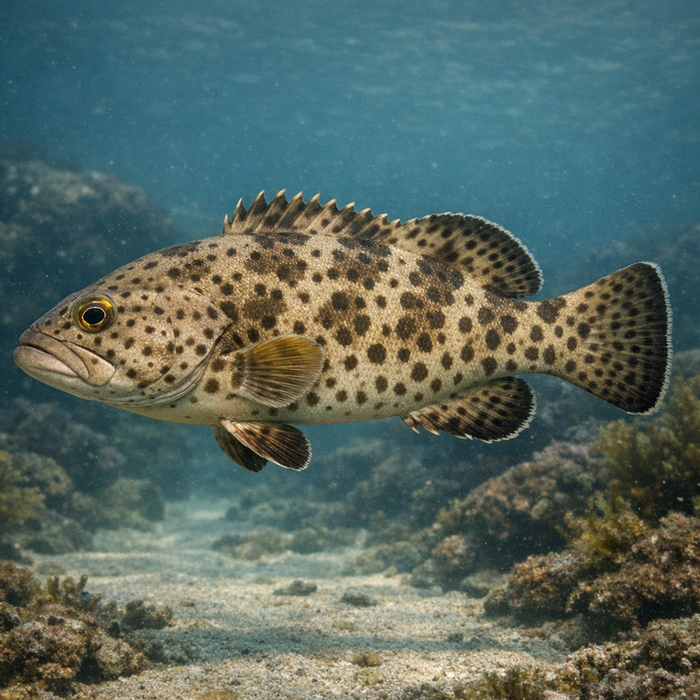
Coney (Cephalopholis fulva): Small Grouper, Big AttitudeIntroductionThe coney is proof that reef bullies don't need to be huge. This compact grouper stuffs itself into coral, hits baits with zero hesitation, and then tries to glue your line to the nearest rock. It's common across warm western Atlantic reefs, easy to ID by its electric-blue speckles, and notorious for one unforgettable twist: some individuals show up bright canary-yellow. If you want a fish that keeps reef days lively, the coney delivers in spades. Consider this your quick tour of Coney facts and Coney habitat, minus the boring lecture.What Makes the Coney Unique?First, that wild wardrobe. Typical coneys are red-brown to orange with neon-blue speckles, but a rare xanthic morph flips the script: pure butter-yellow from nose to tail. Second, they change roles in life. Like many groupers, the species is protogynous, with most individuals starting female and some switching to male as they grow and claim territory. Finally, they're feisty homebodies. A coney will haunt a single coral head for months, ready to mug your jig the moment it drops into its front yard.Habitat & Global RangeThe coney roams coral and rocky reefs from Bermuda and Florida through the Bahamas, Caribbean, and down to northern South America. Think shallow patch reefs, ledges, spur-and-groove formations, and even wrecks with coral growth. Depth-wise, they're flexible: snorkeling shallows to deeper edges where current delivers groceries. They're structure-addicted and prefer ambush-friendly cover. You won't see big migrations; these fish live small, defending bite-sized kingdoms that fit neatly under a single ledge.Behavior & TemperamentIf your bait lands near a coney's door, expect a knockout punch followed by a headlong dive into the furniture. They inhale prey with vacuum-like suction, then try to anchor themselves in crevices. Dusk is prime time, when feeding and courtship spike, and color patterns can shift quickly during social posturing. Juveniles sometimes moonlight as cleaners, picking parasites off larger fish. While they're not long-distance roamers, coneys will shadow morays and other predators, swooping in when a spooked snack bolts the wrong way. In short: curious, opportunistic, and surprisingly bold for their size.Ecological ImportanceSmall groupers like the coney help tune the reef's middle management. They trim back small fishes and invertebrates, transferring energy up the food web while serving as prey for bigger predators. Their site fidelity makes them good barometers of microhabitat health. Lose the coral head, and you lose its resident landlord. Because they're responsive to current, light, and cover, healthy coney populations usually mean the reef still has functioning structure and forage.Conservation & Environmental PressuresCephalopholis fulva is listed as Least Concern, but that's not a blank check. Coral loss, coastal development, and warming seas threaten the literal homes coneys occupy. Local fishing pressure can clip size structure, especially where every grouper ends up in a frying pan. There's also the ongoing ciguatera concern common to many tropical reef fish, which doesn't affect populations directly but shapes how responsibly anglers should harvest. Bottom line: protect habitat and keep harvest measured, and coneys stay abundant neighbors.The FishyAF TakeThe coney won't win any size contests, but it will make you a better reef angler. It punishes sloppy presentations, spotlights how critical structure is, and reminds you that timing matters. Drop a lively shrimp on a patch reef at dusk and hang on. We like them as a confidence fish: easy enough for beginners, finicky enough to reward clean rigs and quick reactions. And when that butter-yellow morph materializes out of the coral like a neon highlighter, you'll understand why this small grouper has such an outsized fan club.