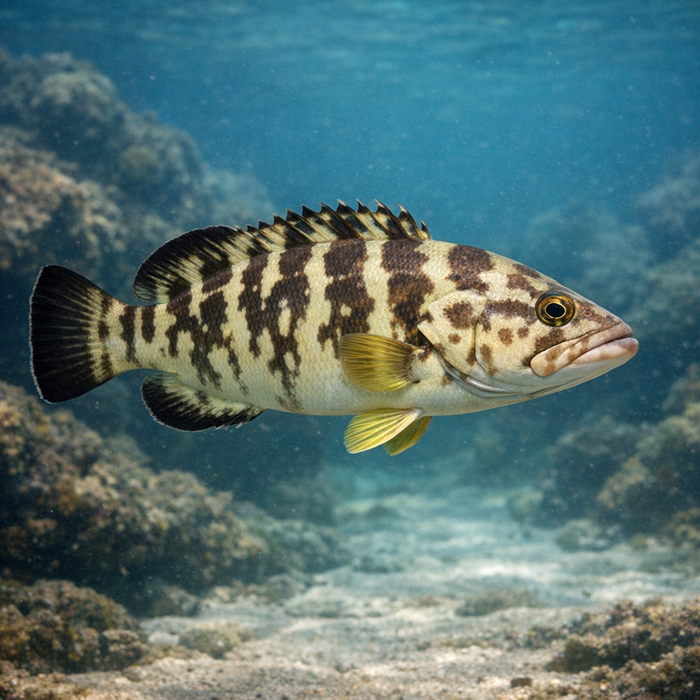
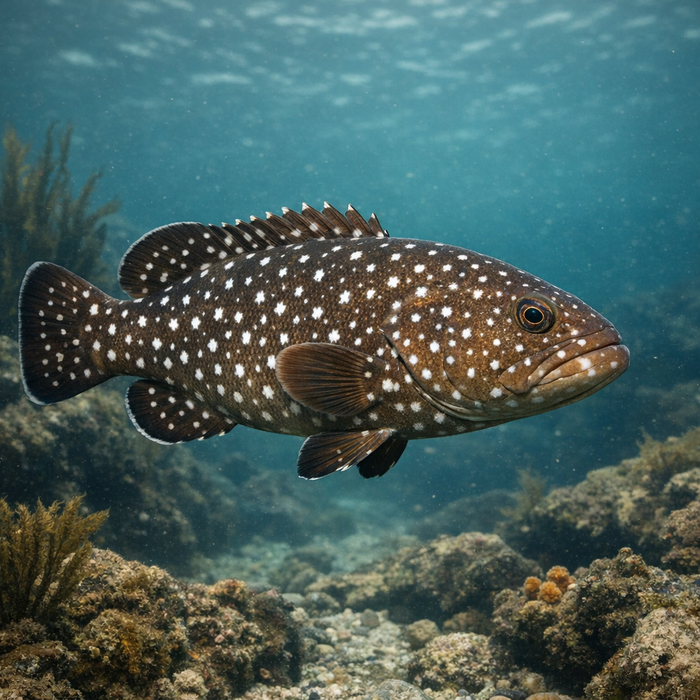
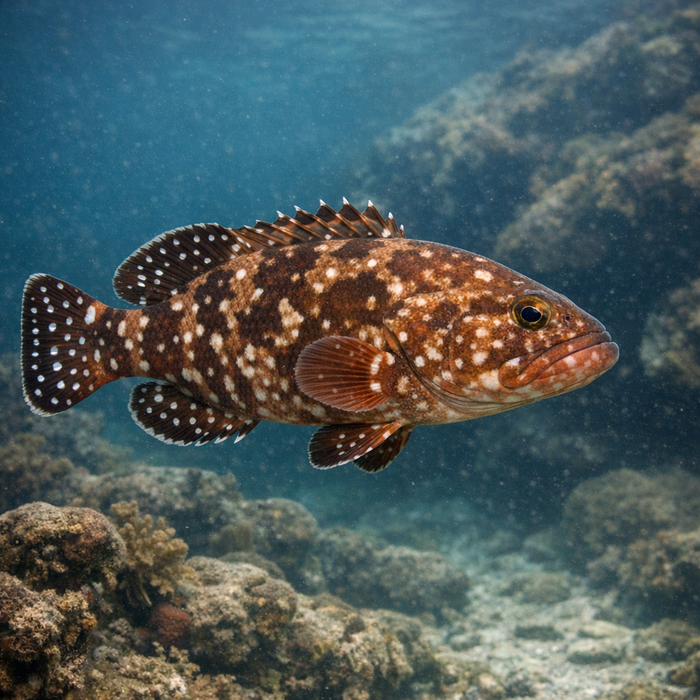
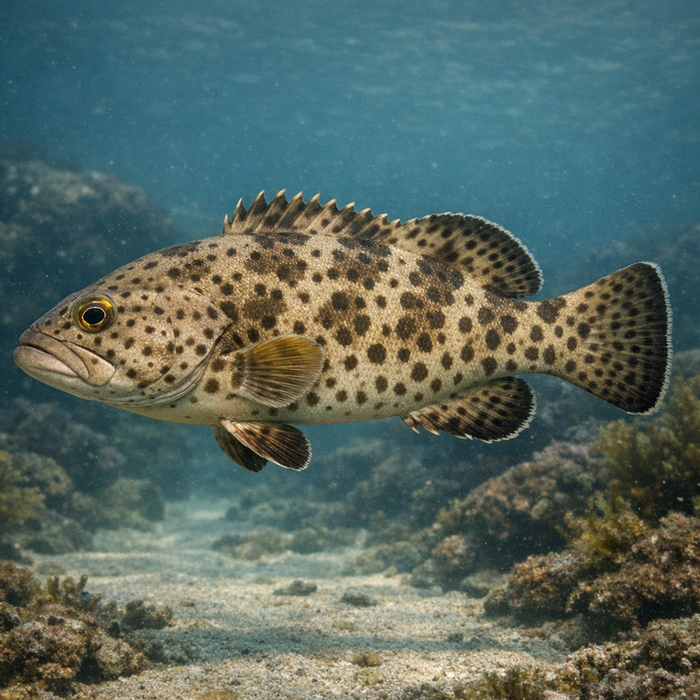
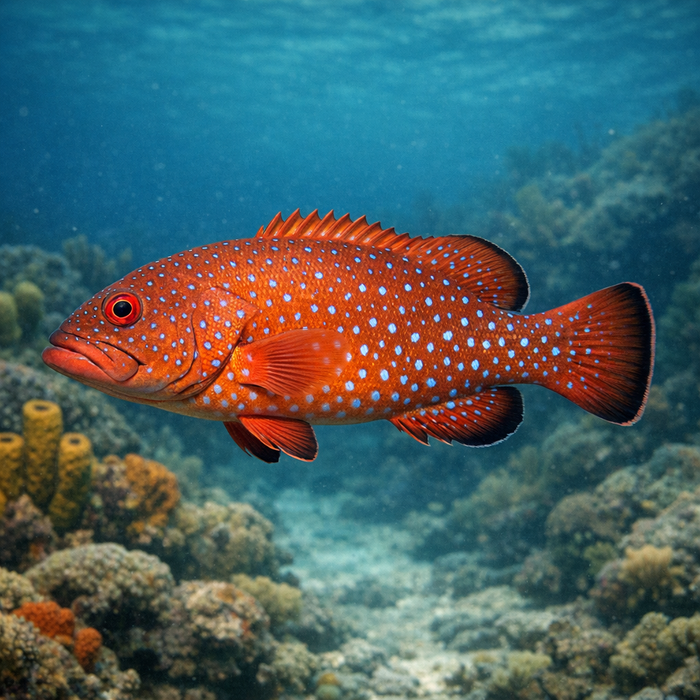
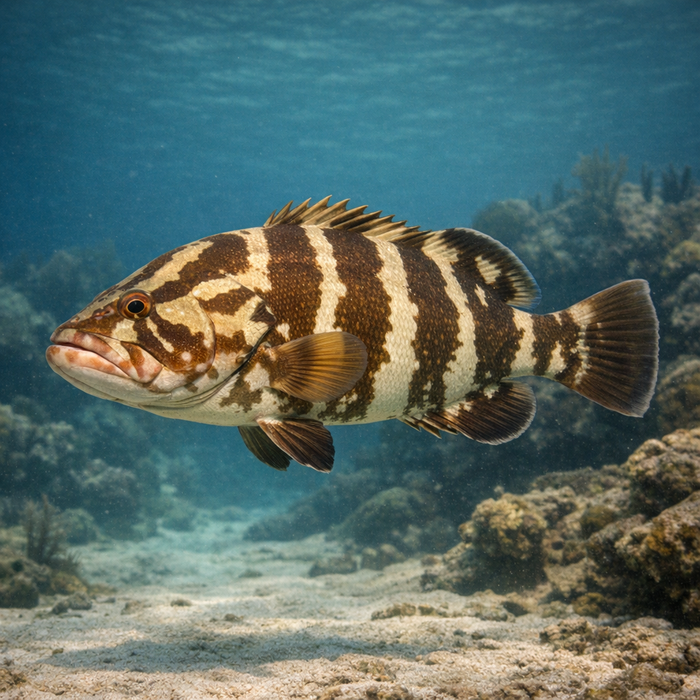
Red Hind (Epinephelus guttatus): A Bold, Memorable Hook LineIntroductionThe red hind is that bossy, spotted grouper parked on your favorite coral head, daring you to drop something edible. It's compact, mean in tight quarters, and a staple of Caribbean reef fishing lore. If you like precision bottom fishing and fast decision-making, the red hind is your kind of chaos.What Makes the Red hind Unique?First, attitude per pound. A red hind won't take you on a blistering run, but it will try to saw you off on rock, fan coral, or an urchin forest in the first two seconds. Second, their look is custom. Each fish's spot pattern is basically a fingerprint, fading or darkening as they shift mood and camouflage. Third, their love life is pure reef drama. Many start life as females and later switch to males, and the big boys flash a bicolor courtship pattern while booming low-frequency calls that divers and hydrophones can pick up. That's not just fish stuff; that's reef opera.Habitat & Global RangeWhen anglers talk red hind habitat, they're talking coral structure with personality. Think patch reefs, spur-and-groove, ledges, and small wrecks with clean ambush lanes. You'll encounter them across the tropical Western Atlantic: Bermuda, the Bahamas, Florida Keys fringes, down through the Greater and Lesser Antilles, and into northern South America. Depth-wise they're happy from snorkeling range to well past easy breath-hold territory, with a sweet spot often around 60 to 120 feet depending on current and relief. They're homebodies, too. A red hind often lives out its days within a tiny home range, commuting between a couple of hideouts like a clock-punching reef employee.Behavior & TemperamentRed hind are ambush pros. They pin themselves to structure, track passerby, and inhale prey with a vacuum snap. Hook one and the fight is close-quarters wrestling. You're not out-muscling a tuna; you're outmaneuvering a street brawler that owns the block. Spawning turns the volume up: winter full moons can pull fish into high-density aggregations, with males patrolling and flashing contrasting patterns. Outside those events, expect solitary or loosely spaced fish, each glued to favored cover. They're not roamers, but they will reposition with current and light.Ecological ImportanceThe red hind is a mid-reef predator that keeps small fish and invertebrate populations honest. Think of it as the reef's neighborhood watch with teeth. That role stabilizes food webs and supports the kaleidoscope of reef life divers come to see. Because they grow slowly compared to small baitfish and often live more than a decade, heavy pressure can tilt the system. Protecting spawning aggregations isn't warm-and-fuzzy policy; it's practical insurance for a functioning reef economy.Conservation & Environmental PressuresAcross parts of their range, the red hind has ridden the rollercoaster of fishing pressure. The good news: targeted seasonal closures and protected aggregation sites in places like the US Virgin Islands have helped populations rebound locally. The bigger threats are familiar: habitat loss, coastal runoff, and warming seas that stress corals and scramble the map of prime structure. They're listed as Near Threatened in some assessments, which translates to: pay attention, fish smart, and let management work. For anglers, that means double-checking local rules, especially around spawning months.The FishyAF TakeIf you're new to reef fish, the red hind is the perfect gateway grouper. It makes you accurate with your drops, honest with your tackle, and quick on the hook-set. It rewards clean boat control and good sense about structure. You'll learn tangle geometry fast. And the fish itself is just cool: beautiful, stubborn, and full of character. Want quick-hit Red hind facts? They're homebodies with attitude, sound-making show-offs during the spawn, and ambush predators that teach hard lessons about leader scuff. Catch one clean, admire the spots, and remember the rule: against a red hind, the first five seconds decide everything. That's not marketing. That's reef truth.