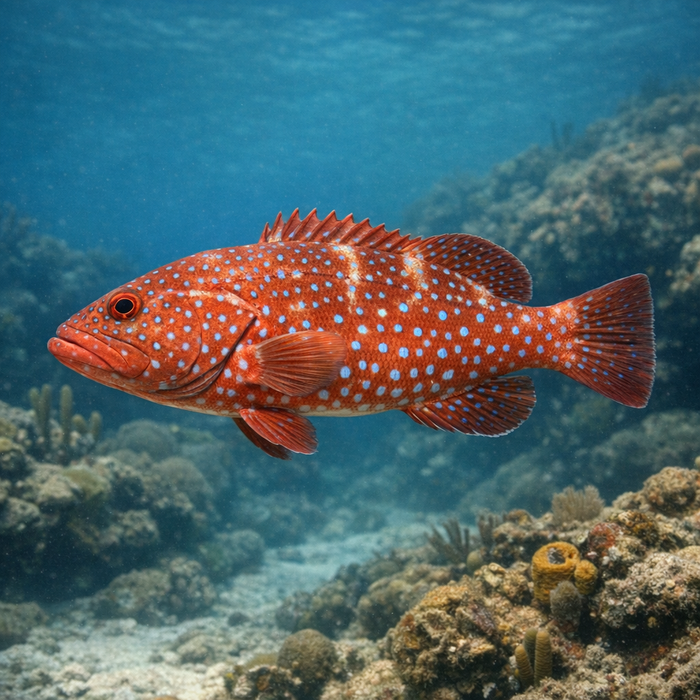
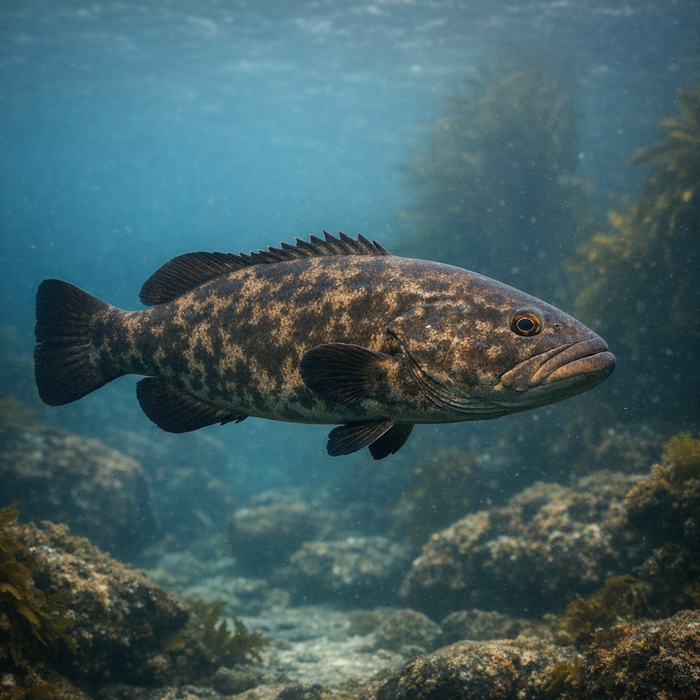
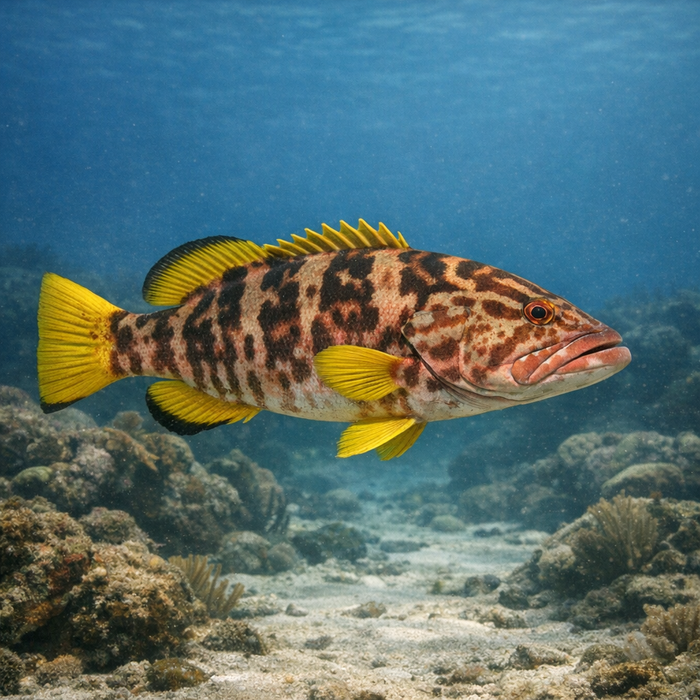
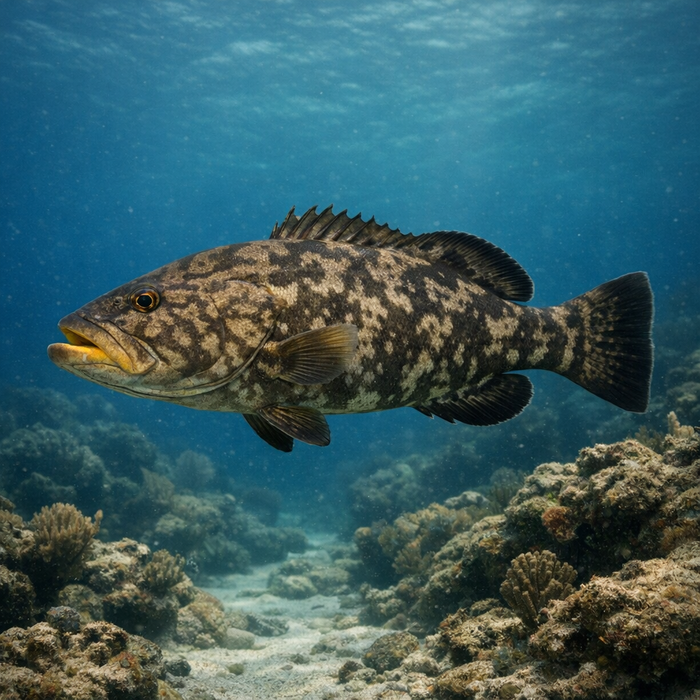
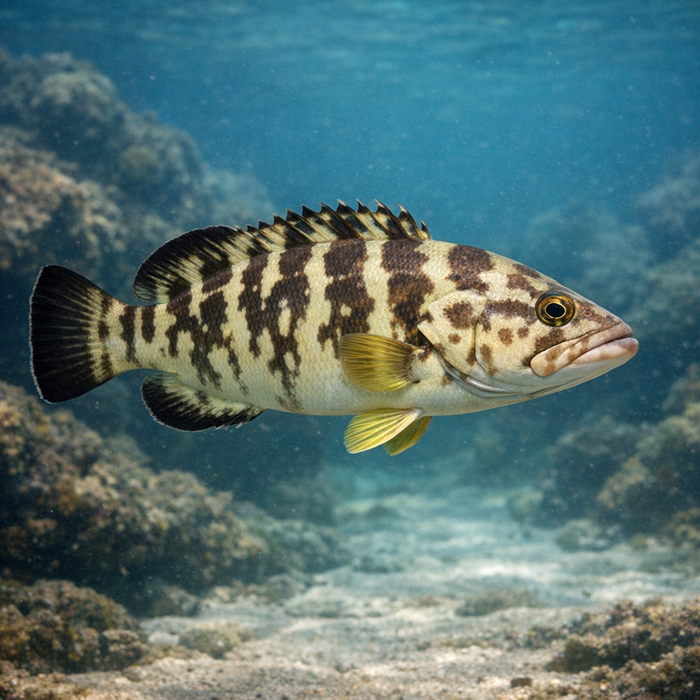
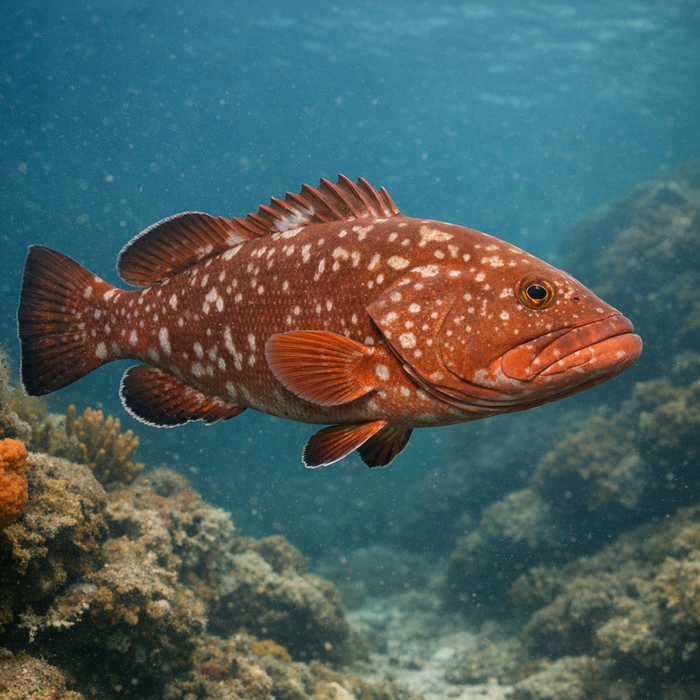
Rock Hind (Epinephelus adscensionis): A bulldog in polka dots that hits like its twice its sizeIntroductionThe rock hind is proof that you dont need a 40-pound grouper to get a proper reef beatdown. This compact, spotted brawler lives tight to rocks and wrecks, blasts baits with bad intentions, and then tries to saw your line off in the first five seconds. If youre chasing quick, honest reef fun with real attitude, the rock hind delivers. Consider this your crash course in Rock hind facts, behavior, and the quirks that make them such fun on light tackle.What Makes the Rock hind Unique?First, the paint job. Rock hind wear a freckled pattern of reddish-brown spots over a pale body, and many show twin black blotches just ahead of the tail. When they get amped up, they can flip from light to chocolate-brown in seconds, flashing bold saddle blotches like a mood ring with teeth. Second, theyre grouper to the core: cavernous mouth, vacuum-force strike, then a straight line to the nearest steel or limestone. Lastly, theyre protogynous hermaphrodites. Many start life as females and transition to males, which shapes their social world into harem territories guarded by bossy guys.Habitat & Global RangeIf youre hunting Rock hind habitat, think hard structure: natural reefs, rocky ledges, jetties, and wrecks from shallow coastal zones out to deeper relief. Theyre a Western Atlantic staple: Southeast U.S., Gulf of Mexico, Bahamas, much of the Caribbean, and down toward Brazil, with island outposts further east. They like nooks and crannies, the kind that scrape knuckles and chew through leaders. Depths vary by region and season, but they stay tight to bottom relief where ambush lanes and current do most of the feeding work.Behavior & TemperamentA rock hind spends a lot of life within a small home range, patrolling the same ambush points like a grumpy landlord. It inhales prey by opening that hinged jaw and expanding its throat, turning water into a conveyor belt aimed at dinner. Spooked or hooked, it flares gill covers to wedge into cracks like a living anchor. Males darken during courtship and may patrol with purpose across ledges, flashing those saddle blotches. Theyre not big on schooling. You might find a handful on the same piece of structure, but theyre more neighbors than teammates. Feeding windows often align with moving water and low-light periods when the buffet line flows right to their front door.Ecological ImportanceRock hind are mid-level reef predators. They keep small fish, crustaceans, and cephalopods honest while donating protein up the chain to bigger hunters. Their site fidelity makes them decent indicators of local reef health. When structure is vibrant and bait is steady, youll see a peppering of rock hind faces at the openings. When habitat gets beaten down by storms, anchors, or pollution, they thin out fast. They also participate in the grouper chorus: low, percussive sounds produced with swim-bladder muscles that communicate territory and courtship.Conservation & Environmental PressuresGood news first: the species is generally listed as Least Concern, and its not the prime target of heavy commercial fleets. But the typical reef pressures apply. Localized overharvest, especially on small nearshore structure, can knock down average size in a hurry. Habitat loss is the real dragon. Break a reef, bury a ledge, or trash a wreck, and youve deleted a household, not just a waypoint. Water quality issues compound it. Warmer, dirtier, lower-oxygen water puts reef communities on the ropes, and the rock hind doesnt win many rounds in that ring.The FishyAF TakeThe rock hind is the friend who always shows up ready to scrap. Its not the biggest grouper, but it might be the most honest: no pretense, all punch. If you like light tackle, quick decisions, and fish that make structure your problem, the rock hind is your kind of chaos. Youll lose some. Youll learn fast. And youll absolutely grin when a spotted bulldog materializes from a crack, hits like a truck, and tries to redecorate your jig in the rocks. Thats reef fishing distilled. Thats rock hind.