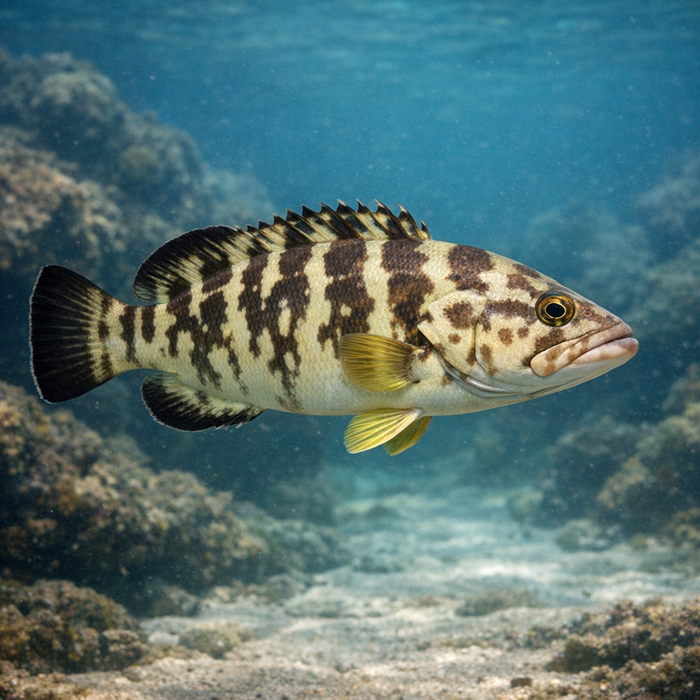
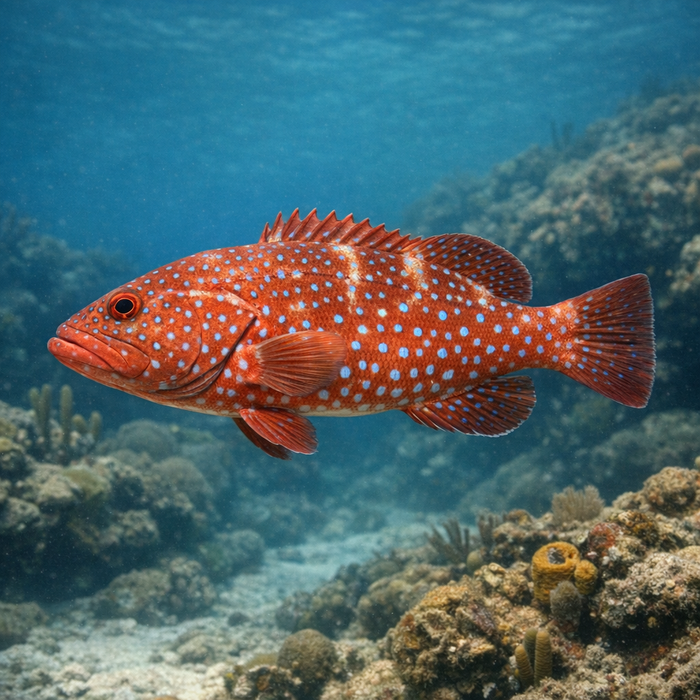
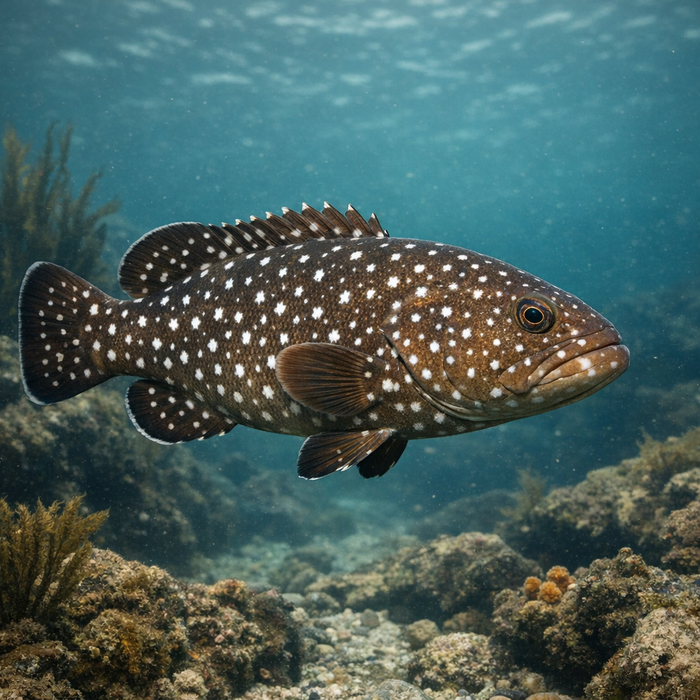
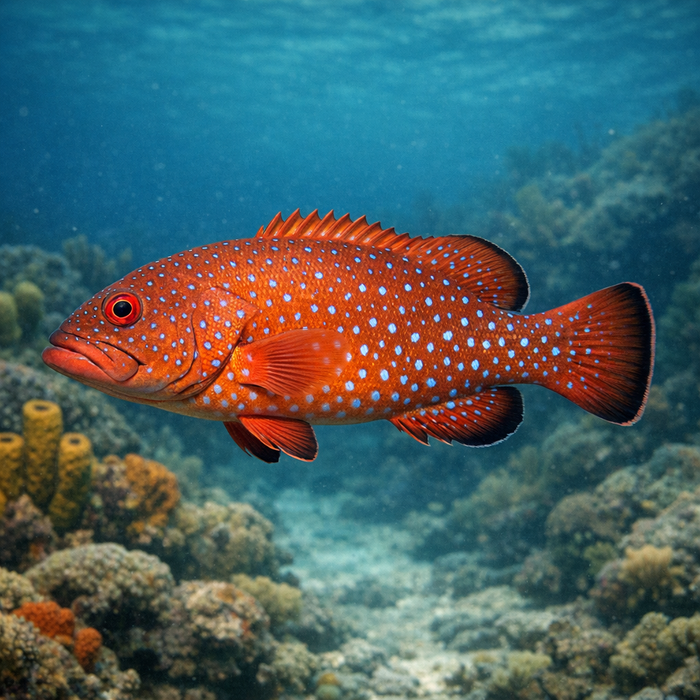
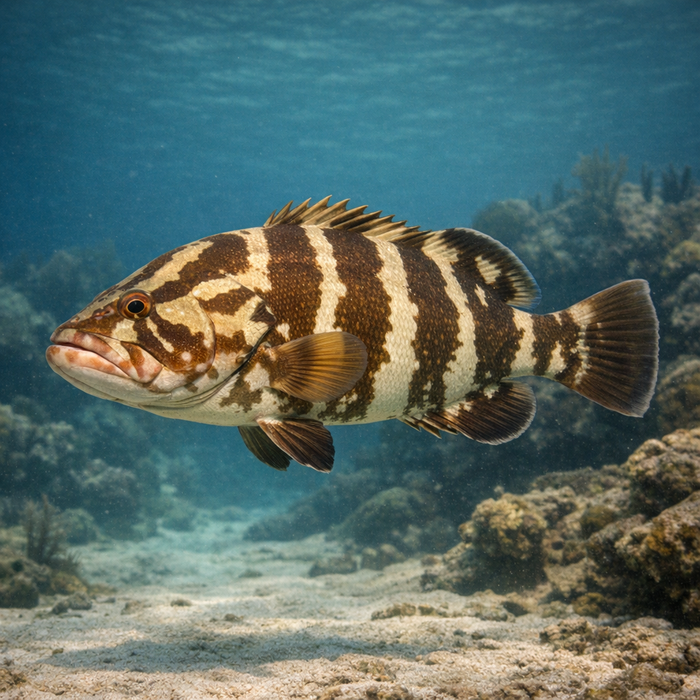
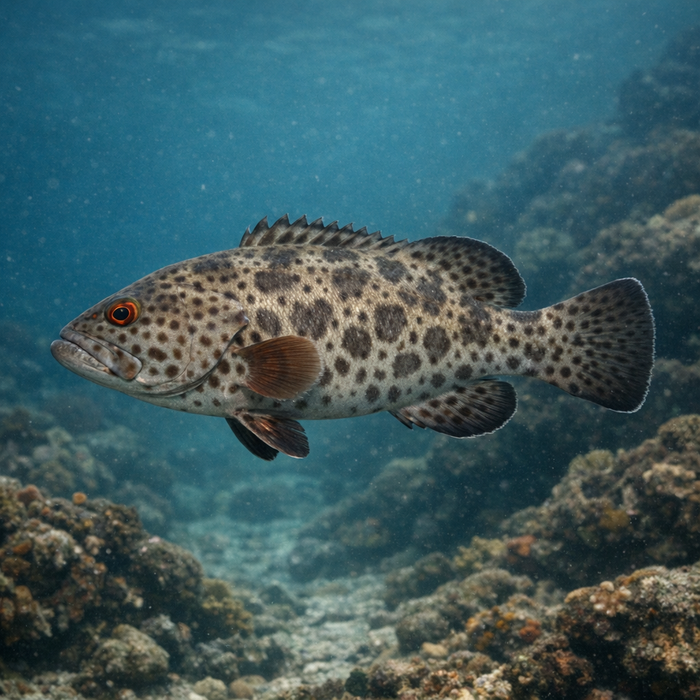
Spotted Grouper (Epinephelus analogus): The rock-crawling bulldog of the eastern Pacific.IntroductionIf reefs had bouncers, the spotted grouper would check IDs at the door. Thick-shouldered, spot-splattered, and bossy around structure, this fish wins fights by choosing the arena. You hook it, it heads straight for the rocks, and now you're either a hero or donating tackle to the reef.What Makes the Spotted grouper Unique?First, the look: bright, snowflake-like spots splashed across chocolate to olive skin that can lighten or darken in seconds. Second, the attitude: these fish are ambush pros, lunging a body length to vacuum prey with serious suction, then ramming back into a crevice where flared gill plates and dorsal spines make them almost unextractable. Third, life history: like many groupers, most start female and switch to male as they grow, a strategy that fuels local dominance by the bruisers. Those three traits combine to make the spotted grouper a structure-addicted, mood-shifting puzzle that keeps gear shops in business.Habitat & Global RangeIf you're digging into Spotted grouper habitat, think hard-bottom country in the eastern Pacific. They haunt rocky reefs, ledges, pinnacles, and wrecks from the Baja California peninsula down through Central America into northern South America. Depth-wise, they're comfortable from very shallow reefs out beyond recreational freediving, but the meat of the fishery lives in that pressure-sweet spot where current rolls over structure and bait stacks up. Juveniles hug shallower crags and protected pockets; adults squat on prime ambush angles where shadows, surge, and baitfish lanes intersect.Behavior & TemperamentThe spotted grouper is a patient thug. It doesn't roam far, preferring a small home range with a few killer perches. It watches, waits, and coils. Hits are decisive and usually down-current of the structure lip. The fight curve is brutal in the first five seconds. If you keep its head turned and away from the reef, you've got a legit shot. If not, it pins itself in a crack and you've got thirty seconds of stalemate followed by a sad, frayed line. They feed in windows: dawn and dusk get the nod, with bonus flurries when tide and wind line up to push forage tight.Ecological ImportanceAs mid-reef predators, spotted grouper help shape who gets to grow up on the rocks. They thin out overeager baitfish and crunchy crustaceans, helping balance fast reproducers and slower, structure-building species. Their habit of sitting tight makes them indicators of local reef health. Healthy bait pulses and moderate current? They get thick. Junked reefs and chronic overpressure? They thin out and shrink.Conservation & Environmental PressuresMany eastern Pacific reefs are close to port, which means easy access for everyone. That's great for anglers but tough on fish that guard small home turfs and mature slowly. Add habitat damage from anchoring, coastal development, and warming events, and pockets of spotted grouper can get hammered. Local rules often shift between open harvest, slot-style limits, and no-take zones inside marine parks. If you're looking for Spotted grouper facts beyond the catch, it's this: respecting closures and handling releases cleanly pays the reef back fast.The FishyAF TakeThe spotted grouper is honest fishing: find the rocks, hit the tide, drop something irresistible, and hang on. It's not a numbers game everywhere, but when you're over the right spine-backed real estate, it feels inevitable. Fish heavier than you think, react faster than you brag, and keep that first run pointed away from the reef. You want a fish that judges your knots and your nerve? This is it. If your idea of fun is winning five-second street fights with a polka-dotted battering ram, welcome to the club.