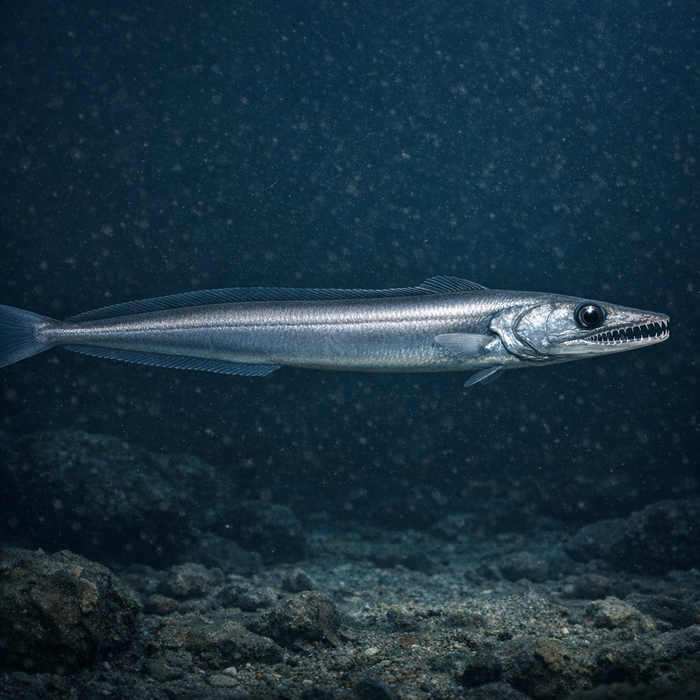
Crossthroat Sawpalate (Serrivomer jesperseni): A Bold, Memorable Hook LineIntroductionThe crossthroat sawpalate is the deep ocean's version of a zipper with fins. It's an eel built for the black zone between sunlit water and the abyss, where every bite counts and teeth rule. You won't see this fish on tourism billboards or weekend derby posters, but if you drop baits into proper darkness, it might make a cameo. Consider this your crash course in crossthroat sawpalate facts with just enough edge to keep it interesting.What Makes the Crossthroat sawpalate Unique?Start with the mouth. The crossthroat sawpalate has a roof-of-mouth lined in backward-hooked teeth that act like a conveyor belt for slippery prey. Add a jutting lower jaw and oversized eyes tuned for gloom, and you've got a midnight specialist. Unlike many shallower eels, it likely foregoes a swim bladder, which makes pressure swings less of a problem during vertical movements. The whole package is a tensioned spring: long, slender, and built to coil when hooked. If your line returns looking like a pretzel, you probably met one.Habitat & Global RangeCrossthroat sawpalate habitat sits squarely in the deep pelagic and continental-slope realm. Think hundreds to a few thousand feet over open water, near canyons, seamount flanks, and long drop-offs where life funnels through invisible highways. The species shows up across tropical and subtropical oceans, far from surf casters and pier rats. Most recreational encounters happen during deep-drop missions aimed at more glamorous targets. It's an oceanic drifter by design, comfortable in the midwater where light fades and dinner gets weird.Behavior & TemperamentDon't expect a topwater blowup. The crossthroat sawpalate feeds in the shadows, taking advantage of stealth and that saw-blade palate. It's not a bulldog fighter; resistance is more twist-and-writhe than run-and-gun. Bites can be tentative, especially on heavy leads. Still, it's a predator-when opportunity swims past, it snags first and asks questions later. Some deep pelagic eels show vertical movements tied to day-night cycles, so it wouldn't be shocking to cross paths in the water column during darkness when midwater prey lifts.Ecological ImportanceDeep pelagic predators are the unsung middle managers of the ocean, quietly converting squishy forage into higher-tier biomass. The crossthroat sawpalate trims back midwater prey and, in turn, becomes occasional prey for larger deep hunters. Its larvae, those transparent ribbon-like leptocephali, ride surface currents for months before morphing, connecting surface productivity to the midnight zone below. It's a neat, if overlooked, linkage in a system we barely understand.Conservation & Environmental PressuresGood data on this fish is thin-welcome to the deep sea. The crossthroat sawpalate likely slips under the radar of most fisheries and assessments. That doesn't mean it's untouchable. Climate-driven shifts in ocean structure, increasing deep-sea extraction, and bycatch from expanding deep trawl effort can all nudge populations even if nobody's weighing them at docks. Data Deficient doesn't equal unlimited; it equals unknown. And unknown species rarely get the benefit of timely management.The FishyAF TakeYou're not running offshore solely to tick "crossthroat sawpalate" off a bucket list, but if you deep-drop long enough, a pale, zipper-mouthed eel might photo-bomb your spread. Treat it with curious respect. This isn't a headline gamefish; it's a window into the dark engine room of the ocean. If you want crossthroat sawpalate habitat intel, think off the edge, past the usual suspects, where electronics matter and sunlight doesn't. For weirdness-per-ounce, it punches above its weight. Deep water does that. And we're here for it.