Dogtooth Tuna (Gymnosarda unicolor): The Reef Has Teeth, and They Pull Back
The first mistake is thinking this is just another tuna. Dogtooth Tuna brings the streamlined body and serious horsepower, then adds a mouthful of conspicuous teeth and a fondness for reef country. Hook one beside a steep dropoff and the problem becomes obvious: you are fighting a powerful fish where the bottom can finish the argument. Its reputation as a demanding gamefish is thoroughly deserved. This is not a species that makes poor preparation look charming.
For anglers, the appeal goes beyond brute force. Here is a predator that connects blue water with coral structure, looks unmistakably dangerous, and rewards people who understand depth, boat positioning, and tackle limits. The most useful Dogtooth Tuna facts explain why those details matter, rather than simply declaring it a monster and calling the job done.
What Makes the Dogtooth Tuna Unique?
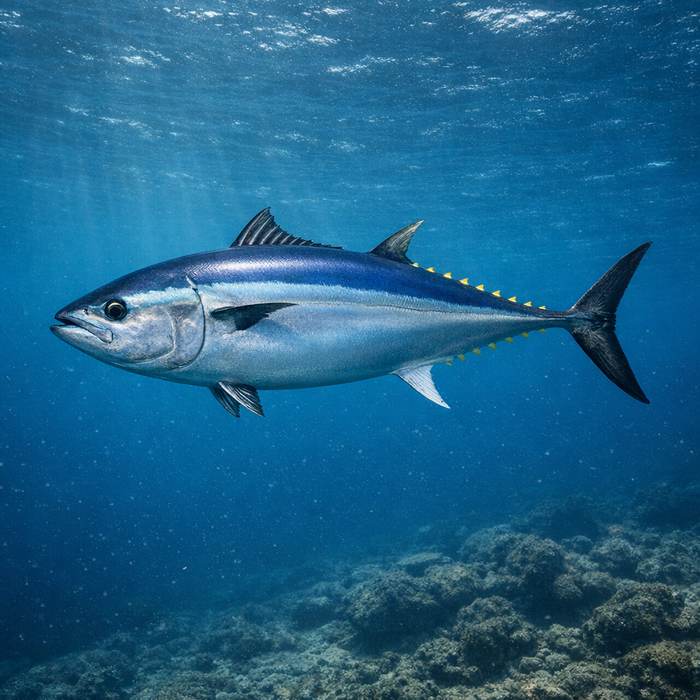
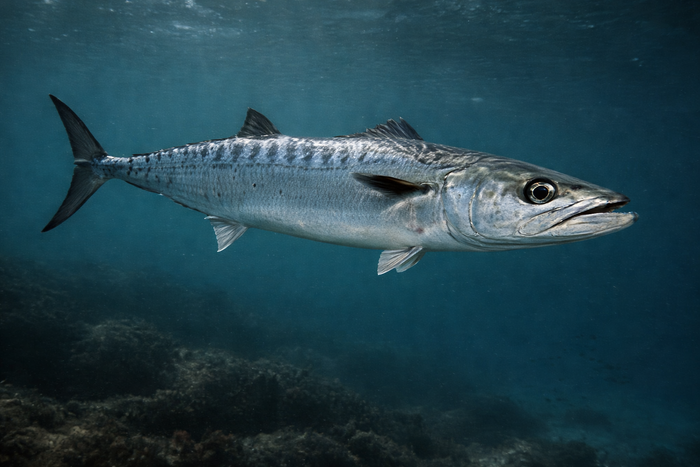
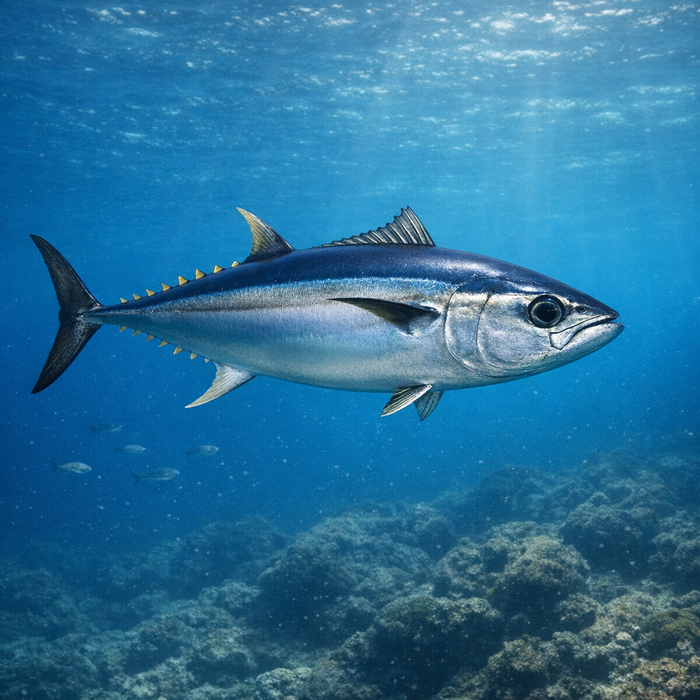
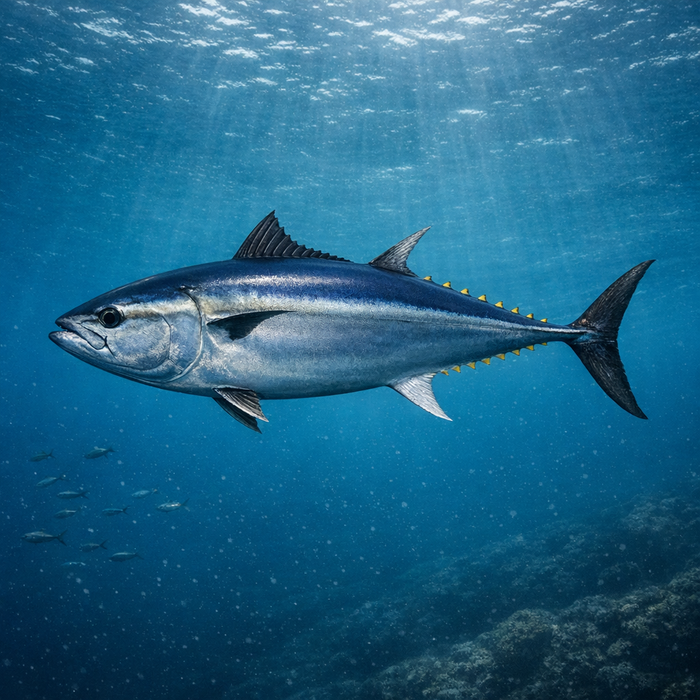
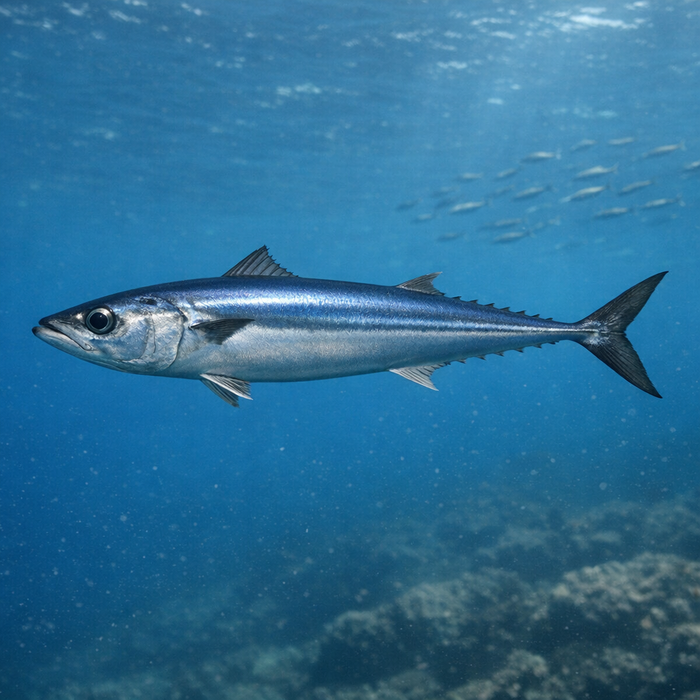
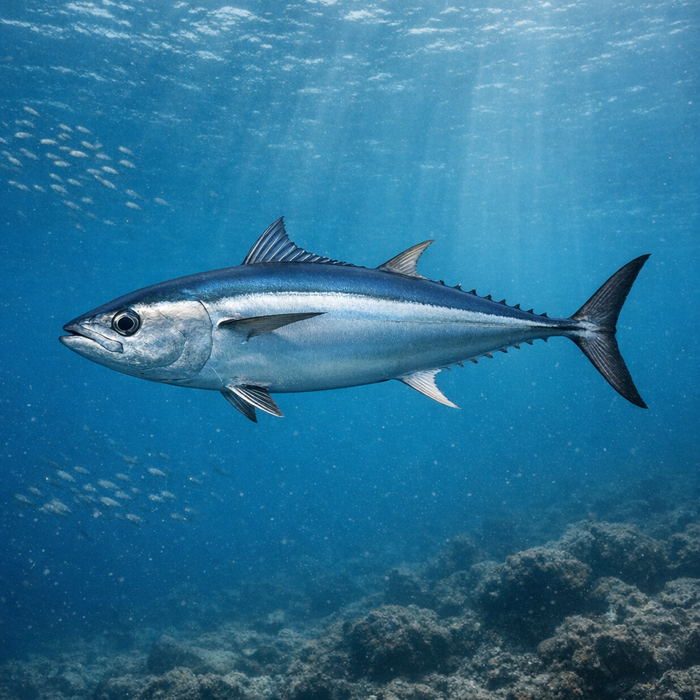
Start with the teeth. Large, conical teeth line both jaws, giving this fish its wonderfully literal common name. There are also two patches of fine teeth on the tongue. That is an impressive amount of dental equipment for something many people initially mistake for an ordinary tuna. The large mouth and elongated body complete a distinctly predatory profile.
Then there is the family twist. Dogtooth Tuna belongs to Scombridae, but sits with the bonitos rather than the true tunas such as yellowfin and bluefin. It is the only living species in Gymnosarda. Unlike other bonitos, it possesses a well-developed swim bladder. Those are genuine biological distinctions, not marketing upgrades applied to a fish that already sells itself.
Its skin offers another clue. Much of the body lacks scales, although scaled areas remain around the shoulder region and elsewhere. A strongly wavy lateral line runs along the sides. The result is a sleek, mostly unmarked fish with blue-black upper surfaces and a silvery underside: restrained paintwork, decidedly unrestrained hardware.
Habitat & Global Range
Dogtooth Tuna habitat is best understood as the meeting point between reef structure and open water. Outer reef slopes, deep edges, channels, and offshore banks provide the setting. The species occurs across the tropical Indo-Pacific, from the Red Sea and East Africa through the Indian Ocean to western and central Pacific islands, with Japan and Australia also within its range.
Think Tanzania, Mauritius, Seychelles, Maldives, and Australia's offshore reef systems rather than an Atlantic tuna canyon. The listed fisheries include Latham Island Reef, Hawkins Bank, Farquhar Atoll, Ari Atoll, and the Swain Reefs. Each requires its own reading of access, weather, structure, and local restrictions. A famous destination is a starting point, not a guaranteed appointment.
Dogtooth Tuna is not restricted to one deep band. Published habitat accounts extend from relatively shallow reef water down to approximately 300 meters. For fishing purposes, the productive depth must be established locally. Finding the right edge matters more than dropping a jig to an impressive number on the reel counter.
Behavior & Temperament
Expect individuals and small groups rather than assuming every encounter involves a vast tuna school. This predator feeds on schooling reef-associated fishes and squid. Its presence around structure makes it different from a purely open-ocean quarry, even though it is fully capable of hunting in the surrounding water column.
Once hooked, Dogtooth Tuna can deliver powerful runs that put tackle and reef clearance under immediate pressure. Angling accounts document success with jigging, trolling, and live or dead bait, but hooking one is only the opening transaction. Landing it requires an intact connection and enough room to fight. Heavy equipment helps; coordinated boat work matters too.
Ecological Importance
As a substantial fish-eating predator, this species participates in the transfer of energy from smaller fishes into larger reef-associated hunters. Its ecological role belongs to both the reef and the water above it. Those are connected habitats, not separate departments with tidy boundaries.
Dogtooth Tuna also supports recreational fishing and contributes to commercial catches in parts of its range. Indian fisheries research documents hook-and-line landings from several coastal and island regions. Its importance therefore extends beyond trophy photographs: the same animal can be a sporting target, a landed food fish, and a component of the local marine community.
Conservation & Environmental Pressures
The global conservation category is Least Concern. That does not mean every reef holds an unlimited supply. Research has identified localized depletion concerns associated with heavy targeting, alongside gaps in knowledge about population structure and recruitment. A broad distribution can coexist with vulnerable fishing spots.
The practical response is restraint rather than panic. Follow local rules, respect protected areas, avoid treating repeated success at one reef as permission for endless extraction, and plan fish handling before the first drop. Responsible fishing includes deciding when enough really is enough.
The FishyAF Take
Dogtooth Tuna is the species for anglers who enjoy having their confidence inspected under load. The attraction is not simply a big fish. It is a big fish beside unforgiving structure, with teeth that look entirely appropriate for the assignment.
Bring balanced tackle, honest knots, and a crew that communicates. Leave the maximum-drag bravado ashore. There is nothing elite about breaking equipment because you confused recklessness with pressure. The memorable catch is the one you handle competently, not the one that becomes an expensive story about what supposedly happened below the boat.